




Ask the AI Tutor
Need help with Materials? Ask our AI Tutor!
AI Tutor - Lucy
Connecting with Tutor...
Please wait while we establish connection
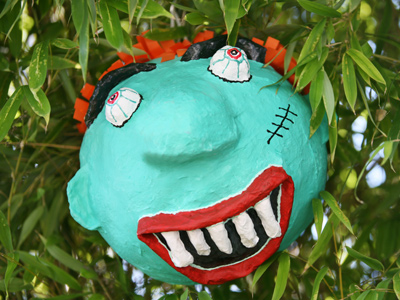
Papier-mâché can be made from newspaper and white glue.
Materials
Materials can change how art looks and feels. Explore paper, paint, clay, and collage, and learn how choosing the right materials helps you create stronger, clearer work.
1 .
If you wanted to repeat an image over and over again, what material might be appropriate?
A piece of lino and a cutter
A ruler and a biro
A whisk and a fan
A piece of carpet and some masking tape
Cutting into the lino and printing the image gives a bold effect
2 .
Which material would be most suitable for decorating a clay pot?
Felt-tipped pens
Watercolours
A hard pencil
Acrylic paints
Acrylic paints would give a strong coloured finish
3 .
Which of the following materials would not be suitable to make a quick sketch in a sketchbook?
Charcoal
Clay
Pencil
Pen and ink
Clay is a medium which results in a three-dimensional piece and could not be used for sketching
4 .
Which of the following would be most appropriate for sculpting?
Watercolour paints
Clay
Wax crayons
Tracing paper
Clay can be moulded, bent, squashed and rolled into many different shapes
5 .
If a project is said to be 'Mixed Media', what does that mean?
It is confused about its purpose
Several projects have been lined up together
It has been created from more than one material or medium
It is only half as successful as it should be
Many artists experiment with putting different media together - often with surprising results!
6 .
Which of the following materials would give the softest edges in a drawing?
A 2H pencil
Pen and ink
Chalk pastels
A marker pen
Pastels are very soft and can be smudged easily
7 .
If you wanted to produce a painting of a landscape, which of the following materials would not be necessary?
Palette
Selection of brushes
Oils or watercolours
Chisel
Other items you may need could include a canvas, an easel, rags, turpentine, water and a palette knife
8 .
How could you 'fix' a charcoal drawing?
With cling film
With hairspray
With a roller
With tracing paper
Hairspray bonds the charcoal to the paper and stops it from smudging
9 .
Which materials might you consider using to make a lightweight, three-dimensional model?
Sugar paper and an exercise book
Silver paper and some sequins
Tissue paper and some scissors
Newspaper and white glue
You could use these materials to make papier-mâché
10 .
Which of these could you use to create a collage?
Natural items such as sticks, leaves and bark
Man-made items such as foil, coloured film and tape
Newspapers, string, crayons and paint
Any of the above
Collages can be made from just about anything!
Our Social Circles




**Unlimited Quizzes Await You! 🚀**
Hey there, quiz champ! 🌟 You've already tackled today's free questions.
Ready for more?
Ready for more?
🔓 Unlock UNLIMITED Quizzes and challenge yourself every day. But that's
not all...
not all...
🔥 As a Subscriber you can join our thrilling "Daily Streak" against other
quizzers. Try to win a coveted spot on our Hall of Fame Page.
quizzers. Try to win a coveted spot on our Hall of Fame Page.
Don't miss out! Join us now and keep the fun rolling. 🎉
**Unlimited Quizzes Await You! 🚀**
Hey there, quiz champ! 🌟 You've already tackled today's free questions. Ready for more?
🔓 Unlock UNLIMITED Quizzes and challenge yourself every day. But that's not all...
🔥 As a Subscriber you can join our thrilling "Daily Streak" against other quizzers. Try to win a coveted spot on our Hall of Fame Page.
Don't miss out! Join us now and keep the fun rolling. 🎉
© Copyright 2016-2026 - Education Quizzes
Work Innovate Ltd - Design | Development |
Marketing
