




Ask the AI Tutor
Need help with Fractions (Year 3)? Ask our AI Tutor!
AI Tutor - Lucy
Connecting with Tutor...
Please wait while we establish connection
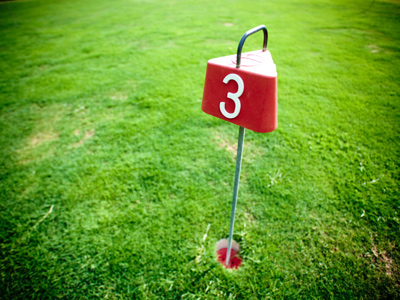
A quarter of 12 is 3.
Fractions (Year 3)
Fractions in Year 3 Maths introduce equal parts and sharing. Pupils learn to recognise simple fractions and see how they relate to everyday objects like food or shapes.
1 .
Which fraction lies exactly between 1⁄2 and 1?
1⁄4
7⁄10
2⁄3
3⁄4
1?2 = 2?4 and 1 = 4?4 so 3?4 is between the two
2 .
Which of these is equivalent to 5⁄10?
1⁄2
2⁄3
3⁄4
1⁄4
If you divide 5 by 5 you get 1 and if you divide 10 by 5 you get two so 5?10 is the same as 1?2
3 .
One third and which other fraction make a whole one?
2⁄10
1⁄2
3⁄4
2⁄3
1?3 + 2?3 = 3?3 which is the same as 1
4 .
If we have 3⁄4 what is needed to make a whole?
1⁄2
1⁄3
1⁄4
1⁄10
3?4 plus 1?4 = 4?4 which is one whole
5 .
What is a quarter of 12?
3
4
6
9
To calculate a quarter divide by 4
6 .
Which is the largest of these fractions?
1⁄2
5⁄10
2⁄3
2⁄4
1?2 is the same as 5?10 and 2?4
7 .
What does 1⁄10 mean?
One whole one divided into ten equal parts
Ten whole ones divided equally
Five whole ones divided equally
One whole one divided into two equal parts
1?10 is the same as 1 ÷ 10
8 .
How many tenths in one whole?
5
10
2
4
A tenth is one part when the whole is divided into ten equal parts
9 .
Which represents one third?
1⁄4
1⁄2
1⁄3
1⁄5
1?3 is the same as 1 ÷ 3
10 .
Which is the smallest of these fractions?
1⁄2
1⁄4
1⁄3
1⁄10
If the numbers above the line are the same then the higher the number below the line the lower the fraction is
Our Social Circles




**Unlimited Quizzes Await You! 🚀**
Hey there, quiz champ! 🌟 You've already tackled today's free questions.
Ready for more?
Ready for more?
🔓 Unlock UNLIMITED Quizzes and challenge yourself every day. But that's
not all...
not all...
🔥 As a Subscriber you can join our thrilling "Daily Streak" against other
quizzers. Try to win a coveted spot on our Hall of Fame Page.
quizzers. Try to win a coveted spot on our Hall of Fame Page.
Don't miss out! Join us now and keep the fun rolling. 🎉
**Unlimited Quizzes Await You! 🚀**
Hey there, quiz champ! 🌟 You've already tackled today's free questions. Ready for more?
🔓 Unlock UNLIMITED Quizzes and challenge yourself every day. But that's not all...
🔥 As a Subscriber you can join our thrilling "Daily Streak" against other quizzers. Try to win a coveted spot on our Hall of Fame Page.
Don't miss out! Join us now and keep the fun rolling. 🎉
© Copyright 2016-2026 - Education Quizzes
Work Innovate Ltd - Design | Development |
Marketing
