




Ask the AI Tutor
Need help with Number Sequences (Year 3)? Ask our AI Tutor!
AI Tutor - Lucy
Connecting with Tutor...
Please wait while we establish connection
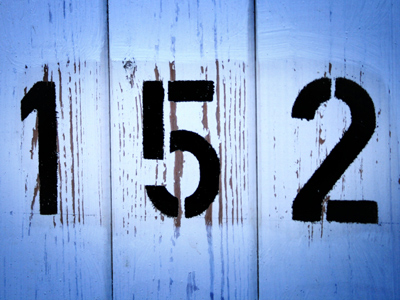
152 is the next number of the sequence 112, 122, 132, 142.
Number Sequences (Year 3)
Number sequences Year 3 introduces patterns in numbers. Pupils practise spotting, continuing, and creating sequences, building key skills for later problem solving in maths.
1 .
What is the next number of the sequence? 20, 120, 220, 320
300
350
400
420
The numbers are increasing by 100
2 .
If you add two odd numbers together the answer is always what?
An odd number
An even number
A number ending in 5
A number ending in 2
Even + even = even
Even + odd = odd
Odd + even = odd
Odd + odd = even
Even + odd = odd
Odd + even = odd
Odd + odd = even
3 .
Which sequence is odd?
4, 6, 8, 10, 12
30, 32, 34, 36, 38
17, 21, 25, 29, 33
12, 20, 28, 36, 44
All the numbers end in 1, 3, 5, 7 or 9 so it must be odd
4 .
How do we know a number is odd?
It ends in 6
It ends in 0, 2, 4, 6 or 8
It ends in 1, 3, 5, 7 or 9
It ends in 2 or 4
If odd numbers are divided by 2 there will be a remainder or fraction left over
5 .
If you add two even numbers together the answer is always what?
An odd number
An even number
A number ending in 2
A number ending in 0
2 even numbers always make an even number but an even with an odd will make an odd number
6 .
Can you find the rule of this sequence? 5, 10, 15, 20, 25, 30
The numbers increase in 2s
The numbers increase in 3s
The numbers increase in 5s
The numbers increase in 10s
This sequence is the 5 times table
7 .
Can you find the rule of this sequence? 3, 13, 23, 33
The numbers increase in 2s
The numbers increase in 3s
The numbers increase in 5s
The numbers increase in 10s
Each number (except the first) is 10 higher than the one before it
8 .
Which is the next even number after 148?
158
150
160
152
148 + 2 = 150
9 .
What are the next two numbers of the sequence? 3, 6, 9, 12
15, 18
13, 14
15, 17
15, 20
The numbers are increasing in 3s
10 .
How do we know a number is even?
It ends in 0, 2, 4, 6 or 8
It ends in 1, 3, 5, 7 or 9
It ends in 5
It ends in 9
All the even numbers can be divided by 2 and give a whole number



**Unlimited Quizzes Await You! 🚀**
Hey there, quiz champ! 🌟 You've already tackled today's free questions.
Ready for more?
Ready for more?
🔓 Unlock UNLIMITED Quizzes and challenge yourself every day. But that's
not all...
not all...
🔥 As a Subscriber you can join our thrilling "Daily Streak" against other
quizzers. Try to win a coveted spot on our Hall of Fame Page.
quizzers. Try to win a coveted spot on our Hall of Fame Page.
Don't miss out! Join us now and keep the fun rolling. 🎉
**Unlimited Quizzes Await You! 🚀**
Hey there, quiz champ! 🌟 You've already tackled today's free questions. Ready for more?
🔓 Unlock UNLIMITED Quizzes and challenge yourself every day. But that's not all...
🔥 As a Subscriber you can join our thrilling "Daily Streak" against other quizzers. Try to win a coveted spot on our Hall of Fame Page.
Don't miss out! Join us now and keep the fun rolling. 🎉




© Copyright 2016-2026 - Education Quizzes
Work Innovate Ltd - Design | Development |
Marketing
