




Ask the AI Tutor
Need help with Responding to Music? Ask our AI Tutor!
AI Tutor - Lucy
Connecting with Tutor...
Please wait while we establish connection
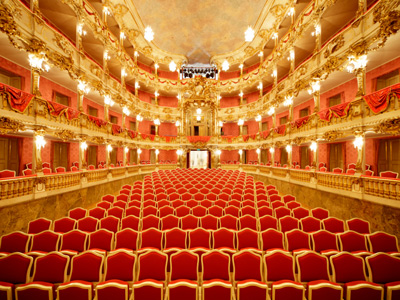
You might hear an aria at an opera.
Responding to Music
Music isn’t just played, it’s heard and felt. Practise describing what you notice, mood, instruments, and how pieces change, using the right musical words.
1 .
Which instrument could best represent the sound of an elephant walking?
A flute
The kettle drum
The harmonica
A cymbal
You can just imagine an elephant lumbering along with each thud-thud-thud of the drum
2 .
What is a musical accompaniment?
A musical part played in the background or in support of another voice or instrument
A chamber orchestra
A musical
The period of time an orchestra waits for a solo to be finished
Many singers are accompanied by music
3 .
In which of these environments are you NOT likely to hear music?
A library
A place of worship
A theatre
Outdoors
Music is everywhere! Most libraries, however, do not encourage music
4 .
Music can ____.
create different moods
create different effects
tell a story
all of the above
Music is more than just a bunch of notes strung together!
5 .
Which of these is NOT an example of folk music?
A sea shanty, such as 'Haul Away Joe'
A work song, such as 'Hoe Emma Hoe'
A song from a musical, such as 'Food Glorious Food'
A song traditionally sung in a specific region, such as 'The Lambton Worm'
Folk songs are often lively, humorous or sad
6 .
Which of these would be a response to music?
A piece of music makes you feel sad
A piece of music makes you feel like dancing
You draw a picture inspired by a piece of music you've heard
All of the above
There are hundreds of ways of responding to music and we usually do it without even thinking about it
7 .
Who wrote 'Peter and the Wolf'?
Rachmaninov
Beethoven
Prokofiev
Mozart
Prokofiev composed 'Peter and the Wolf' in 1936 to teach children about music
8 .
A film's musical score ____.
is another term for the songs in a musical
can reinforce the story and create mood or suspense
does not have an effect on the film
is included as a distraction from the story
Some films' musical scores are so well-known that you only need to hear a few bars to be instantly reminded of the film
9 .
Where might you hear an aria?
At a ballet
At a disco
At an opera
In a church
An aria is usually sung by a soloist and is associated with operas
10 .
Which of these light-hearted pieces was written by the French composer Saint-Saëns?
'The Young Person's Guide to the Orchestra'
'The Carnival of the Animals'
'The 1812 Overture'
'Ode to Joy'
If you haven't heard it yet, it's well worth a listen



**Unlimited Quizzes Await You! 🚀**
Hey there, quiz champ! 🌟 You've already tackled today's free questions.
Ready for more?
Ready for more?
🔓 Unlock UNLIMITED Quizzes and challenge yourself every day. But that's
not all...
not all...
🔥 As a Subscriber you can join our thrilling "Daily Streak" against other
quizzers. Try to win a coveted spot on our Hall of Fame Page.
quizzers. Try to win a coveted spot on our Hall of Fame Page.
Don't miss out! Join us now and keep the fun rolling. 🎉
**Unlimited Quizzes Await You! 🚀**
Hey there, quiz champ! 🌟 You've already tackled today's free questions. Ready for more?
🔓 Unlock UNLIMITED Quizzes and challenge yourself every day. But that's not all...
🔥 As a Subscriber you can join our thrilling "Daily Streak" against other quizzers. Try to win a coveted spot on our Hall of Fame Page.
Don't miss out! Join us now and keep the fun rolling. 🎉




© Copyright 2016-2026 - Education Quizzes
Work Innovate Ltd - Design | Development |
Marketing
