




Ask the AI Tutor
Need help with Swimming? Ask our AI Tutor!
AI Tutor - Lucy
Connecting with Tutor...
Please wait while we establish connection
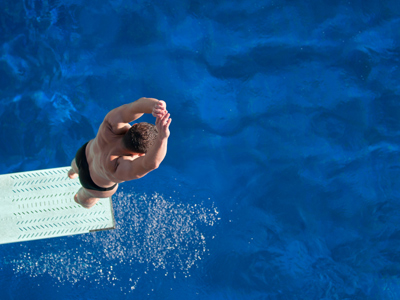
A safe place to dive is from the diving board.
Swimming
Swimming in KS2 PE is about confidence, control, and safety. Explore strokes, breathing, and floating skills, plus pool rules that help everyone learn and improve.
1 .
If you can’t swim which part of the pool should you stay in?
You shouldn’t go in the pool
The deep end
The shallow end
The middle
The shallow end is the safest
2 .
What is the best method of getting out of the pool?
Climb up the side
Stand on someone else
Use the steps and handrail
Jump out of the shallow end
That's what they are there for!
3 .
What must you never do around the edge of the pool?
Run
Talk
Walk
Sing
You could slip as the edge of the pool is wet
4 .
Which of these is the safest place to swim?
Local river
Canal
Icy pond
Local swimming pool
There are lifeguards present and no hidden dangers or currents
5 .
Which of the following is NOT a swimming stroke?
Side step
Breaststroke
Front crawl
Back crawl
Which is your favourite swimming stroke?
6 .
When you go swimming it is best not to go alone. Why?
It is more fun with friends
If you get into trouble others can get help
Others will help you keep warm
It is more expensive alone
If you are alone there would be no one to raise the alarm if you got into difficulties
7 .
Which is a safe place to dive?
Into the sea
From the side of the pool
From the diving board
In the shallow part of the pool
Diving boards can be very high!
8 .
When sculling, what equipment should you be using?
Poolside brush
A football
Floats
Swimming cap
Sculling will improve your swimming skills
9 .
What do the numbers around the pool tell you?
The age you are allowed to swim
The date
They don’t mean anything
The depth of the water
The deep end is the deepest part of the pool
10 .
How should you enter the pool safely?
Run and jump in
Climb down the steps
Dive in from the side
Cartwheel into the pool
You might think it's fun to jump in, but you could land on another swimmer and hurt them
Our Social Circles




**Unlimited Quizzes Await You! 🚀**
Hey there, quiz champ! 🌟 You've already tackled today's free questions.
Ready for more?
Ready for more?
🔓 Unlock UNLIMITED Quizzes and challenge yourself every day. But that's
not all...
not all...
🔥 As a Subscriber you can join our thrilling "Daily Streak" against other
quizzers. Try to win a coveted spot on our Hall of Fame Page.
quizzers. Try to win a coveted spot on our Hall of Fame Page.
Don't miss out! Join us now and keep the fun rolling. 🎉
**Unlimited Quizzes Await You! 🚀**
Hey there, quiz champ! 🌟 You've already tackled today's free questions. Ready for more?
🔓 Unlock UNLIMITED Quizzes and challenge yourself every day. But that's not all...
🔥 As a Subscriber you can join our thrilling "Daily Streak" against other quizzers. Try to win a coveted spot on our Hall of Fame Page.
Don't miss out! Join us now and keep the fun rolling. 🎉
© Copyright 2016-2026 - Education Quizzes
Work Innovate Ltd - Design | Development |
Marketing
