




Ask the AI Tutor
Need help with Life Cycles - Plants? Ask our AI Tutor!
AI Tutor - Lucy
Connecting with Tutor...
Please wait while we establish connection
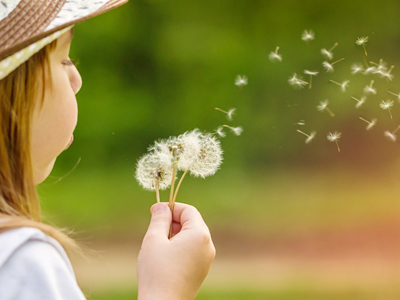
Dandelions disperse their seeds by wind.
Life Cycles - Plants
Plants grow, change, and reproduce through life cycles. In KS2 Science, pupils explore how seeds, flowers, and fruits continue the journey of plant survival.
1 .
Why do plants need sunlight?
Plants use sunlight to make food
Sunlight makes plants warm
Sunlight allows plants to flower
Sunlight keeps plants from getting too wet
Although seeds can germinate without sunlight, plants need it to make their food, using a process called photosynthesis
2 .
What happens if seeds are planted too closely together?
None of the seeds will grow
The young plants struggle to compete for moisture and nutrients
Only one seed will grow
The young plants will be healthier
Plants need space to spread their roots and stems
3 .
What do seeds need in order to germinate?
Water and soil
Sunlight and soil
Water and warmth
Sunlight and warmth
Seeds can germinate without light or soil, but cannot germinate in a cold, dry place
4 .
Which of the following is true?
All plants grow from seeds
All plants have flowers
All plants can reproduce
All plants have fruit
All plants reproduce, but not all plants reproduce by flowering
5 .
Which part of a flowering plant grows into a fruit?
Petals
Stem
Seed
Ovary
The fertilised ovary, containing seeds, develops into a fruit
6 .
Which of the following plants disperses its seeds by wind?
Beech trees
Dandelions
Apple trees
Poppies
Have you ever blown the seeds from a dandelion clock?
7 .
Flowering plants produce many seeds which never grow. Why do they do this?
Because many of the seeds are defective
Because some of the seeds will not have enough soil to germinate
Because many of the seeds will be eaten by animals, blown away by the wind, or washed away
Because some seeds will not receive enough food to survive
The more seeds a plant produces, the better its chance of reproducing
8 .
Which part of a flowering plant is male?
Stamen
Stigma
Petals
Seeds
The stamen produces pollen
9 .
Which of the following words describes the moment a seed begins to grow?
Pollination
Dispersal
Flowering
Germination
Seeds need certain conditions before they can germinate
10 .
What is dispersal?
The ripening of a seed pod
The method by which a plant spreads its seeds
The transfer of pollen to the stigma
The length of time it takes a seed to germinate
Plants have several methods of dispersing seeds - by wind, by explosion, by animal, even by water - coconut palms can disperse their seeds (coconuts) by sea
Our Social Circles




**Unlimited Quizzes Await You! 🚀**
Hey there, quiz champ! 🌟 You've already tackled today's free questions.
Ready for more?
Ready for more?
🔓 Unlock UNLIMITED Quizzes and challenge yourself every day. But that's
not all...
not all...
🔥 As a Subscriber you can join our thrilling "Daily Streak" against other
quizzers. Try to win a coveted spot on our Hall of Fame Page.
quizzers. Try to win a coveted spot on our Hall of Fame Page.
Don't miss out! Join us now and keep the fun rolling. 🎉
**Unlimited Quizzes Await You! 🚀**
Hey there, quiz champ! 🌟 You've already tackled today's free questions. Ready for more?
🔓 Unlock UNLIMITED Quizzes and challenge yourself every day. But that's not all...
🔥 As a Subscriber you can join our thrilling "Daily Streak" against other quizzers. Try to win a coveted spot on our Hall of Fame Page.
Don't miss out! Join us now and keep the fun rolling. 🎉
© Copyright 2016-2026 - Education Quizzes
Work Innovate Ltd - Design | Development |
Marketing
