




Ask the AI Tutor
Need help with Pop Art? Ask our AI Tutor!
AI Tutor - Lucy
Connecting with Tutor...
Please wait while we establish connection
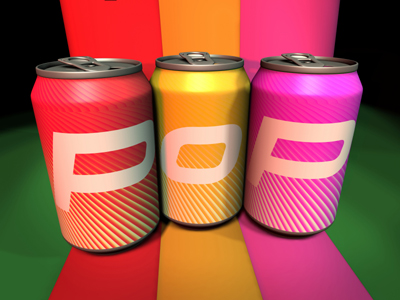
Pop Art drew some of its inspiration from commercial products.
Pop Art
Pop Art turns everyday images into bold artwork, from adverts to comics. Explore the key ideas, then test what you know with the quiz below.
1 .
Pop Art emerged in which decade?
The 1920s
The 1980s
The 1850s
The 1950s
It emerged first in the UK, in the middle of the 1950s, and later in that same decade in America
2 .
Pop Art's main influence came from which aspect of culture?
Mass-produced consumer items
Classical music and opera
Hand-crafted art
Interpretive dance
Pop Art employed aspects of mass culture, such as advertising, comic books and mundane cultural objects such as tins of soup!
3 .
What did the founders of the UK 'branch' of Pop artists first call themselves?
The Standalone Group
The Outsiders' Group
The Independent Group
The Unaffiliated Group
They were a gathering of young painters, sculptors, architects, writers and critics who challenged approaches to culture as well as traditional views of fine art
4 .
Which sculptor was one of the co-founding members of the group?
Aristide Maillol
Eduardo Paolozzi
Ernst Barlach
Jacob Epstein
At the first group meeting in 1952, Paolozzi presented material of "found objects" such as advertising, comic book characters, magazine covers and various mass-produced graphics that mostly represented American popular culture
5 .
When was the term 'Pop Art' first officially used?
January 1950
August 1970
July 1966
December 1962
The first use of this official 'label' for the movement was the occasion of a "Symposium on Pop Art" organised by the Museum of Modern Art
6 .
One Pop artist in particular was famous for his colourful portrait of Marilyn Monroe and tins of Campbell soup. Who was he?
James Rosenquist
Roy Lichtenstein
Andy Warhol
Jim Dine
Even the labelling on the packaging box containing retail items has been used as subject matter in Pop Art. Apart from the famous soup tins, Warhol also made sculptures of Brillo Soap boxes!
7 .
How did British Pop Art differ from American Pop Art?
British Pop Art used similar influences to American Pop Art, but viewed from a distance
British Artists gave more focus to including other styles of art
American Pop Art was far superior in its quality
British Pop Art was ultimately banned
Early Pop Art in Britain was fuelled by American popular culture but viewed from a distance, while the American artists were inspired by what they saw and experienced living within that culture
8 .
What kind of Pop Art is Roy Lichtenstein most noted for?
Collages of people's faces
Cutouts of soap boxes
Collections of postcards
Cartoon strip style art
Lichtenstein's work probably encapsulates the essence of Pop Art better than any other artist
9 .
How did the majority of Pop artists begin their careers?
As art lecturers
As artist's models
In commercial art
As soup manufacturers
Andy Warhol was a highly successful magazine illustrator and graphic designer; Ed Ruscha was also a graphic designer, and James Rosenquist started his career as a billboard painter
10 .
Which method of image reproduction was popular amongst several artists of the movement?
Screenprinting
Etching
Hand drawing
Vegetable dying
The mechanical technique was highly suited to the nature of the imagery used in Pop Art, as it produced clean lines and bold colours time after time



**Unlimited Quizzes Await You! 🚀**
Hey there, quiz champ! 🌟 You've already tackled today's free questions.
Ready for more?
Ready for more?
🔓 Unlock UNLIMITED Quizzes and challenge yourself every day. But that's
not all...
not all...
🔥 As a Subscriber you can join our thrilling "Daily Streak" against other
quizzers. Try to win a coveted spot on our Hall of Fame Page.
quizzers. Try to win a coveted spot on our Hall of Fame Page.
Don't miss out! Join us now and keep the fun rolling. 🎉
**Unlimited Quizzes Await You! 🚀**
Hey there, quiz champ! 🌟 You've already tackled today's free questions. Ready for more?
🔓 Unlock UNLIMITED Quizzes and challenge yourself every day. But that's not all...
🔥 As a Subscriber you can join our thrilling "Daily Streak" against other quizzers. Try to win a coveted spot on our Hall of Fame Page.
Don't miss out! Join us now and keep the fun rolling. 🎉




© Copyright 2016-2026 - Education Quizzes
Work Innovate Ltd - Design | Development |
Marketing
