




Ask the AI Tutor
Need help with Media Choices? Ask our AI Tutor!
AI Tutor - Lucy
Connecting with Tutor...
Please wait while we establish connection
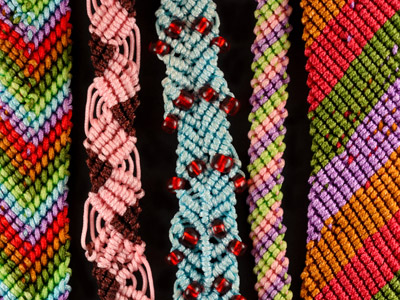
Macramé is a form of Textile Art.
Media Choices
Choose the right media for your artwork. Explore how pencils, paint, and ink behave, and how paper choice changes colour, texture, and control in KS3 Art and Design.
1 .
Which of the following is not a printing method?
Lithography
Etching
Screen printing
Gouache
Gouache is a type of paint which can be laid down in quite thick layers
2 .
Acrylic paint is a water-based version of which other medium?
Pencil crayons
Pastels
Oil paints
Charcoal
Acrylic paints are versatile and easier to clean up than oils as they can be washed with water
3 .
What do we call a stick of pure, powdered pigment and a binding agent moulded into a stick?
A pastel
A tube
A crayon
A pencil
Pastels are halfway between painting and drawing and can provide all sorts of interesting finishes
4 .
Photography, graphics software and paint programs are all good examples of what?
Magazine titles
DIY categories
Job titles
Digital media
Digital media is a fast-moving and exciting way to change images
5 .
What is ModRoc?
A fixative
A modelling material
A painting device
A brush holder
ModRoc is a medium which combines plaster-covered bandages. When they are moistened, they can be moulded into sculptures
6 .
What might you do to a charcoal sketch to stop it from smudging?
Lay tissue paper over the top
Store it in a paper bag
Rub away all the smudges
Use a fixative spray to seal it
Special fixatives can be expensive - some artists use cheap hairspray!
7 .
Weaving, macramé, batik and neeedle point are all disciplines of which kind of medium?
Landscaping
Drawing
Textiles
Sculpture
They all require working with a textile, fabric or other material base
8 .
Which one of the following media is ideal for working with outdoors?
Lino cutting
Pen and ink
Watercolour paints
Screen printing
Watercolours are lightweight and very portable, making them ideal for using 'on location'!
9 .
Which of the following is not an example of three-dimensional media?
Polymer
Graphite
Balsa
Resin
Graphite is generally used for drawing whereas the others would be used for three-dimensional work
10 .
Which of the following media would you expect a ceramic artist to make?
A blown glass bauble
A wooden carving
A copper bracelet
A glazed plate
Ceramic artists work with clay to make pottery



**Unlimited Quizzes Await You! 🚀**
Hey there, quiz champ! 🌟 You've already tackled today's free questions.
Ready for more?
Ready for more?
🔓 Unlock UNLIMITED Quizzes and challenge yourself every day. But that's
not all...
not all...
🔥 As a Subscriber you can join our thrilling "Daily Streak" against other
quizzers. Try to win a coveted spot on our Hall of Fame Page.
quizzers. Try to win a coveted spot on our Hall of Fame Page.
Don't miss out! Join us now and keep the fun rolling. 🎉
**Unlimited Quizzes Await You! 🚀**
Hey there, quiz champ! 🌟 You've already tackled today's free questions. Ready for more?
🔓 Unlock UNLIMITED Quizzes and challenge yourself every day. But that's not all...
🔥 As a Subscriber you can join our thrilling "Daily Streak" against other quizzers. Try to win a coveted spot on our Hall of Fame Page.
Don't miss out! Join us now and keep the fun rolling. 🎉




© Copyright 2016-2026 - Education Quizzes
Work Innovate Ltd - Design | Development |
Marketing
