




Ask the AI Tutor
Need help with The Surrealists? Ask our AI Tutor!
AI Tutor - Lucy
Connecting with Tutor...
Please wait while we establish connection
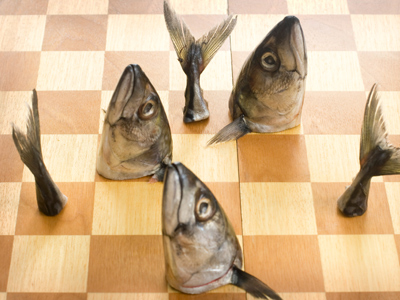
The Surrealists created dreamlike or seemingly insane works of art.
The Surrealists
Surrealist artists explored strange ideas, unexpected combinations, and imaginative scenes. Discover key Surrealist techniques and how meaning can shift, then try the quiz below.
1 .
When did Surrealism begin?
The 1940s
The 1850s
The 1980s
The 1920s
Artists painted unnerving, illogical scenes with photographic precision, creating strange and unnerving worlds as they attempted to recreate the subconscious
2 .
A key artist in the movement, Salvador Dali, is best known for his work showing melting clocks in a surreal landscape. What is it called?
The Repetition of Time
The Unwinding of Clocks
The Occurrence of Thought
The Persistence of Memory
The general interpretation of the work is that the soft watches are a rejection of the assumption that time is rigid
3 .
Which aspect of Sigmund Freud's work inspired the Surrealists?
Dream analysis
Word games
Ink blot interpretation
Grief therapy
Freud's work with free association, dream analysis, and the unconscious was of utmost importance to the Surrealists in developing methods to free imagination
4 .
Chirico's famous work, 'Le Mauvais Génie d’un Roi' is translated as what?
The Badness of Royalty
The Wicked Behaviour of a Prince
The Rudeness of the Queen
The Evil Genius of a King
Chirico founded the 'scuola metafisica' art movement, which profoundly influenced the Surrealists
5 .
What happened to Surrealism in the 1930s?
The infighting within the movement caused its collapse
The movement moved back towards a more traditional way of working
Surrealism reached a larger public audience than ever before
Most artists left the movement to pursue other careers
A British Surrealist group emerged in Britain and Surrealist leaders saw this era as the pinnacle of the movement
6 .
When and how was the term 'Surrealism' first used?
In 1927, to describe a painting
In 1903, in the preface to a play
In 1909, as the name of an exhibition
In 1901, as the title of a book
'The Breasts of Tiresias' (Les mamelles de Tirésias) is a surrealist play by Guillaume Apollinaire. He used the term in his preface to the play
7 .
Another key Surrealist, Joan Miró, famously declared what?
A destruction of the establishment
A ruination of the academy
An overthrowing of the rule makers
An assassination of painting
He favoured a completely renegade style, which did not adhere to any conventions of the time
8 .
What key event happened to Surrealism in 1924
The Surrealists looked to the Romantics for inspiration
The Surrealists adopted a more regulated style
The Surrealist movement split into two factions
The Surrealists held a special exhibition
The two leaders of the factions clashed regularly, sometimes physically fighting over their right to be called Surrealists
9 .
Surrealist René Magritte challenged conceptions of reality. What was the subject of his painting entitled 'This is not a pipe'?
A cigarette
A matchstick
An ashtray
A pipe
He wanted people to look at his work and think, 'What does that mean?'
10 .
A huge exhibition of Surrealism was held in Paris in 1938. What were visitors to the exhibition given?
A torch
A raincoat
A pocket watch
A paint brush
The Surrealists wanted to create an exhibition which in itself would be a creative act



**Unlimited Quizzes Await You! 🚀**
Hey there, quiz champ! 🌟 You've already tackled today's free questions.
Ready for more?
Ready for more?
🔓 Unlock UNLIMITED Quizzes and challenge yourself every day. But that's
not all...
not all...
🔥 As a Subscriber you can join our thrilling "Daily Streak" against other
quizzers. Try to win a coveted spot on our Hall of Fame Page.
quizzers. Try to win a coveted spot on our Hall of Fame Page.
Don't miss out! Join us now and keep the fun rolling. 🎉
**Unlimited Quizzes Await You! 🚀**
Hey there, quiz champ! 🌟 You've already tackled today's free questions. Ready for more?
🔓 Unlock UNLIMITED Quizzes and challenge yourself every day. But that's not all...
🔥 As a Subscriber you can join our thrilling "Daily Streak" against other quizzers. Try to win a coveted spot on our Hall of Fame Page.
Don't miss out! Join us now and keep the fun rolling. 🎉




© Copyright 2016-2026 - Education Quizzes
Work Innovate Ltd - Design | Development |
Marketing
