




Ask the AI Tutor
Need help with Medieval Castles 01? Ask our AI Tutor!
AI Tutor - Lucy
Connecting with Tutor...
Please wait while we establish connection
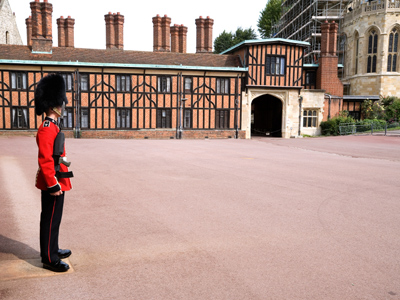
Castles were symbols of authority not only for the king, but also for barons.
Medieval Castles 01
Medieval castles were strong stone fortresses where lords lived, soldiers trained and villagers took shelter. Explore how their walls, towers and gateways helped defenders resist enemy attacks.
1 .
Castles were first built in England after which event?
Julius Caesar's invasion
The Battle of Agincourt
The Norman Conquest
The Spanish Armada
The Normans came from France where they used castles to protect themselves from invaders from further north like the Vikings
2 .
Which King had the first castles built?
Harold II
Stephen
William I
William II
He was also known as William the Conqueror
3 .
William was worried about attacks by which people?
Huns
Jutes
Saxons
Vikings
He had defeated the Saxons at the Battle of Hastings
4 .
What were the earliest castles made of?
Brick
Concrete
Earth and wood
Sand and pebbles
Using these made it possible to build a castle in just a few weeks
5 .
A wooden fort built on top of a mound was called a .......
Mite
Moat
Motte
Mount
It protected the most important people
6 .
The enclosed area around the motte was the .......
Bailey
Bailiff
Bailrigg
Bewley
People often lived within the bailey
7 .
What usually protected a motte and bailey castle?
A high hedge
A line of trees
A wooden fence
Electric fences
A wooden bridge or ladder linked the motte to the bailey
8 .
The wooden fence had what special name?
Balustrade
Palisade
Palister
Palladio
A palisade is a simple fence built from stakes of wood hammered into the ground and often sharpened at the top
9 .
As well as the king, castles were symbols of authority for whom?
Barons
Lord Mayors
Priests
Schoolteachers
By 1070 about 400 had been built
10 .
What was an advantage of motte and bailey castles?
The wood rotted fairly quickly
They did not last for very long
They were cheap and quick to build
They were easily set on fire
It was reported that the motte and bailey castle at Dover was built in just eight days
Our Social Circles




**Unlimited Quizzes Await You! 🚀**
Hey there, quiz champ! 🌟 You've already tackled today's free questions.
Ready for more?
Ready for more?
🔓 Unlock UNLIMITED Quizzes and challenge yourself every day. But that's
not all...
not all...
🔥 As a Subscriber you can join our thrilling "Daily Streak" against other
quizzers. Try to win a coveted spot on our Hall of Fame Page.
quizzers. Try to win a coveted spot on our Hall of Fame Page.
Don't miss out! Join us now and keep the fun rolling. 🎉
**Unlimited Quizzes Await You! 🚀**
Hey there, quiz champ! 🌟 You've already tackled today's free questions. Ready for more?
🔓 Unlock UNLIMITED Quizzes and challenge yourself every day. But that's not all...
🔥 As a Subscriber you can join our thrilling "Daily Streak" against other quizzers. Try to win a coveted spot on our Hall of Fame Page.
Don't miss out! Join us now and keep the fun rolling. 🎉
© Copyright 2016-2026 - Education Quizzes
Work Innovate Ltd - Design | Development |
Marketing
