




Ask the AI Tutor
Need help with Information (Reliability, Validity and Bias) 01? Ask our AI Tutor!
AI Tutor - Lucy
Connecting with Tutor...
Please wait while we establish connection
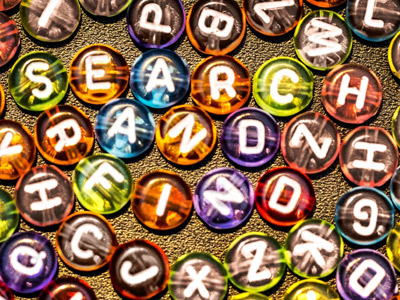
To find information on the internet you use a search engine.
Information (Reliability, Validity and Bias) 01
Not all information is trustworthy. Learn how to check reliability, validity and bias, so your data conclusions are fair, accurate, and backed by evidence.
1 .
The internet is a source of information. What is a URL?
A list of search results
A search engine
The address of a web page
The name of a web page
The URL tells a browser where to find the website.
2 .
URL stands for .......
Un-identifiable Resource Locator
Uniform Readable Locator
Uniform Recycling Locator
Uniform Resource Locator
It was invented in 1994 by Tim Berners-Lee, the person who 'invented' the World Wide Web
3 .
To find information on the internet you use a .......
browser
search engine
spreadsheet
web engine
A browser displays information but search engines are used to find it
4 .
Search Engines produce lots of results which .......
are nearly always written by experts in a subject
are usually not checked by anybody
can always be trusted
have always been checked by experts
Anybody can create a web resource about anything. Search engines work automatically, no-one checks if the results are sites containing reliable information
5 .
Lots of web resources contain opinions. An opinion is .......
a statement which has no truth
an argument that can be proved
someone's point of view
the truth about something
The author may or may not have any real expertise
6 .
Some authors select information to favour a viewpoint.
This could mean their information is biased
This is normal practice and can be ignored
This means the viewpoint should be ignored
This is OK so long as the information is factual
This is normal, for example, someone who doesn't believe that global warming is real will choose information to back up their claims, whether it is valid or not. It can sometimes be very difficult to be objective
7 .
An opinion or viewpoint is biased if .......
it has anything to do with politics
I don't like it
it ignores facts which don't agree with it
it is based on facts which I don't agree with
Any facts and observations that don't agree with a theory should be checked to determine if the theory is wrong and needs changing or to find out if something regarded as being a fact is actually correct
8 .
Website resources are not likely to be biased if .......
the authors name is given
the author has a title like Dr. or Prof.
the web site has professional looking graphics
None of these
Sadly it's not that easy to tell. All sites should be validated. If you are not sure about a site, it would be worth having a word with a teacher
9 .
Which is not a good form of website validation?
Carefully entering the URL in the address bar
Finding what other sites are linked to a site
Looking up a domain name's WHOIS record
Using a search engine to check an author
Even doing the other three things does not guarantee that the information on a site is valid
10 .
Which of these is a fact?
All scientists believe in global warming
It always rains in Wales
London is the capital city of England
Sunderland is the greatest football team in the country
Be careful not to confuse a fact with an opinion



**Unlimited Quizzes Await You! 🚀**
Hey there, quiz champ! 🌟 You've already tackled today's free questions.
Ready for more?
Ready for more?
🔓 Unlock UNLIMITED Quizzes and challenge yourself every day. But that's
not all...
not all...
🔥 As a Subscriber you can join our thrilling "Daily Streak" against other
quizzers. Try to win a coveted spot on our Hall of Fame Page.
quizzers. Try to win a coveted spot on our Hall of Fame Page.
Don't miss out! Join us now and keep the fun rolling. 🎉
**Unlimited Quizzes Await You! 🚀**
Hey there, quiz champ! 🌟 You've already tackled today's free questions. Ready for more?
🔓 Unlock UNLIMITED Quizzes and challenge yourself every day. But that's not all...
🔥 As a Subscriber you can join our thrilling "Daily Streak" against other quizzers. Try to win a coveted spot on our Hall of Fame Page.
Don't miss out! Join us now and keep the fun rolling. 🎉




© Copyright 2016-2026 - Education Quizzes
Work Innovate Ltd - Design | Development |
Marketing
