




Ask the AI Tutor
Need help with Fictional Creatures 1? Ask our AI Tutor!
AI Tutor - Lucy
Connecting with Tutor...
Please wait while we establish connection
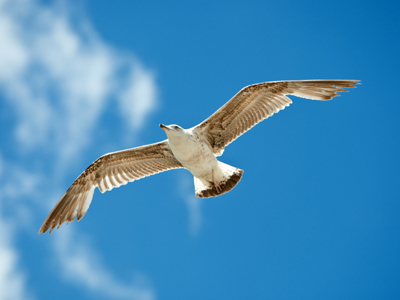
Richard Bach's Jonathan Livingston was a seagull.
Fictional Creatures 1
Fictional creatures fill stories with wonder, danger and mystery. This quiz explores how authors invent dragons, unicorns and other beings to symbolise fears, hopes and beliefs.
1 .
What type of bird is Jonathan Livingston in Richard Bach's 1970 novella?
An albatross
A crow
A raven
A seagull
Bach is himself a pilot and many of his books are related to flying
2 .
Which fish appears in Doulas Adams' The Hitchhiker's Guide to the Galaxy?
Babble fish
Babel Fish
Bubble fish
Burble fish
If you put it in your ear you can understand alien languages
3 .
In the 1974 novel by Richard Adams, what type of creature is the title character, Shardik?
A bear
A fox
A rabbit
A wolf
Adams is most famous for his rabbit adventure novel Watership Down
4 .
In Rudyard Kipling's Mowgli stories, what type of creature is Kaa?
A bear
An eagle
A mongoose
A python
Kipling thought the sound of his name suggested the hiss-spit of a snake
5 .
What type of animal is the Empress of Blandings, who appears in several P G Wodehouse stories?
A cow
A horse
A pig
A sheep
She's a black Berkshire sow belonging to Lord Emsworth
6 .
Which science fiction author created the Triffids?
Brian Aldiss
Isaac Asimov
J G Ballard
John Wyndham
The Day of the Triffids was published in 1951
7 .
In Herman Melville's Moby-Dick, what is the name of the whaling captain who hunts the title character?
Captain Ahab
Captain Bligh
Captain Nemo
Captain Queeg
The book tells the story of Ahab's obsessive hunt for the white whale Moby-Dick who destroyed his ship and severed his leg on a previous voyage
8 .
In Alice's Adventures in Wonderland, which creature sings Beautiful Soup?
The Dormouse
The Gryphon
The March Hare
The Mock Turtle
In chapter nine The Mock Turtle's Story, The Mock Turtle is sad and tries to tell the story of how he used to be a real turtle when he was at school
9 .
What is the name of the elephant-like creature mentioned in the Winnie-the-Pooh stories?
Ellyfump
Heffalump
Hellyfump
Phumple
Winnie-the-Pooh appeared in 4 volumes by A A Milne: Winnie-the-Pooh, The House at Pooh Corner, When We Were Very Young and Now We Are Six
10 .
In Richmal Crompton's Just William stories, what is the name of William's mongrel dog?
Jumble
Rumble
Stumble
Tumble
There are a total of 39 books in the Just William series, published between 1921 and 1970 - over which time William Brown remains 11 years old!



**Unlimited Quizzes Await You! 🚀**
Hey there, quiz champ! 🌟 You've already tackled today's free questions.
Ready for more?
Ready for more?
🔓 Unlock UNLIMITED Quizzes and challenge yourself every day. But that's
not all...
not all...
🔥 As a Subscriber you can join our thrilling "Daily Streak" against other
quizzers. Try to win a coveted spot on our Hall of Fame Page.
quizzers. Try to win a coveted spot on our Hall of Fame Page.
Don't miss out! Join us now and keep the fun rolling. 🎉
**Unlimited Quizzes Await You! 🚀**
Hey there, quiz champ! 🌟 You've already tackled today's free questions. Ready for more?
🔓 Unlock UNLIMITED Quizzes and challenge yourself every day. But that's not all...
🔥 As a Subscriber you can join our thrilling "Daily Streak" against other quizzers. Try to win a coveted spot on our Hall of Fame Page.
Don't miss out! Join us now and keep the fun rolling. 🎉




© Copyright 2016-2026 - Education Quizzes
Work Innovate Ltd - Design | Development |
Marketing
