




Ask the AI Tutor
Need help with Environmental Treaties? Ask our AI Tutor!
AI Tutor - Lucy
Connecting with Tutor...
Please wait while we establish connection
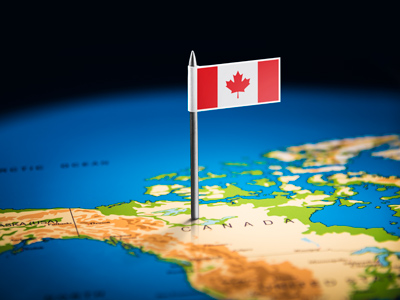
Canada withdrew from the Kyoto Protocol in 2012.
Environmental Treaties
Environmental treaties are global promises to protect our planet. Learn why countries sign agreements, how they work, and how rules can reduce pollution and climate risks.
1 .
Environmental laws have been around for a long time. In 1272 the burning of coal was banned in London by which monarch?
Edward I
Victoria
Charles I
Stephen
As London’s population grew and the forests around it shrank, people started to use coal, rather than wood, for fuel. This produced clouds of toxic gas, hence Edward’s ban
2 .
Whales were first protected when the International Agreement for the Regulation of Whaling was signed in which year?
1887
1937
1967
2007
It's still in force today - unfortunately, fewer than half the countries in the world are bound by the agreement
3 .
The Antarctic Treaty was signed in 1959. What does the treaty forbid on the continent?
Hunting
Mining
Farming
Military activity
As well as banning military activity, the treaty also makes Antarctica a scientific reserve
4 .
In 1963, the Partial Nuclear Test Ban Treaty forbade testing nuclear weapons in which of the following places?
Space
Under the sea
In the atmosphere
All of the above
The treaty prohibited nuclear tests anywhere other than beneath ground. Before then, most nuclear tests were carried out in lands far from the nations doing the testing – places where wildlife and indigenous people were exposed to radiation
5 .
In 1979, a treaty to protect migratory species was signed in which former German capital?
Berlin
Hamburg
Munich
Bonn
Bonn was the capital of West Germany prior to reunification. Sadly, many nations have still not signed the Bonn Convention
6 .
Adopted in 1985, the Vienna Convention is aimed at protecting which part of our atmosphere?
The troposphere (the part we live in)
The ionosphere (where auroras happen)
The ozone layer (protects us from UV radiation)
The exosphere (the highest level)
The treaty set out strategies for reducing CFCs (chlorofluorocarbons) which damage the ozone layer. The ozone layer protects us from ultraviolet light which causes skin cancer
7 .
The UNFCCC came to be in 1992, with the aim of tackling greenhouse gasses. What does UNFCCC stand for?
The United Nations Framework Convention on Climate Change
The United Nations Focus Comittee on Climate Change
The United Nations First Call on Climate Change
The United Nations Fundamental Crisis of Climate Change
The framework limits the amount of greenhouses gasses countries are allowed to produce. However, because over 190 countries are involved and consensus is required, progress has been slow
8 .
Until it was banned in 1994, fourteen countries (including the UK) used to dump what in the ocean?
Plastic waste
Radioactive waste
Human waste (sewage)
Chemical waste
Between 1946 and 1994, 18 times as much nuclear waste entered the oceans as did so in the Fukushima disaster of 2011 - we did this deliberately!
9 .
The Rotterdam Convention was signed by 72 nations in 1998. It controls trade in what?
Elephant ivory
Hazardous chemicals
Endangered species
Oil
The convention forces exporters of hazardous chemicals to use proper labelling, to give directions for safe handling, and to inform users of any known restrictions. However, it does nothing to outlaw them
10 .
The Kyoto Protocol came into force in 2005 as a way to combat greenhouse gasses. It was signed by all but 4 UN members. Which country withdrew its support in 2012?
Australia
The UK
Canada
The USA
Andorra, Palestine, South Sudan, the United States and Canada are the only countries not bound by the Protocol



**Unlimited Quizzes Await You! 🚀**
Hey there, quiz champ! 🌟 You've already tackled today's free questions.
Ready for more?
Ready for more?
🔓 Unlock UNLIMITED Quizzes and challenge yourself every day. But that's
not all...
not all...
🔥 As a Subscriber you can join our thrilling "Daily Streak" against other
quizzers. Try to win a coveted spot on our Hall of Fame Page.
quizzers. Try to win a coveted spot on our Hall of Fame Page.
Don't miss out! Join us now and keep the fun rolling. 🎉
**Unlimited Quizzes Await You! 🚀**
Hey there, quiz champ! 🌟 You've already tackled today's free questions. Ready for more?
🔓 Unlock UNLIMITED Quizzes and challenge yourself every day. But that's not all...
🔥 As a Subscriber you can join our thrilling "Daily Streak" against other quizzers. Try to win a coveted spot on our Hall of Fame Page.
Don't miss out! Join us now and keep the fun rolling. 🎉




© Copyright 2016-2026 - Education Quizzes
Work Innovate Ltd - Design | Development |
Marketing
