




Ask the AI Tutor
Need help with Plastic Pollution? Ask our AI Tutor!
AI Tutor - Lucy
Connecting with Tutor...
Please wait while we establish connection
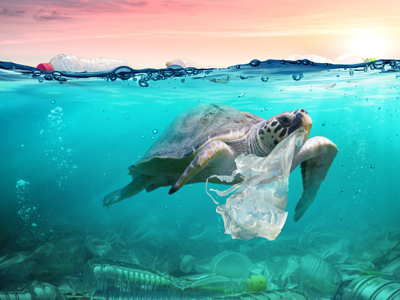
Sea creatures like turtles are threatened by plastic pollution.
Plastic Pollution
Discover plastic pollution and how it harms wildlife and habitats. Learn where plastic comes from, how it travels, and what actions can reduce it.
1 .
Plastic pollution in our oceans is a threat to sealife. How exactly does plastic harm sea creatures?
It starves them to death
It poisons them
It makes reproduction more difficult
All of the above
Many animals mistake plastic for food. It fills their stomachs, so they don't get hungry - then they starve. It's also poisonous - corals that come into contact with plastic have an 89% chance of contracting disease. Also, there is so much plastic on our beaches that it affects the sand's temperature, making turtle eggs less likely to hatch
2 .
How many marine species are harmed by plastic pollution?
At least 700
At least 70
At least 17
At least 7
A study by Plymouth University found that plastic pollution is a danger to a minimum of 700 marine species. The number of animals affected is huge. One estimate says that plastic pollution kills 100 million marine mammals alone every year
3 .
To stop plastic pollution, we need to recycle. What percent of its plastic does the UK recycle?
86%
66%
46%
26%
Sadly, less than half of our plastic gets recyled - most goes to landfills
4 .
Which country is the world’s worst plastic polluter?
The UK
China
India
The USA
India recently overtook China but both produce over 12 million tonnes of plastic waste each year
5 .
Plastic waste is such a problem because it takes so long to break down. How many years does it take a plastic bottle to decompose?
4.5 years
45 years
450 years
4,500 years
Some plastics don't take as long as this, and others take much longer. Plastic bags take 10 to 20 years to disappear, but the worst plastics take up to 1,000 years to rot away
6 .
Areas in the sea where plastic waste collects are known as what?
Marine mosh pits
Ocean garbage patches
Sea trash cans
Naval dumping grounds
There are 5 "ocean garbage patches" which go from the seabed all the way up to the surface. They are huge entities, covering areas as large as Russia!
7 .
Plastic pollution can even get into our drinking water. If you bought a bottle of water, what are the chances it would contain particles of plastic?
25%
50%
75%
90%
A study by the World Health Organisation found an average of 325 plastic particles per litre of bottled water. Tap water fared better – “only” 83% of that contained plastic
8 .
Coral reefs are threatened by plastic pollution as well as climate change. Experts predict that 90% of coral reefs will be dead by which year?
2050
2100
2150
2200
A quarter of all sealife lives in coral reefs, so their future looks bleak - another example of habitat destruction caused by humans
9 .
Tiny particles of plastic are added to cosmetic products and toothpastes. What are the particles called?
Smallballs
Tinybits
Microbeads
Littlelumps
When microbeads are rinsed down a drain (after cleaning your teeth or washing your face) they make their way into rivers and, eventually, the sea. They are then eaten by sea creatures, and ultimately by us. Thankfully the UK banned the sale of products containing microbeads in 2018 but the vast majority of nations still use them
10 .
What can you do to help stop plastic pollution?
Reuse shopping bags
Use a steel, glass or bamboo straw
Pick up any plastic litter you find
All of the above
You can also avoid plastic packaging, use re-usable cups when you buy a tea or coffee, and buy greener clothes which do not contain synthetic materials



**Unlimited Quizzes Await You! 🚀**
Hey there, quiz champ! 🌟 You've already tackled today's free questions.
Ready for more?
Ready for more?
🔓 Unlock UNLIMITED Quizzes and challenge yourself every day. But that's
not all...
not all...
🔥 As a Subscriber you can join our thrilling "Daily Streak" against other
quizzers. Try to win a coveted spot on our Hall of Fame Page.
quizzers. Try to win a coveted spot on our Hall of Fame Page.
Don't miss out! Join us now and keep the fun rolling. 🎉
**Unlimited Quizzes Await You! 🚀**
Hey there, quiz champ! 🌟 You've already tackled today's free questions. Ready for more?
🔓 Unlock UNLIMITED Quizzes and challenge yourself every day. But that's not all...
🔥 As a Subscriber you can join our thrilling "Daily Streak" against other quizzers. Try to win a coveted spot on our Hall of Fame Page.
Don't miss out! Join us now and keep the fun rolling. 🎉




© Copyright 2016-2026 - Education Quizzes
Work Innovate Ltd - Design | Development |
Marketing
