




Ask the AI Tutor
Need help with Annuals - Border Plants 1? Ask our AI Tutor!
AI Tutor - Lucy
Connecting with Tutor...
Please wait while we establish connection

See if you can get 10 out of 10 in this quiz.
Annuals - Border Plants 1
Annual border plants can transform bare soil fast. Explore sowing, spacing, and simple care tips that help your flowers last longer and keep borders looking full.
To see a larger image, click on the picture.
1 .
What is the common name for this plant?

Photograph courtesy of www.flickr.com/photos/gmayfield10/
Black Eyed Susan
Black Eyed Sharon
Yellow Dressed Sheila
Yellow Dressed Shirley
- The plant genus is Rudbeckia.
- Many different varieties are available.
- The most usual flower colour combination is black and yellow but you can also buy reds and whites.
- Prefers a warm situation in full sun and if this is provided they will do well even on poor soils.
- Like many annual plants the seed is cheap enough to sow during the spring in the border where the plants are destined to remain.
2 .
What is a common name for Portulacas?
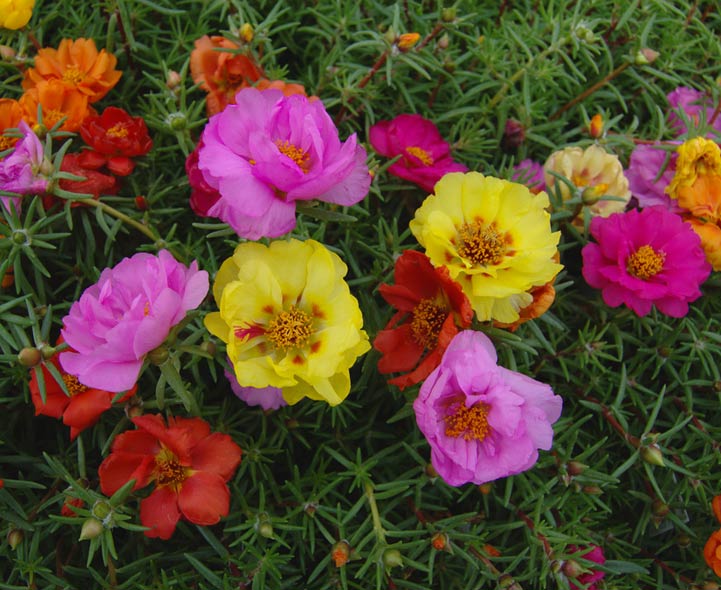
Photograph courtesy of www.flickr.com/photos/ejchang/
Algae rose
Fern rose
Lichen rose
Moss rose
- The species most often used as a brightly coloured annual plant is Portulaca grandiflora.
- Can grow up to 30cm tall but modern, compact strains tend to be less than 20cm.
- Many plants have double and semi-double flowers.
- It will thrive on any well-drained site that is in full sun.
- Spreads readily and requires very little attention.
3 .
What type of flower is this?

Photograph courtesy of Thai Jasmine
Carnation
Cosmos
Dahlia
Zinnia
- Belongs to the Aster family.
- There are about 20 different species and innumerable garden hybrids.
- They love heat. If germinating in a glasshouse early in the year then the temperature must not fall below 15 degrees C.
- They dislike being transplanted so most gardeners sow seed in the border where they will remain for their entire life.
- Come in a dazzling array of colours and butterflies find them irresistible!
4 .
What is the name of this flower?
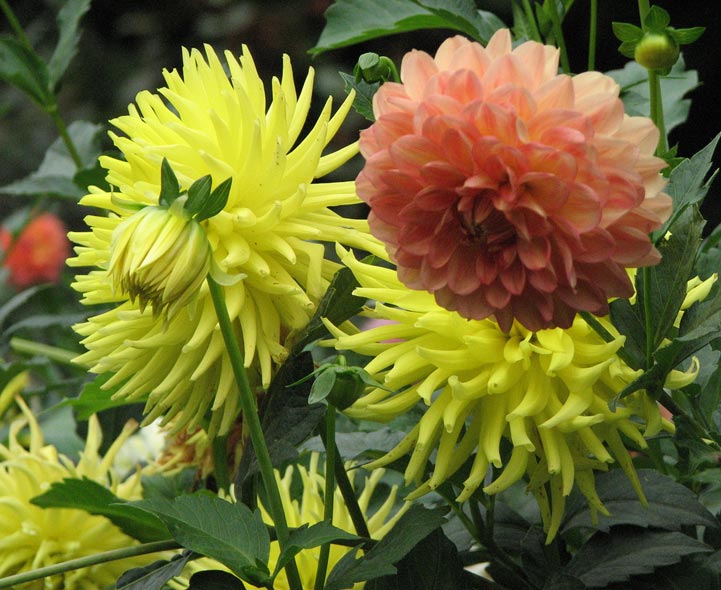
Photograph courtesy of www.flickr.com/photos/sin_agua/
Begonia
Chrysanthemum
Dahlia
Eustoma
- The plants with the largest flowers need to be grown from tubers but there are now many good 'bedding' varieties that flower the first year from seed.
- The seeds are large and easy to handle - sow inside in late February/March.
- Protect from frost - the slightest one will kill them!
- They prefer a rich loam in full sun but satisfactory results can often be obtained in less than ideal conditions.
5 .
Mature Sunflower heads almost always point in the same direction - which direction?

Photograph courtesy of 3268zauber
Track the sun
East
South
West
- Belongs to the genus Helianthus.
- Native to South America.
- Grown commercially in the UK for birdseed.
- Sunflower oil is used in cooking and to produce margarine - it is cheaper than olive oil.
- It's fun to see how tall a 'normal' one will grow but many dwarf varieties are now available.
- Easy to grow from seed.
- Must have full sun.
Young Sunflower plants do track the sun but mature ones settle on constantly pointing East. Remember this when you are planning where to put them!
6 .
This is a closeup of the flower of which garden plant?
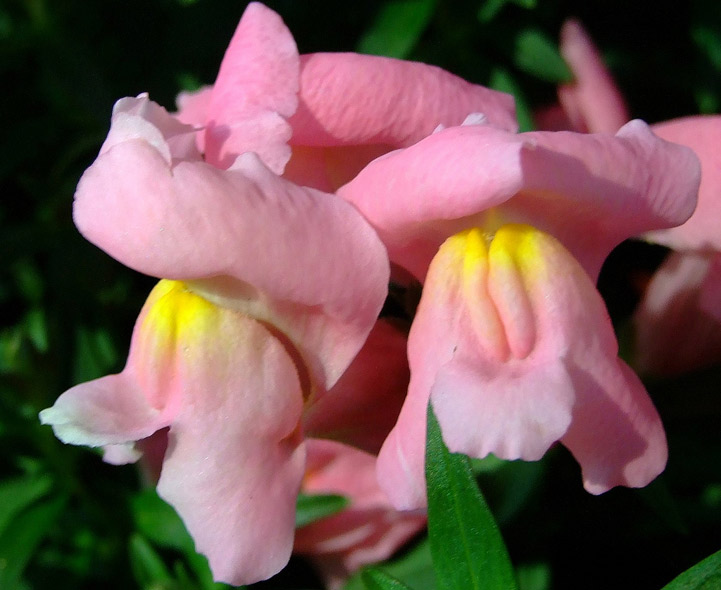
Photograph courtesy of Kaiyanwong223
Antennaria
Anthemis
Anthurium
Antirrhinum
- The plant is usually known as the Snapdragon because when the flowers are squeezed they resemble a dragon opening its mouth!
- Seed is available in a wide range of flower colours and with different heights to suit varying situations.
- Quite hardy and in southern and coastal areas they can be planted out in the autumn for flowering the next year.
- Likes to be in good soil and in full sun.
- Dead-heading will prolong the flowering season.
7 .
Sweet Williams are often used as cut flowers. Which family do they belong to?
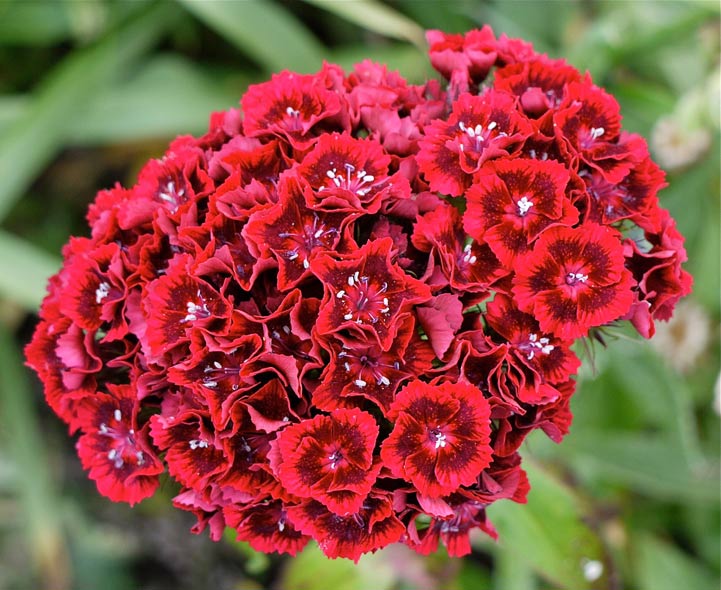
Photograph courtesy of Mick/Lumix
Aster
Chrysanthemum
Dianthus
Iris
- Flowers come in a whole range of colours and seed is usually purchased as 'mixed'.
- As a cut flower they are normally sown in summer and then they bloom in spring.
- Annual varieties can be sown in early spring for flowering later in the same year.
- Kate Middleton included Sweet Williams in her bouquet when she married Prince William!
- The picture shows the typical flower formation - thirty or more individual flowers in a dense cluster.
Sweet Williams are Dianthus Barbatus. They look very unlike the familiar garden pinks BUT the frilled edge to the petals in each flower is a giveaway that they belong to the Dianthus family
8 .
What is the common name for Gaillardia?
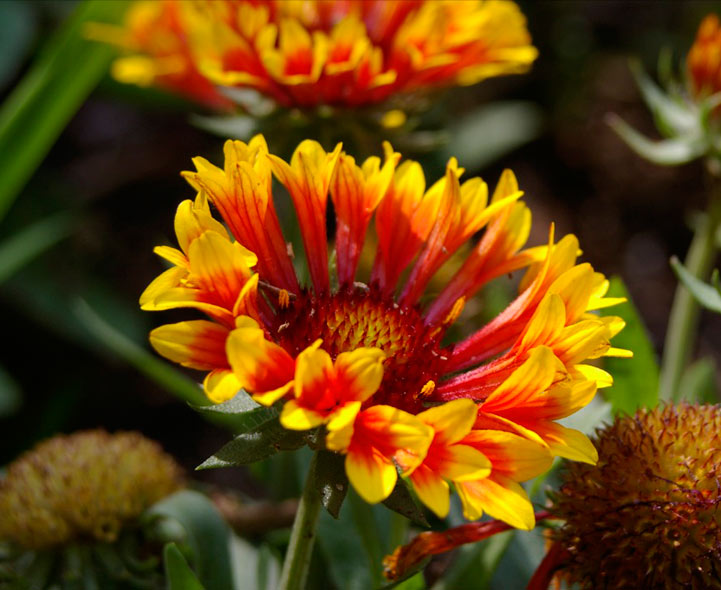
Photograph courtesy of www.flickr.com/photos/kfisto/
Blanket Flower
Duvet Flower
Pillow Flower
Sheet Flower
- Many varieties are available, some perennial and some that are usually treated as annuals.
- Seed sown early in the year will provide a good crop of flowers in the summer.
- Loves hot, dry conditions and are ideal for sandy soils where moisture retention is a problem.
- The long wiry stems are often used as cut flowers.
This name is most often used in America where it is said that Native Americans made blankets with similar colouring to gaillardia flowers
9 .
It is possible that a colour was named after a wild species of Dianthus. What colour is it?
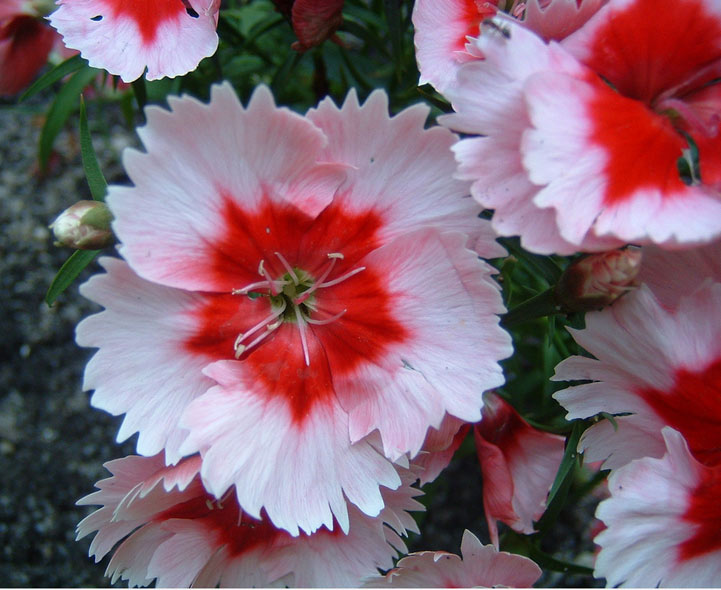
Photograph courtesy of www.flickr.com/photos/asturnut/
Lavender
Lilac
Pink
Salmon
- There are over 300 different species of Dianthus growing in the wild - many are perennials.
- Generally the named plants found in garden centres are propagated by cuttings and are perennial whilst the ones sold in 'packs' as bedding plants are grown from seed and usually treated as annuals.
- Fairly easy to grow from seed yourself.
- Ensure that the plants are regularly dead-headed in order to keep them flowering.
The plants are often known as 'pinks'. The original meaning of pink inferred a perforated pattern as at the outside of Dianthus flowers
10 .
Plants that in the UK are known as Tourenia are known as what in the USA?
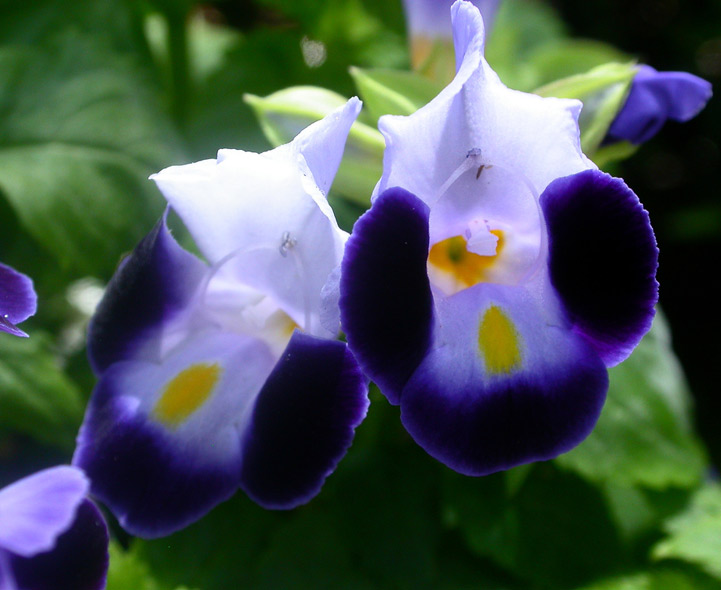
Photograph courtesy of www.flickr.com/photos/tim-waters/
Tarenia
Terenia
Torenia
Turenia
- The species most often grown is Tourenia fournieri.
- Sometimes called Wishbone flowers.
- Flowers are a distinctive shape and somewhat similar to Antirrhinums (Snapdragons) to which they are closely related.
- The plants grow best in hot humid conditions and will keel over and die if their roots get dry.
- A good choice for the more shady parts of a garden - even under trees.
In American they drop the 'u' the same way that they do with 'favorite' and 'color'!



**Unlimited Quizzes Await You! 🚀**
Hey there, quiz champ! 🌟 You've already tackled today's free questions.
Ready for more?
Ready for more?
🔓 Unlock UNLIMITED Quizzes and challenge yourself every day. But that's
not all...
not all...
🔥 As a Subscriber you can join our thrilling "Daily Streak" against other
quizzers. Try to win a coveted spot on our Hall of Fame Page.
quizzers. Try to win a coveted spot on our Hall of Fame Page.
Don't miss out! Join us now and keep the fun rolling. 🎉
**Unlimited Quizzes Await You! 🚀**
Hey there, quiz champ! 🌟 You've already tackled today's free questions. Ready for more?
🔓 Unlock UNLIMITED Quizzes and challenge yourself every day. But that's not all...
🔥 As a Subscriber you can join our thrilling "Daily Streak" against other quizzers. Try to win a coveted spot on our Hall of Fame Page.
Don't miss out! Join us now and keep the fun rolling. 🎉




© Copyright 2016-2026 - Education Quizzes
Work Innovate Ltd - Design | Development |
Marketing
