




Ask the AI Tutor
Need help with Annuals - Container Plants 2? Ask our AI Tutor!
AI Tutor - Lucy
Connecting with Tutor...
Please wait while we establish connection
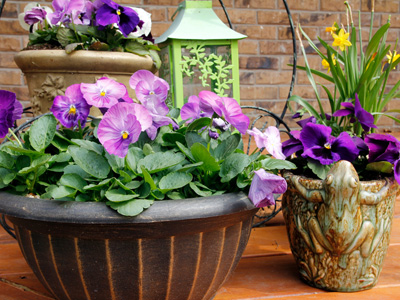
Choosing only one colour can have a striking effect.
Annuals - Container Plants 2
Container annuals can look instantly lush, but crowding causes problems. This quiz explores how to plant, position, and care for pots so flowers stay healthy.
To see a larger image, click on the picture.
1 .
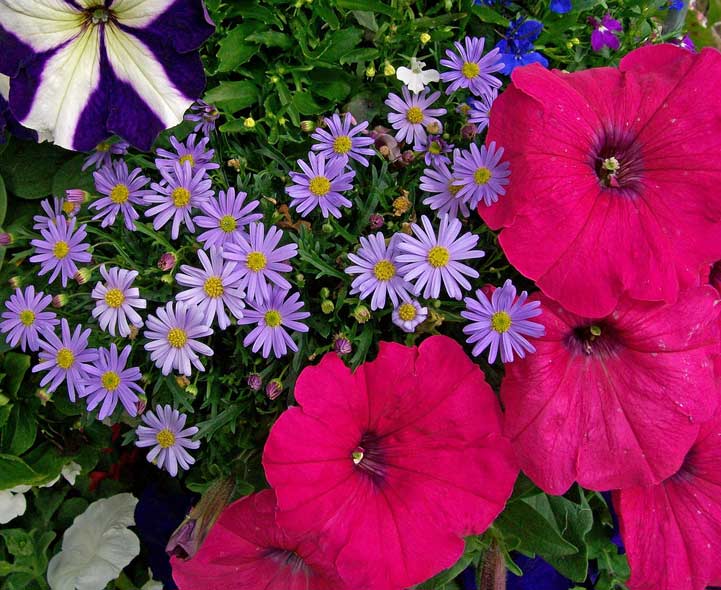
In this mixed assortment of annuals, which of the following plants is not present?
Photograph courtesy of Daves Portfolio
Brachycome
Impatiens
Lobelia
Petunia
- Patio containers are not generally exposed to drying winds as much as are hanging baskets and therefore they do not need quite as much water.
- All containers will need regular feeding.
- Don't be in too much of a rush to get planted up in the Spring - a late frost can do untold damage.
- Don't try to do too much! One or two good containers will be more appreciated than twenty poor ones!
Brachcome = lilac flowers in centre. Lobelia = small blue and purple flowers in top right. Petunia = blue and white flowers in top left and pink flowers in bottom right
2 .
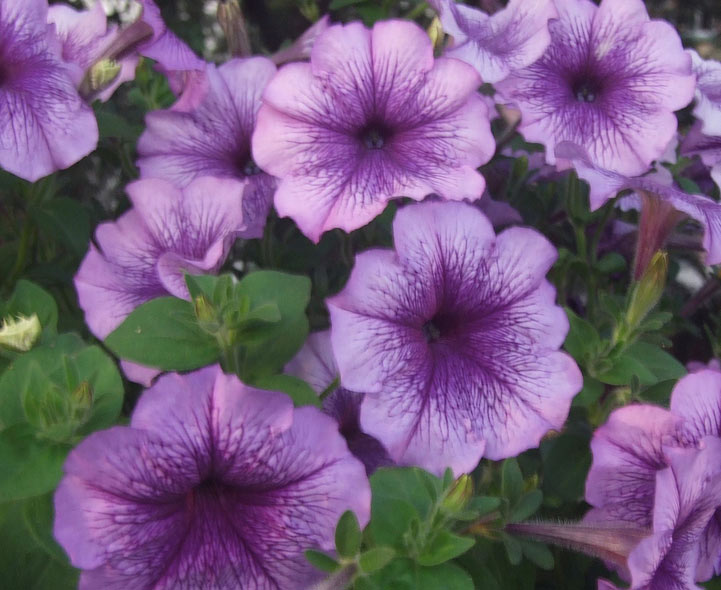
Surfinias are closely related to which common vegetable?
Photograph courtesy of Kaiyanwong223
Asparagus
Cabbage
Carrot
Potato
- Surfinias are often called "Trailing Petunias" and that is exactly what they are.
- New varieties are being bred all the time including some noteworthy double-flowered ones.
- Especially successful in containers that are watered infrequently - they thrive in dry conditions.
- If growing in a mixed container it might be necessary to prune them now and again to prevent them taking over.
Both Surfinias and Potatoes belong to the Solanaceae family
3 .
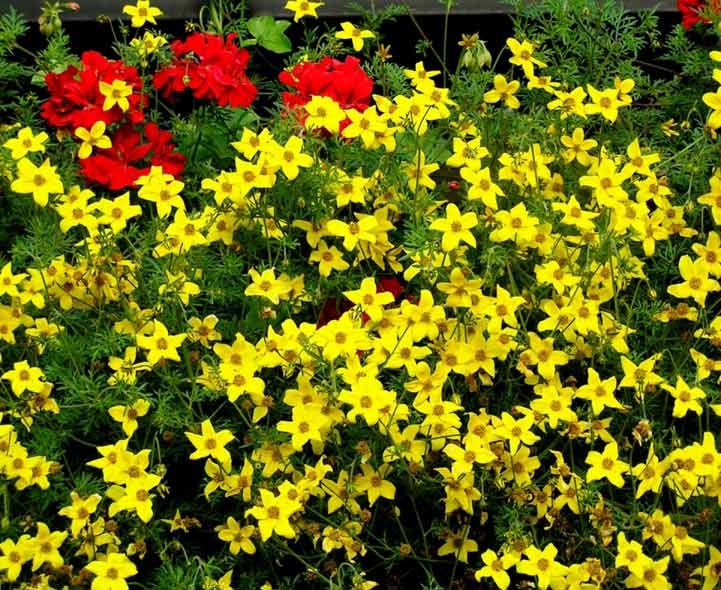
What is the name of the yellow-flowered plant that is providing a striking contrast to the red Geraniums?
Photograph courtesy of Pcgn7
Begonia
Bidens
Billbergia
Browallia
- Masses of brilliant yellow flowers.
- The species grown in hanging baskets and tubs is .... ferulifolia.
- Performs best in full sun.
- Spills over the side of containers and just keeps growing!
- Usually one of the first plants to come into flower in a mixed planting and continues flowering all through the summer.
- Pinch frequently in order to induce sideshoots and thereby produce a greater concentration of flowers.
4 .
What type of Begonia is this?
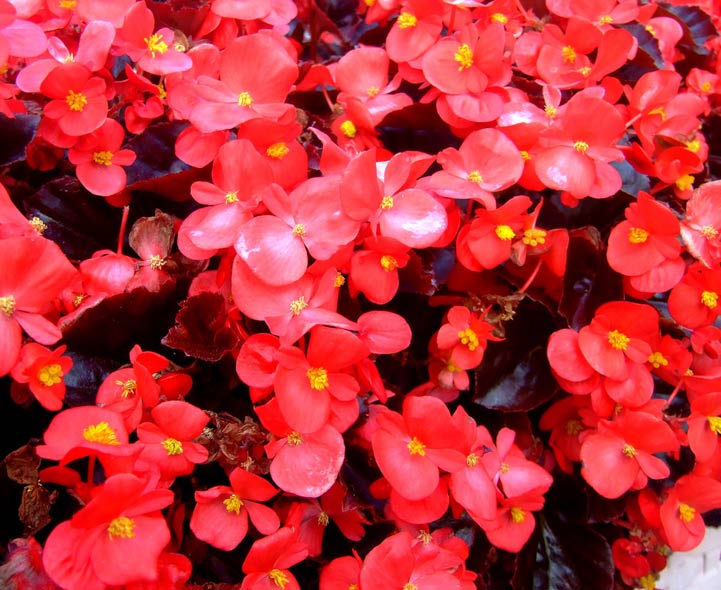
Photograph courtesy of Kaiyanwong223
Selaginella
Selinum
Semperflorens
Sempervivum
- An old favourite and always reliable
- Sometimes known as Wax Begonias because of their waxy-looking foliage.
- Leaves are shiny and can be either green or brown.
- Seeds are microscopic and difficult to germinate so it is usually best to buy plug plants or larger, potted plants.
- Keeps its habit throughout the summer and does not go as leggy as Impatiens (with which it is often compared as a multi-use annual plant).
5 .
What is the most popular variety of Bacopa for use in hanging baskets?
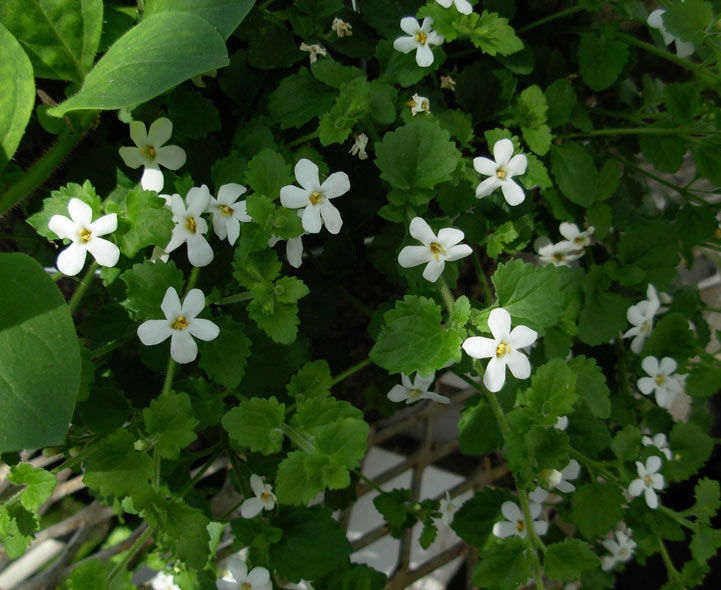
Photograph courtesy of www.flickr.com/photos/jenessalynn/
Shooting Stars
Snowflake
Sparklers
Twinkletoe
- Carries a profusion of tiny white flowers that serve as a contrast to more vividly coloured plants in mixed plantings.
- A pink form is available but is seldom seen.
- Bacopa belongs to a family of mainly aquatic plants so it comes as no surprise that the plant likes its compost to be kept moist.
- Starts life looking very delicate but quickly forms a dense mat of foliage that can hold its own against all other basket and tub plants.
6 .
Which of the following common names is NOT used for Lysimachia Nummularia?
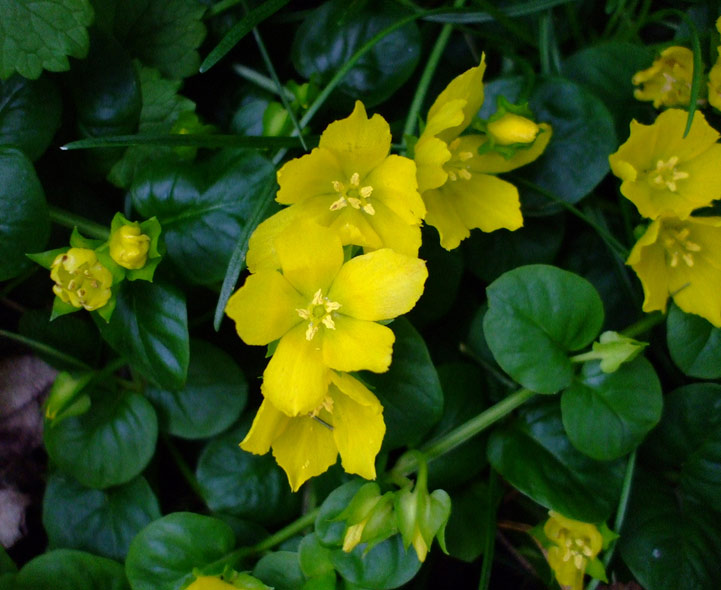
Photograph courtesy of Dufusis1ofus
Creeping Jenny
Moneywort
St John's Wort
Twopenny grass
- This is one of the few patio plants that is hardy - it can withstand many degrees of frost.
- Usually propagated from cuttings each year because older plants tend to look dishevelled.
- A good trailing plant in hanging baskets but it needs to be kept constantly moist if it is to retain its shiny foliage and sparkling flowers.
St John's Wort is the common name of Hypericum
7 .
Which of the following plants is not present in this hanging basket?
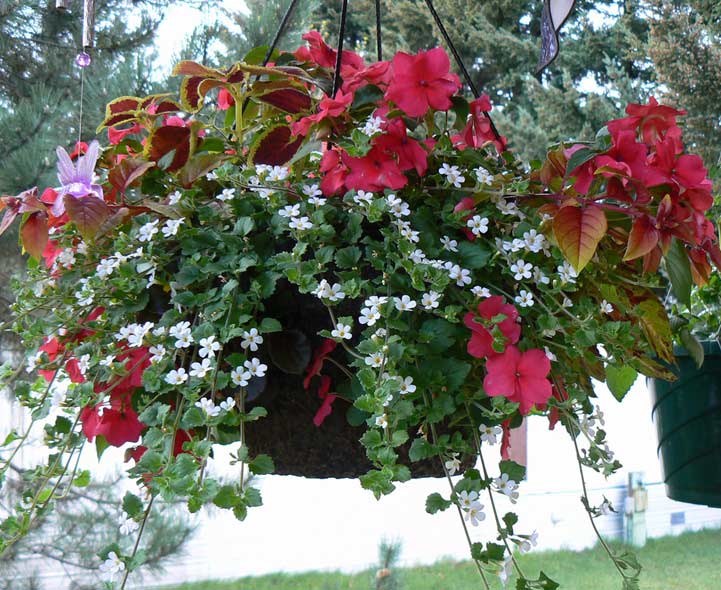
Photograph courtesy of www.flickr.com/photos/skamaniak/
Bacopa
Coleus
Impatiens
Tuberous Begonia
- To do well hanging baskets need constant attention after planting:
- Take off dead heads to prolong flowering.
- Water frequently - remember that even a heavy rainstorm will probably not wet all the compost in a hanging basket!
- Trim very vigorous plants to prevent them getting out of hand.
- Feed once every week or fortnight.
- Summer hanging baskets are the most popular but it well worth re-planting them in the autumn with Pansies, Primulas etc.
Coleus = red foliage, top left. Bacopa = white flowers. Impatiens = pink flowers top centre
8 .
This is a Diascia flower. How are named varieties propagated?
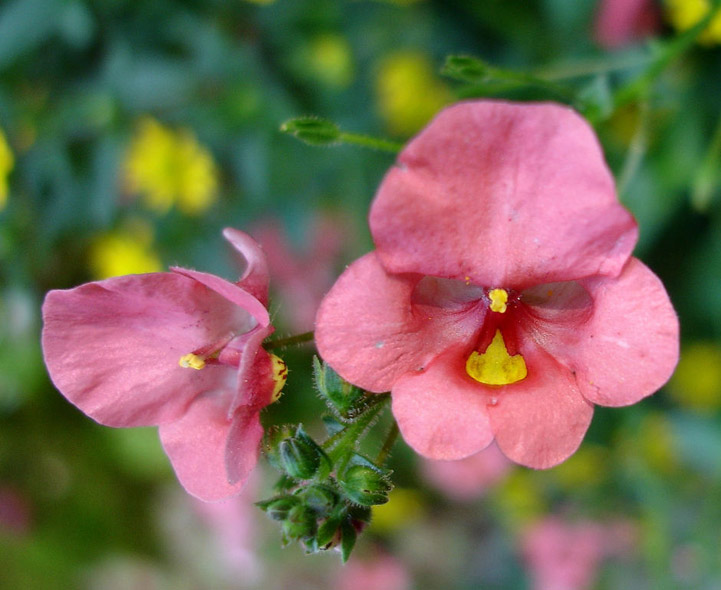
Photograph courtesy of www.flickr.com/photos/gertrudk/
Cuttings
Division
Grafting
Stolons
- Sometimes called Twinspur because of the two unusual spurs on the back of each flower.
- Thrives in full sun but will tolerate light shade.
- Flowers for most of the summer provided that its compost is never allowed to completely dry out.
- A delicate plant that can easily be smothered in a mixed planting of very vigorous plants.
- Deserves a place of its own!
9 .
Nasturtiums belong to which plant genus?
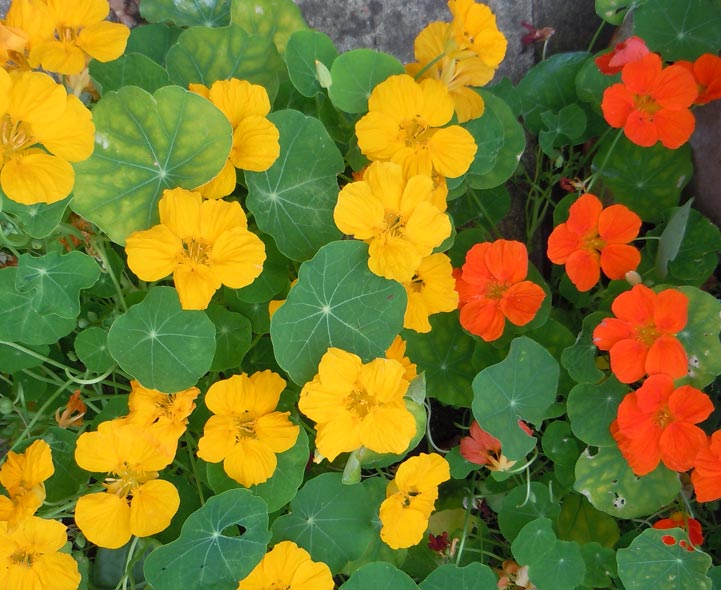
Photograph courtesy of www.flickr.com/photos/quisnovus/
Trifolium
Trochodendron
Trollius
Tropaeolum
- Most frequently seen colours are reds, oranges and yellows but pink shades are also available.
- Extremely fast grower.
- A few seeds can be inserted into a hanging basket or other container at planting time - within a few weeks the Nasturtiums will have caught up with much bigger plants.
- It seldom crowds out other plants, prefering instead to grow and trail into open spaces.
10 .
This is a closeup of a modern variety of which popular hanging basket plant?
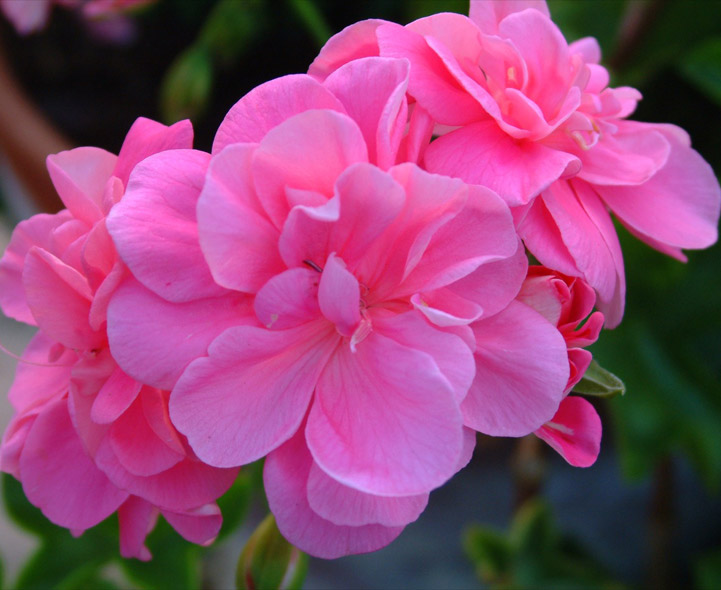
Photograph courtesy of www.flickr.com/photos/phototoasty/
Brachycome
Impatiens
Ivy Geranium
Petunia
- The scientific name is Pelargonium peltatum.
- A native of South Africa which has been grown in Europe for over 300 years.
- The illustrated plant is a close relative of the plants seen in the window boxes on picture postcard Swiss homes.
- Grown from cuttings which are not always easy to root and therefore the plants are often expensive.
- For best results grow in a situation that is shaded in the heat of the day.



**Unlimited Quizzes Await You! 🚀**
Hey there, quiz champ! 🌟 You've already tackled today's free questions.
Ready for more?
Ready for more?
🔓 Unlock UNLIMITED Quizzes and challenge yourself every day. But that's
not all...
not all...
🔥 As a Subscriber you can join our thrilling "Daily Streak" against other
quizzers. Try to win a coveted spot on our Hall of Fame Page.
quizzers. Try to win a coveted spot on our Hall of Fame Page.
Don't miss out! Join us now and keep the fun rolling. 🎉
**Unlimited Quizzes Await You! 🚀**
Hey there, quiz champ! 🌟 You've already tackled today's free questions. Ready for more?
🔓 Unlock UNLIMITED Quizzes and challenge yourself every day. But that's not all...
🔥 As a Subscriber you can join our thrilling "Daily Streak" against other quizzers. Try to win a coveted spot on our Hall of Fame Page.
Don't miss out! Join us now and keep the fun rolling. 🎉




© Copyright 2016-2026 - Education Quizzes
Work Innovate Ltd - Design | Development |
Marketing
