




Ask the AI Tutor
Need help with Ferns and Grasses - Ferns? Ask our AI Tutor!
AI Tutor - Lucy
Connecting with Tutor...
Please wait while we establish connection

How well do you know ferns?
Ferns and Grasses - Ferns
Ferns bring lush, leafy texture to shady spots. This quiz explores where ferns grow best, how they reproduce, and how to keep them healthy in gardens and pots.
To see a larger image, click on the picture.
1 .
What kind of fern is this?
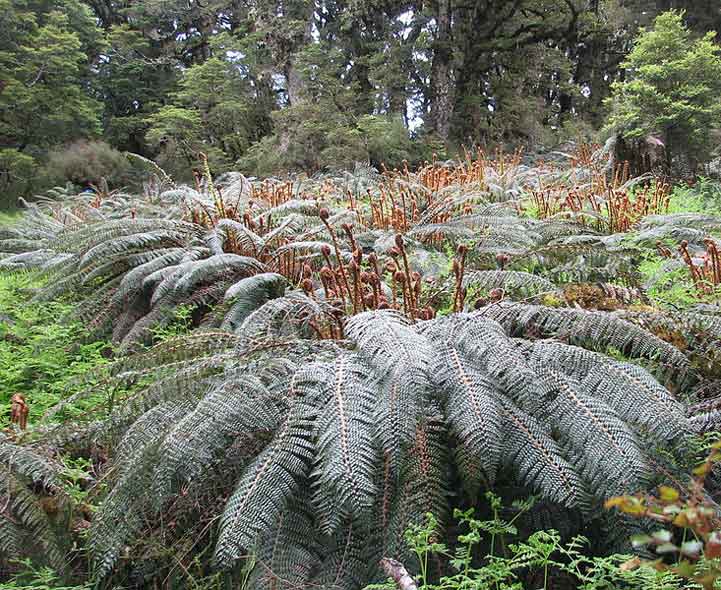
Photograph courtesy of Alan Liefting
Shield fern
Male fern
Holly fern
Hard fern
- Latin Name: Polystichum vestitum.
- Easy to grow on well drained, light soil.
- Very well regarded as a plant to give texture to mixed plantings.
- Must be grown in shade or partial shade - it will quickly wither in full sun.
2 .
What kind of fern is this?
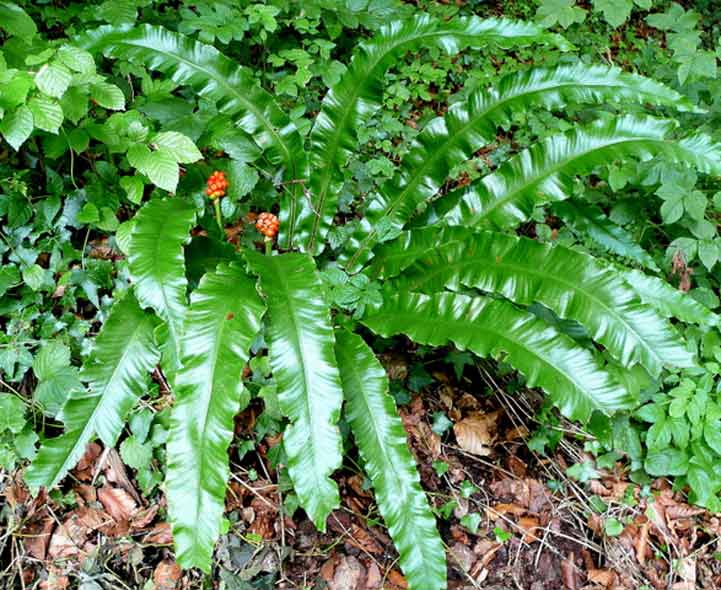
Photograph courtesy of www.geograph.org.uk/profile/8569
Hart's tongue fern
Male fern
Regal fern
Shield fern
- Latin Name: Asplenium scolopendrium.
- There are several different cultivars that have been selected over the years for different frond types - cristata, forked and frilled.
- Plants do not like acid soil, neither do they like full sun.
- Where they are unhappy they will possibly survive but growth will be yellow and stunted.
3 .
What kind of fern is this?
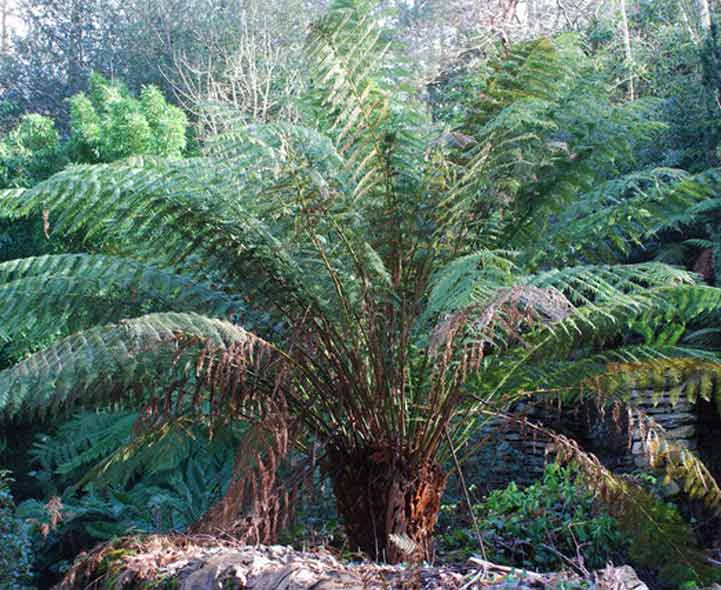
Photograph courtesy of www.geograph.org.uk/profile/10843
Regal fern
Male fern
Ostrich fern
Hardy tree fern
- Latin Name: Dicksonia antarctica.
- Sometimes known as the Man fern or Soft tree fern.
- Orginates from Australia.
- An extremely large fern that can grow up to 15 metres in favourable conditions but it seldom gets close to this in the UK.
- What appears to be a trunk is actually the decaying remains of earlier years growth.
- In the garden, plants must be watered in dry conditions - they can be killed by drought.
4 .
What kind of fern is this?

Photograph courtesy of MPF
Hart's tongue fern
Regal fern
Male fern
Shield fern
- Latin Name: Dryopteris affinis.
- Because of its size and the fact that it can form a trunk-like base, it is sometimes mistaken for a tree fern.
- The fern is native to Europe and thrives in humid conditions such as are found in Wales and parts of England.
- The plant is fully hardy and keeps its leaves almost all through the year.
5 .
What kind of fern is this?
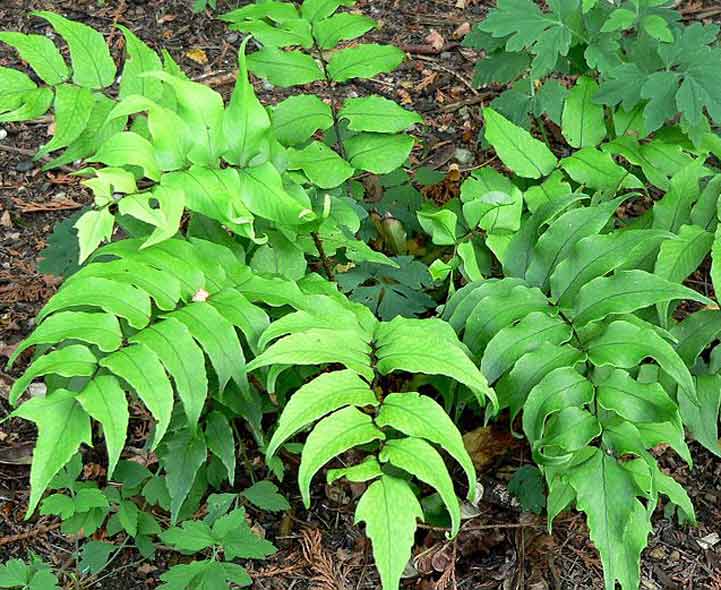
Photograph courtesy of Stan Shebs
Japanese painted fern
Hardy tree fern
Holly fern
Polypody fern
- Latin Name: Cyrtomium falcatum.
- The plant originates from Eastern Asia but in Europe it is widely grown as a garden plant and in some areas it has 'escaped' and established itself in the wild.
- It is a large fern with individual leaves sometimes exceeding 50 cm.
6 .
What kind of fern is this?
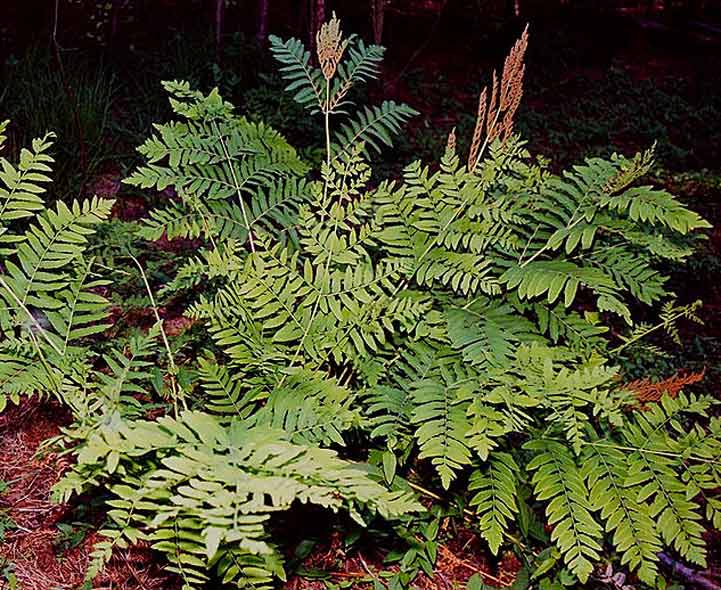
Photograph courtesy of Christian Fisher
Regal fern
Ostrich fern
Japanese painted fern
Holly fern
- Latin Name: Osmunda regalis.
- Sometimes called the Flowering fern because of the appearance of its fronds. It does not actually flower!
- Thrives on boggy land, even in shade.
- The young shoots are referred to as fiddleheads and they can be eaten. It is said that they taste like asparagus.
7 .
What kind of fern is this?
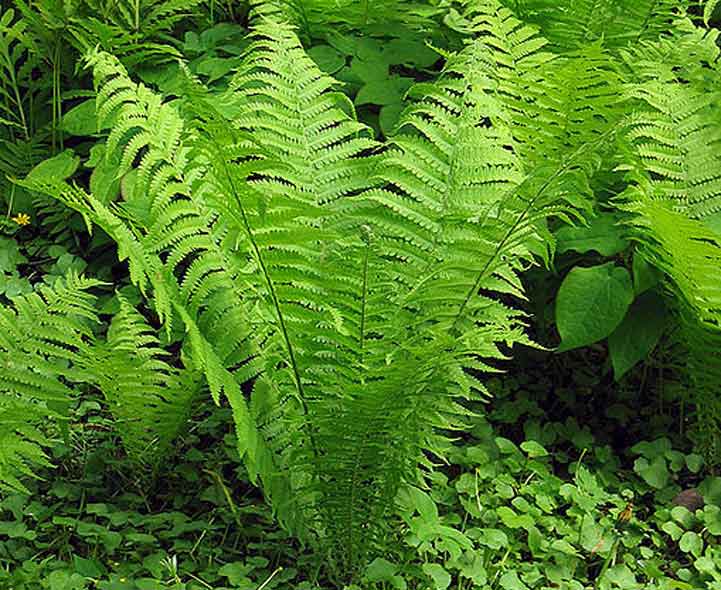
Photograph courtesy of User:Vzb83 (Helsinki)
Polypody fern
Ostrich fern
Japanese painted fern
Hard fern
- Latin Name: Matteuccia struthiopteris.
- Unusually for ferns, the Matteuccia genus contains only this one species.
- Plants send out lateral stolons that can quickly create a colony.
- Unfortunately the plants are easily damaged by hail, heavy rain and wind and for this reason it is NOT a plant for the most choice area of the garden.
8 .
What kind of fern is this?
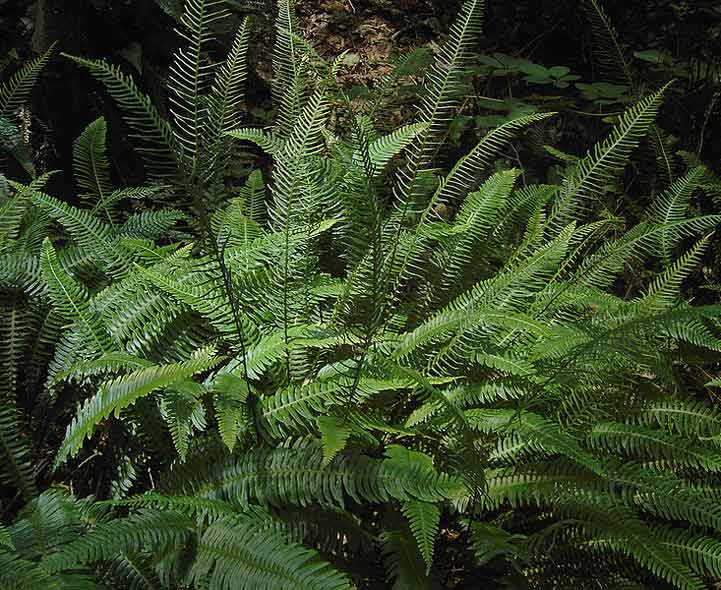
Photograph courtesy of Hans Hillewaert
Male fern
Hardy tree fern
Polypody fern
Hard fern
- Latin Name: Blechnum spicant.
- Sometimes known as Deer fern.
- There are over 200 species of Blechnum growing mainly in tropical regions but a few live in cool, temperate areas.
- The plant has two different forms of leaves: the wider leaves are sterile whilst the narrower ones are fertile and carry spores.
9 .
What kind of fern is this?
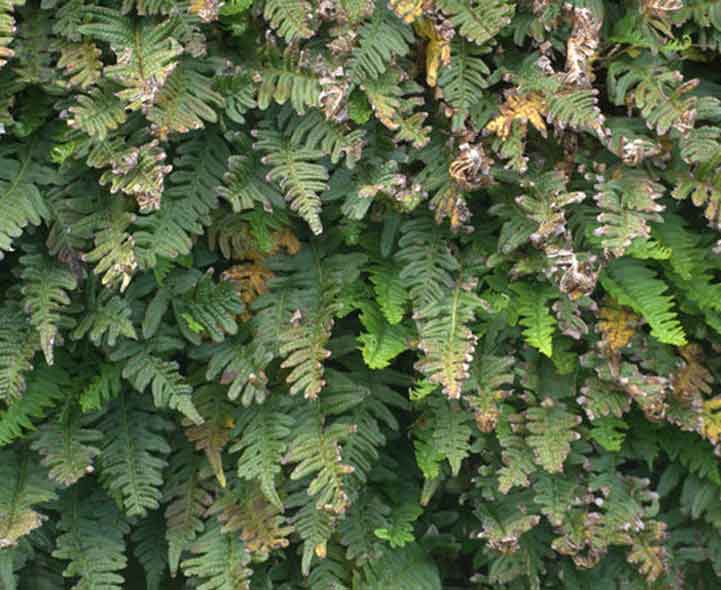
Photograph courtesy of www.geograph.org.uk/profile/9715
Hardy tree fern
Hart's tongue fern
Ostrich fern
Polypody fern
- Latin Name: Polypodium vulgare.
- One of the most common and easy to grow ferns.
- As the photograph shows, the old growth continuously shrivels at the ends of the stems but new growth is constantly coming along to replenish it.
- The rhizome of the plant is sometimes used in cooking, most notably to flavour nougat. The rhizomes contain a compound that is said to be 500 times sweeter than sugar!
10 .
What kind of fern is this?
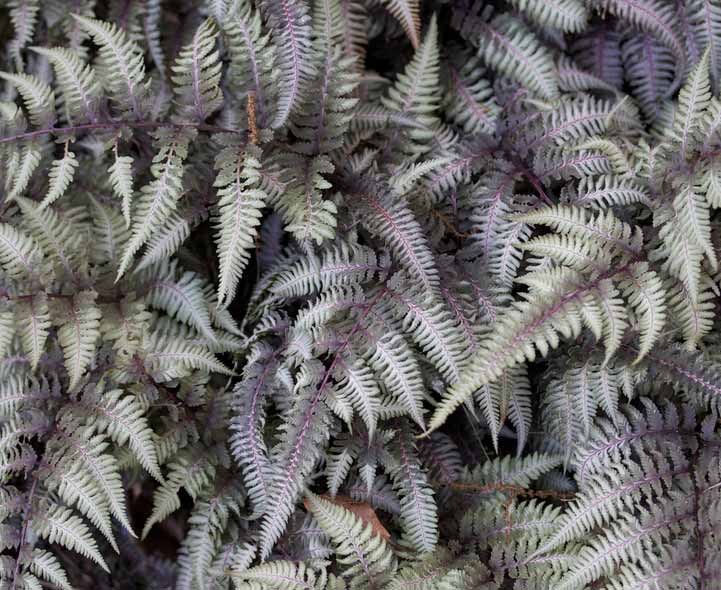
Photograph courtesy of www.flickr.com/photos/amalthea23/
Hard fern
Japanese painted fern
Holly fern
Hart's tongue fern
- Latin Name: Athyrium niponicum pictum
- The Athyrium genus contains about 180 species and are often referred to as Lady ferns.
- A native of eastern Asia.
- Striking silver foliage with dark red veins and stem.



**Unlimited Quizzes Await You! 🚀**
Hey there, quiz champ! 🌟 You've already tackled today's free questions.
Ready for more?
Ready for more?
🔓 Unlock UNLIMITED Quizzes and challenge yourself every day. But that's
not all...
not all...
🔥 As a Subscriber you can join our thrilling "Daily Streak" against other
quizzers. Try to win a coveted spot on our Hall of Fame Page.
quizzers. Try to win a coveted spot on our Hall of Fame Page.
Don't miss out! Join us now and keep the fun rolling. 🎉
**Unlimited Quizzes Await You! 🚀**
Hey there, quiz champ! 🌟 You've already tackled today's free questions. Ready for more?
🔓 Unlock UNLIMITED Quizzes and challenge yourself every day. But that's not all...
🔥 As a Subscriber you can join our thrilling "Daily Streak" against other quizzers. Try to win a coveted spot on our Hall of Fame Page.
Don't miss out! Join us now and keep the fun rolling. 🎉




© Copyright 2016-2026 - Education Quizzes
Work Innovate Ltd - Design | Development |
Marketing
