




Ask the AI Tutor
Need help with Vegetables - Vegetables 2? Ask our AI Tutor!
AI Tutor - Lucy
Connecting with Tutor...
Please wait while we establish connection
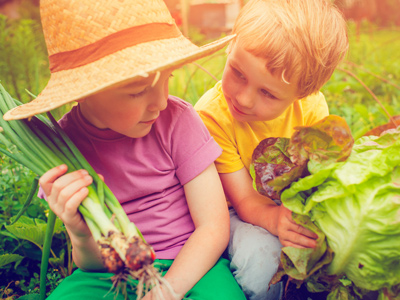
Getting children interested in vegetables is never easy!
Vegetables - Vegetables 2
Vegetable crops face pests, cold snaps, and drying winds. Learn simple ways to protect plants, keep growth steady, and improve harvests without making the plot complicated.
To see a larger image, click on the picture.
1 .
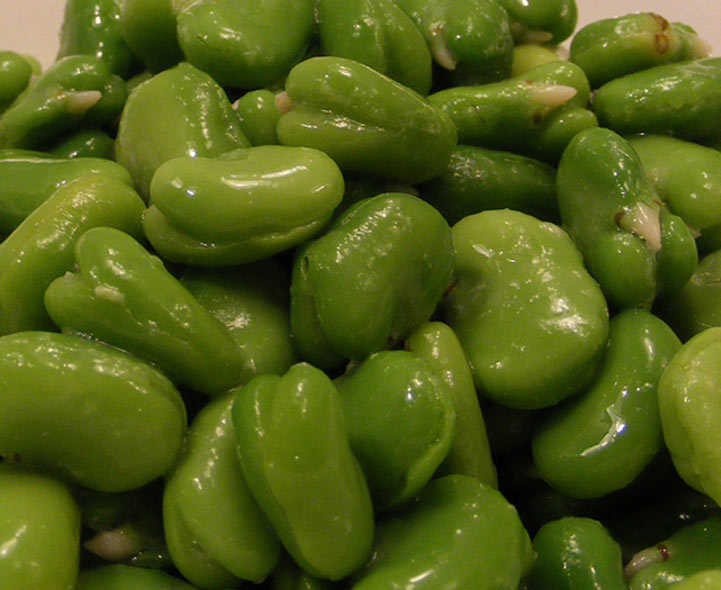
According to folklore when should beans be planted in order to bring good luck?
Photograph courtesy of FotoosVanRobin
Ash Wednesday
Maundy Thursday
Good Friday
Easter Sunday
- Latin Name: Vicia faba.
- Sometimes known as bell bean, fava bean or field bean.
- Broad beans are sometimes considered mundane and flavourless but young beans served with lashings of butter (as in the picture) are delicious.
- The secret is to crop whilst the beans are still small and tender.
- Easy to grow but watch out for blackfly - they like nothing better than broad bean plants.
2 .
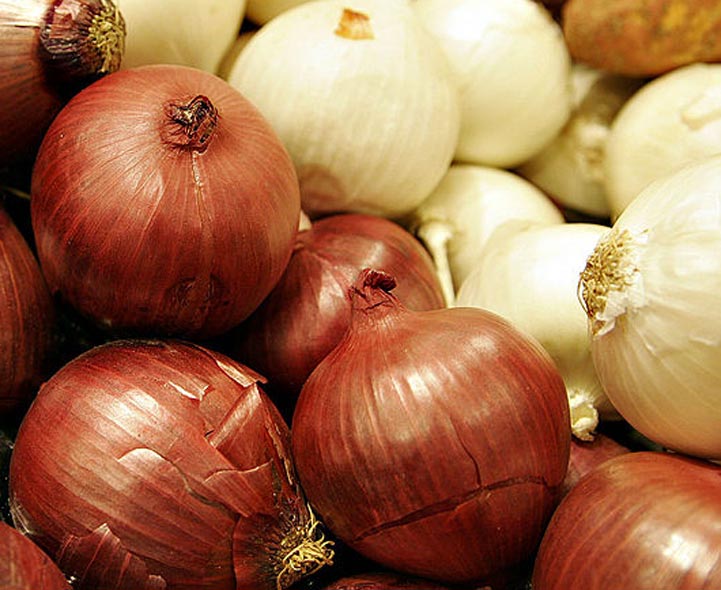
What is the name of the small type of onion that is often used for pickling?
Photograph courtesy of Fir002
Charlotte
Culotte
Garrotte
Shallot
- Latin Name: Allium cepa.
- Spring onions are eaten as a salad when the bulbs have just begun to swell.
- Mature onions that have been dried correctly will store for up to 6 months.
- Crops can be produced from seed but it is sometimes difficult to get the seeds to germinate.
- It is easier to grow from 'sets' - immature onions produced commercially in the previous season.
3 .
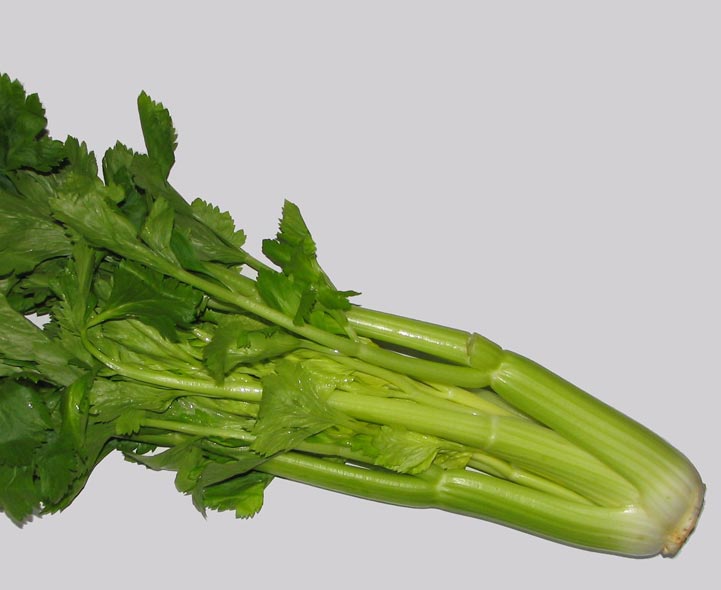
What is it that makes the stalks of old varieties of celery go white?
Photograph courtesy of Popolon
Exclusion of light
Reduction of water
Profusion of nitrogen
Elimination of potash
- Latin Name: Apium graveolens.
- Requires moist but well drained situations.
- Has a reputation for growing well on peaty soils.
- Suffers from very few pests and diseases.
- Lift plants as required from August onwards.
- Best kept in the soil to keep it crisp and fresh.
- Tastes better after the first frosts.
4 .
An extract from beetroot is used as a food colourant in tomato paste and jams. What is the name of the extract?
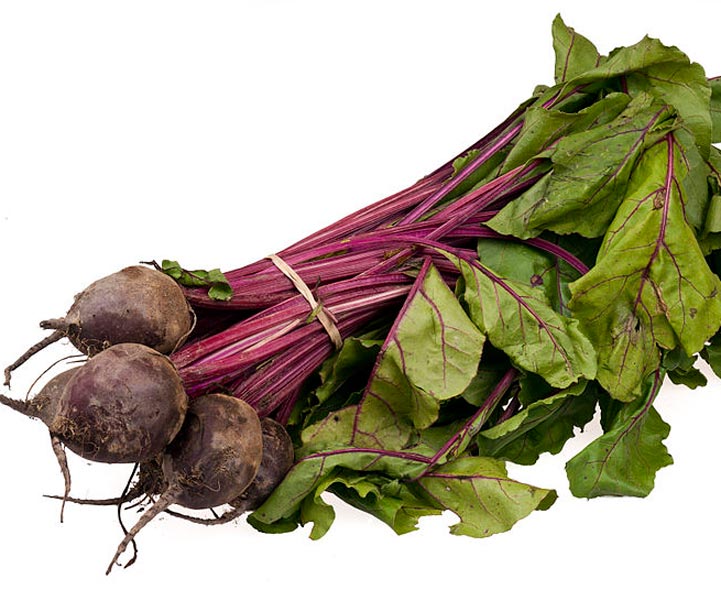
Photograph courtesy of Evan-Amos
Betamon
Betanin
Betabuy
Betablocker
- Latin Name: Beta vulgaris.
- Variously known as garden beet, red beet and table beet.
- Usually the roots are boiled and eaten hot as a vegetable or cold as a salad.
- The leaves can also be eaten (if you are desperate!) and they are said to taste a little like spinach.
- Sow from April onwards and start to harvest about 3 months later when the roots have reached the size of a golf ball.
5 .
Which family of plants do cabbage belong to?
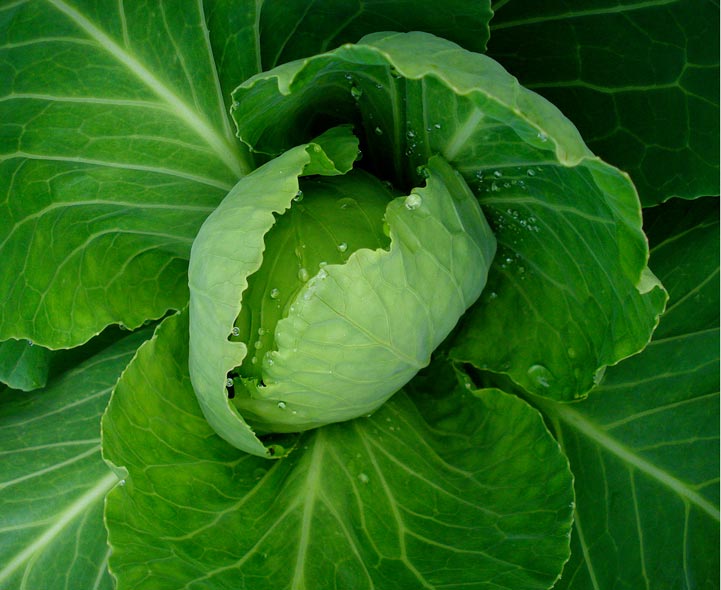
Photograph courtesy of www.flickr.com/photos/wheatfields/
Apiaceae
Asteraceae
Brassicaceae
Solanaceae
- By using different varieties it is possible to have fresh cabbage every week of the year except in the severest of winters.
- When referring to cabbages the season refers to the season in which it is EATEN not when it is sown. Thus 'summer cabbages' are eaten in the summer.
- Top tip: If you find the taste a little bland then boil some bacon and save the water in which to cook your cabbage!
6 .
Which of the names beneath the picture is NOT a variety of pea?
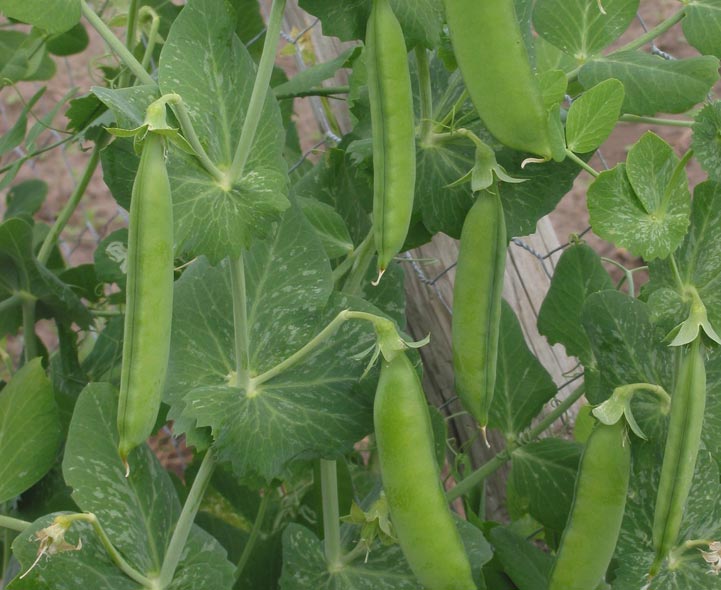
Lincoln
London
Little Marvel
Kelvedon Wonder
- Latin Name: Pisum sativum.
- The English climate is well suited to growing peas - they grow poorly if the temperature is consistently over 18 degrees C.
- A succession of sowings (early March to late June) will ensure fresh peas from June to September but you should expect less peas per plant in the height of summer.
- Mangetout peas have particularly sweet pods that are cooked and eaten before the peas within start to swell.
7 .
What is the name of this vegetable?
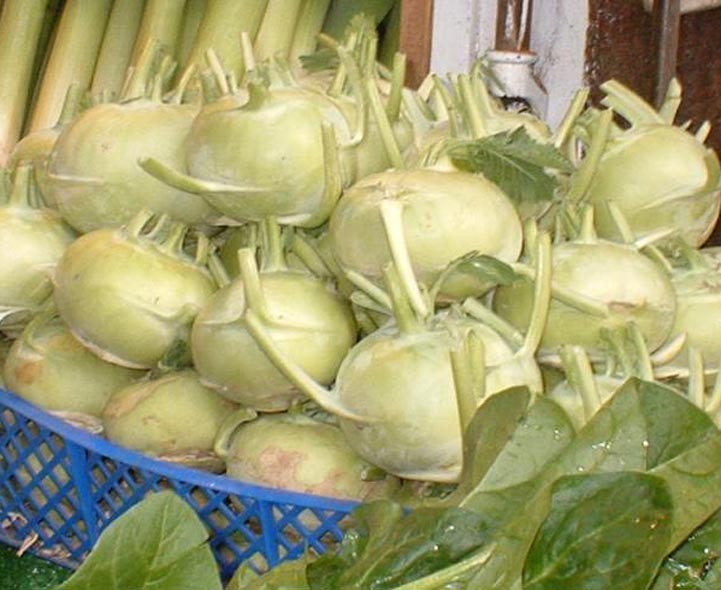
Photograph courtesy of C Ford
Jerusalem Artichoke
Kohlrabi
Sea Samphire
Sweet Potato
- Latin Name: Brassica oleracea.
- Belongs to the same family as cabbage and cauliflower.
- Its taste is similar to that of cabbage but a little sweeter.
- There are different varieties to produce green, purple and white skins but that is only cosmetic - they are all white inside.
- Usually sown in spring to produce an autumn crop but in favourable locations they can be sown in autumn to produce a late spring crop.
8 .
This is the flower of salsify but what is the common name for the vegetable?

Photograph courtesy of www.geograph.org.uk/profile/41439
Cockle plant
Mussel plant
Oyster plant
Winkle plant
- Latin name: Tragopogon porrifolius.
- An attractive, flowering addition to the vegetable garden.
- Often grown as a curiosity but most gardeners never seem to get around to eating it!
- It tastes somewhat similar to the shellfish from which it gets its common name.
- Can be used in soups and stews or mashed like potatoes.
9 .
This exotic looking flower is that of a vegetable but what is the vegetable's name?
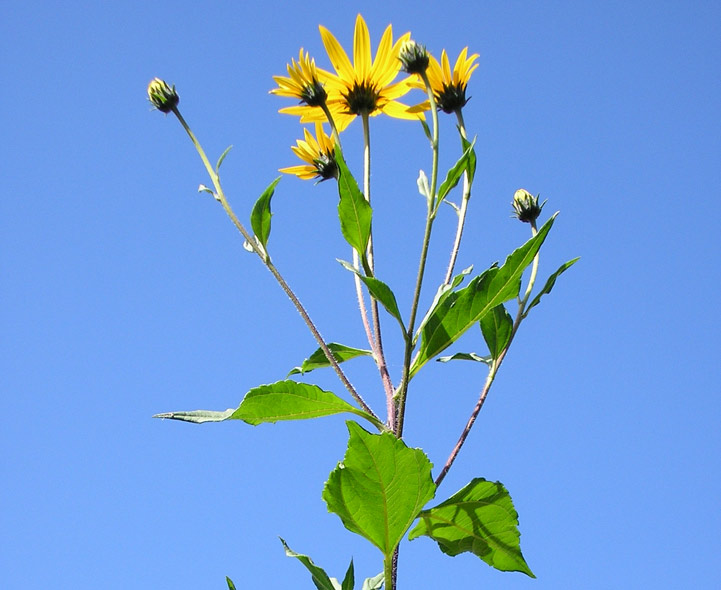
Photograph courtesy of Paul Fenwick
Celeriac
Jerusalem Artichoke
Kohlrabi
Okra
- Latin Name: Helianthus tuberosus.
- Closely related to the sunflower (Helianthus annuus).
- Has been named the 'best soup vegetable' by a French panel!
- The plants are perennial and easy to grow.
- Some people believe they are TOO easy to grow because even a small piece of tuber left in the ground will spring to life and make it a nuisance in the next crop on the same land.
10 .
The vegetable known in the UK as pumpkin is sometimes called what in America?
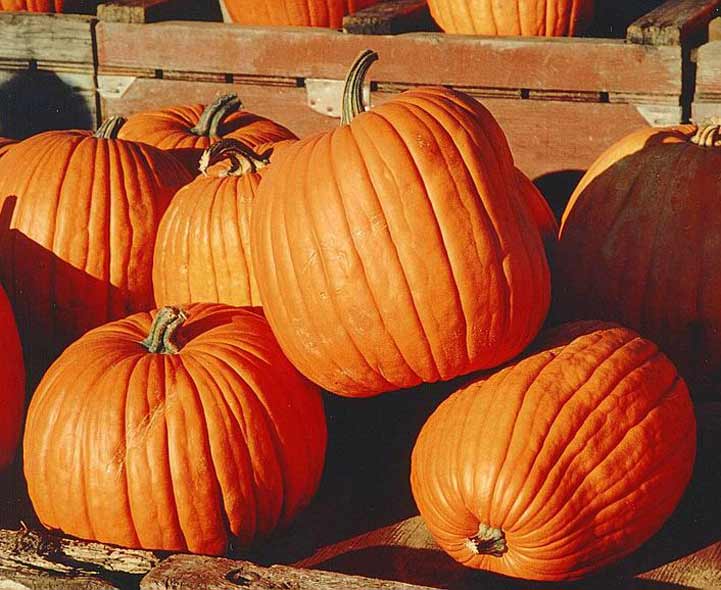
Photograph courtesy of Martin Doege
Squash
Crush
Pulp
Squeeze
- Genus: Cucurbita.
- A new world record weight for a pumpkin was set in September 2021 when a pumpkin grown in Italy weighed in at 2,702lbs (1,226 kilos).
- A great plant with which to get youngsters interested in gardening because they are so easy to grow.
- In the UK they are used mainly for Halloween activities but in Australia and the USA they are eaten with gusto.



**Unlimited Quizzes Await You! 🚀**
Hey there, quiz champ! 🌟 You've already tackled today's free questions.
Ready for more?
Ready for more?
🔓 Unlock UNLIMITED Quizzes and challenge yourself every day. But that's
not all...
not all...
🔥 As a Subscriber you can join our thrilling "Daily Streak" against other
quizzers. Try to win a coveted spot on our Hall of Fame Page.
quizzers. Try to win a coveted spot on our Hall of Fame Page.
Don't miss out! Join us now and keep the fun rolling. 🎉
**Unlimited Quizzes Await You! 🚀**
Hey there, quiz champ! 🌟 You've already tackled today's free questions. Ready for more?
🔓 Unlock UNLIMITED Quizzes and challenge yourself every day. But that's not all...
🔥 As a Subscriber you can join our thrilling "Daily Streak" against other quizzers. Try to win a coveted spot on our Hall of Fame Page.
Don't miss out! Join us now and keep the fun rolling. 🎉




© Copyright 2016-2026 - Education Quizzes
Work Innovate Ltd - Design | Development |
Marketing
