




Ask the AI Tutor
Need help with World Wildlife Day Quiz ? Ask our AI Tutor!
AI Tutor - Lucy
Connecting with Tutor...
Please wait while we establish connection
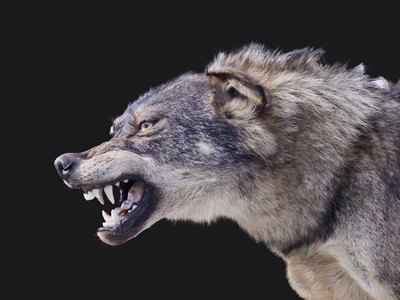
Are there any wild wolves in Britain?
World Wildlife Day Quiz
World Wildlife Day shines a spotlight on animals, plants and habitats worldwide. Use this talking-points quiz to explore conservation issues and spark thoughtful conversations.
1 .
The loudest animal in the world makes more noise than a jet’s sonic boom. Which animal is it?
The African elephant
The pistol shrimp
The electric eel
The sperm whale
Sperm whales have calls which can be as loud as 230 decibels – a sonic boom is a mere 200 decibels. We can’t hear these because they are at a very low frequency. Despite their tiny size, pistol shrimps can produce sounds as loud as 200 decibels by snapping their claws!
2 .
There is one family of animals in which the males give birth. Which family is it?
Syngnathidae
Canidae
Ursidae
Felidae
The Syngnathidae family includes seahorses, pipefish and sea dragons. The females lay their eggs in the male's pouch and he carries them until they emerge fully developed, but not very large.
Canidae are dogs, ursidae are bears and felidae are cats, all of which are mammals whose mothers give birth to their young
Canidae are dogs, ursidae are bears and felidae are cats, all of which are mammals whose mothers give birth to their young
3 .
Only one type of bird can fly backwards for a reasonable distance. Which?
Kestrels
Hummingbirds
Cuckoos
Warblers
Whilst many different types of bird can fly backwards by being ‘pushed’ by the wind, or a short distance by ‘fluttering’, the only ones which can genuinely fly backwards are hummingbirds. Cuckoos can go backwards – when they are in cuckoo clocks!
4 .
Between 1970 and 2010, the human population increased by over 50%. By what percentage did wildlife decrease over the same period?
32%
42%
52%
62%
The more people there are on the planet, the worse wildlife fares. Habitat destruction to make way for farms is the biggest cause of this
5 .
Britain is home to a variety of wildlife. Which of these does not live in the wild here?
Wallaby
Mink
Wolf
Beaver
The last wild wolf in Britain died around 1800. We have beavers, although they are endangered. Wallabies and mink were introduced in the early 20th Century and have wild populations to this very day
6 .
Rhinoceroses are famous for their horns. What are their horns made from?
Ivory
Enamel
Bone
Hair
Rhinoceros horns are in fact made from a protein called keratin. This is the same material that human hair and nails are made from
7 .
Humans are not the only animals with fingerprints. Which of these does not have them?
Squirrel
Gorilla
Koala
Chimpanzee
Fingerprints evolved to help us grip things and our closest relatives have them too. Koalas are not closely related to us, but they evolved fingerprints separately, whilst squirrels did not
8 .
Sloths are known for taking their time! How long does it take a sloth to digest its food (clue: it takes humans between 24 and 72 hours)?
Up to a year
Up to a month
Up to a fortnight
Up to a week
Sloths have very slow metabolisms (hence their slow movement) and low-calorie food, which mean that their food takes a long time to pass through their digestive systems. The average time is about 16 days, but it can take up to a month
9 .
Which animal has the slowest heart rate?
The pygmy shrew
The African elephant
The dormouse
The blue whale
Human hearts beat something between 60 and 100 times a minute. A blue whale’s heart beats 8 times a minute, or just twice a minute when they are diving for food. In contrast, a pygmy shrew’s heart beats 1,200 times a second!
10 .
Many animals migrate, but which of these migrates the furthest?
The wandering albatross
The chinook salmon
The arctic tern
The humpback whale
Arctic terns travel an amazing 71,000 km (44,000 miles) a year – that’s almost twice the diameter of the earth! Humpback whales have the longest migration of any mammal and travel up to 9,800 km (6,090 miles) – nowhere near as far as terns, but still a long way



**Unlimited Quizzes Await You! 🚀**
Hey there, quiz champ! 🌟 You've already tackled today's free questions.
Ready for more?
Ready for more?
🔓 Unlock UNLIMITED Quizzes and challenge yourself every day. But that's
not all...
not all...
🔥 As a Subscriber you can join our thrilling "Daily Streak" against other
quizzers. Try to win a coveted spot on our Hall of Fame Page.
quizzers. Try to win a coveted spot on our Hall of Fame Page.
Don't miss out! Join us now and keep the fun rolling. 🎉
**Unlimited Quizzes Await You! 🚀**
Hey there, quiz champ! 🌟 You've already tackled today's free questions. Ready for more?
🔓 Unlock UNLIMITED Quizzes and challenge yourself every day. But that's not all...
🔥 As a Subscriber you can join our thrilling "Daily Streak" against other quizzers. Try to win a coveted spot on our Hall of Fame Page.
Don't miss out! Join us now and keep the fun rolling. 🎉




© Copyright 2016-2026 - Education Quizzes
Work Innovate Ltd - Design | Development |
Marketing
