




Ask the AI Tutor
Need help with Leviticus? Ask our AI Tutor!
AI Tutor - Lucy
Connecting with Tutor...
Please wait while we establish connection
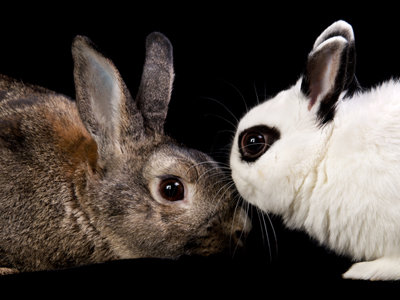
Were rabbits considered clean or unclean? Find out by playing this quiz.
Leviticus
Leviticus explores worship, priesthood, and everyday living in ancient Israel. Discover why its laws mattered, then test your knowledge in the quiz below.
All quotations from the Bible are taken from the Authorised King James Version.
1 .
God forgave the sins of the Israelites when they offered Him sacrifices. What must a priest who had sinned sacrifice to God?
A lamb
A portion of his money
A bull
A portion of his belongings
2 .
Moses' brother Aaron was appointed by God as the head of what?
The priesthood
The judges
The army
The government
On the day of Aaron's consecration there was a miracle when:
Leviticus 9:23-24
"Moses and Aaron went into the tabernacle of the congregation, and came out, and blessed the people: and the glory of the Lord appeared unto all the people. And there came a fire out from before the Lord, and consumed upon the altar the burnt offering and the fat: which when all the people saw, they shouted, and fell on their faces"
Leviticus 9:23-24
"Moses and Aaron went into the tabernacle of the congregation, and came out, and blessed the people: and the glory of the Lord appeared unto all the people. And there came a fire out from before the Lord, and consumed upon the altar the burnt offering and the fat: which when all the people saw, they shouted, and fell on their faces"
3 .
Also on the day of Aaron's consecration God took away his two eldest sons for breaking His laws. What were the names of Aaron's sons who died?
Cain and Abel
Eleazar and Ithamar
David and Goliath
Nadab and Abihu
Nadab and Abihu violated God's instructions for sacrifice within the tabernacle.
Leviticus 10:1-2
"And Nadab and Abihu, the sons of Aaron, took either of them his censer, and put fire therein, and put incense thereon, and offered strange fire before the Lord, which he commanded them not. And there went out fire from the Lord, and devoured them, and they died before the Lord"
Leviticus 10:1-2
"And Nadab and Abihu, the sons of Aaron, took either of them his censer, and put fire therein, and put incense thereon, and offered strange fire before the Lord, which he commanded them not. And there went out fire from the Lord, and devoured them, and they died before the Lord"
4 .
God gave the Israelites instructions on what animals they could and could not eat or touch because they were 'unclean' or 'unholy'. Animals which lived on land were only clean if they chewed the cud and had cloven hooves. Which of these animals was considered clean?
Horses
Goats
Rabbits
Pigs
Leviticus 11:3-7
"Whatsoever parteth the hoof, and is clovenfooted, and cheweth the cud, among the beasts, that shall ye eat. Nevertheless these shall ye not eat of them that chew the cud, or of them that divide the hoof: as the camel, because he cheweth the cud, but divideth not the hoof; he is unclean unto you. And the coney, because he cheweth the cud, but divideth not the hoof; he is unclean unto you. And the hare, because he cheweth the cud, but divideth not the hoof; he is unclean unto you. And the swine, though he divide the hoof, and be clovenfooted, yet he cheweth not the cud; he is unclean to you."
God gives no reason why these animals are unclean, merely that the Israelites must not touch them. These are God's standards and His people are to obey them
"Whatsoever parteth the hoof, and is clovenfooted, and cheweth the cud, among the beasts, that shall ye eat. Nevertheless these shall ye not eat of them that chew the cud, or of them that divide the hoof: as the camel, because he cheweth the cud, but divideth not the hoof; he is unclean unto you. And the coney, because he cheweth the cud, but divideth not the hoof; he is unclean unto you. And the hare, because he cheweth the cud, but divideth not the hoof; he is unclean unto you. And the swine, though he divide the hoof, and be clovenfooted, yet he cheweth not the cud; he is unclean to you."
God gives no reason why these animals are unclean, merely that the Israelites must not touch them. These are God's standards and His people are to obey them
5 .
Of the animals which lived in water, clean ones must have both scales and fins. Which one of these creatures was regarded as being unclean?
Goldfish
Haddock
Eels
Herrings
Leviticus 11:9-12
"These shall ye eat of all that are in the waters: whatsoever hath fins and scales in the waters, in the seas, and in the rivers, them shall ye eat. And all that have not fins and scales in the seas, and in the rivers, of all that move in the waters, and of any living thing which is in the waters, they shall be an abomination unto you: they shall be even an abomination unto you; ye shall not eat of their flesh, but ye shall have their carcases in abomination. Whatsoever hath no fins nor scales in the waters, that shall be an abomination unto you."
Eels have fins (though they are short) but their scales are different to those of most other fish and cannot be removed without harming the creature. Therefore eels are considered unclean
"These shall ye eat of all that are in the waters: whatsoever hath fins and scales in the waters, in the seas, and in the rivers, them shall ye eat. And all that have not fins and scales in the seas, and in the rivers, of all that move in the waters, and of any living thing which is in the waters, they shall be an abomination unto you: they shall be even an abomination unto you; ye shall not eat of their flesh, but ye shall have their carcases in abomination. Whatsoever hath no fins nor scales in the waters, that shall be an abomination unto you."
Eels have fins (though they are short) but their scales are different to those of most other fish and cannot be removed without harming the creature. Therefore eels are considered unclean
6 .
Most kinds of insect were regarded as being unclean, but not all. Which of the following did God allow the Israelites to eat?
Caterpillars
Ants
Maggots
Locusts
Leviticus 11:21-23
"Yet these may ye eat of every flying creeping thing that goeth upon all four, which have legs above their feet, to leap withal upon the earth; even these of them ye may eat; the locust after his kind, and the bald locust after his kind, and the beetle after his kind, and the grasshopper after his kind. But all other flying creeping things, which have four feet, shall be an abomination unto you."
The command refers to insects as having four feet, when in fact they have six, however it is meant to describe their movement which resembles that of four-footed animals
"Yet these may ye eat of every flying creeping thing that goeth upon all four, which have legs above their feet, to leap withal upon the earth; even these of them ye may eat; the locust after his kind, and the bald locust after his kind, and the beetle after his kind, and the grasshopper after his kind. But all other flying creeping things, which have four feet, shall be an abomination unto you."
The command refers to insects as having four feet, when in fact they have six, however it is meant to describe their movement which resembles that of four-footed animals
7 .
In Leviticus God tells us to love who as ourselves?
Our neighbours
Our fathers
Our enemies
Our sons
Leviticus 19:18
"Thou shalt not avenge, nor bear any grudge against the children of thy people, but thou shalt love thy neighbour as thyself: I am the Lord."
Jesus Himself says that this is the second most important of God's commandments.
Mark 12:30-31
Tthou shalt love the Lord thy God with all thy heart, and with all thy soul, and with all thy mind, and with all thy strength: this is the first commandment. And the second is like, namely this, Thou shalt love thy neighbour as thyself. There is none other commandment greater than these"
"Thou shalt not avenge, nor bear any grudge against the children of thy people, but thou shalt love thy neighbour as thyself: I am the Lord."
Jesus Himself says that this is the second most important of God's commandments.
Mark 12:30-31
Tthou shalt love the Lord thy God with all thy heart, and with all thy soul, and with all thy mind, and with all thy strength: this is the first commandment. And the second is like, namely this, Thou shalt love thy neighbour as thyself. There is none other commandment greater than these"
8 .
What punishment did God prescribe for those who broke his commandment and committed adultery?
They should be put into exile
They should be put to death
They should be put in slavery
They should be put in prison
Leviticus 20:10
"And the man that committeth adultery with another man’s wife, even he that committeth adultery with his neighbour’s wife, the adulterer and the adulteress shall surely be put to death."
Jesus saved an adulterous woman from death by stoning when he said to the crowd about to kill her, "Let he who is without sin cast the first stone." The crowd departed and left the two alone:
John 8:10-11
"When Jesus had lifted up himself, and saw none but the woman, he said unto her, Woman, where are those thine accusers? hath no man condemned thee? She said, No man, Lord. And Jesus said unto her, Neither do I condemn thee: go, and sin no more"
"And the man that committeth adultery with another man’s wife, even he that committeth adultery with his neighbour’s wife, the adulterer and the adulteress shall surely be put to death."
Jesus saved an adulterous woman from death by stoning when he said to the crowd about to kill her, "Let he who is without sin cast the first stone." The crowd departed and left the two alone:
John 8:10-11
"When Jesus had lifted up himself, and saw none but the woman, he said unto her, Woman, where are those thine accusers? hath no man condemned thee? She said, No man, Lord. And Jesus said unto her, Neither do I condemn thee: go, and sin no more"
9 .
What punishment did God say should be given to one who injures another?
He should be put to death
He should pay compensation
He should be given the same injury
He should be made a slave
Leviticus 24:19-20
"And if a man cause a blemish in his neighbour; as he hath done, so shall it be done to him; breach for breach, eye for eye, tooth for tooth: as he hath caused a blemish in a man, so shall it be done to him again."
Jesus changed this commandment when He said:
Matthew 5:37-40
"Ye have heard that it hath been said, An eye for an eye, and a tooth for a tooth: but I say unto you, That ye resist not evil: but whosoever shall smite thee on thy right cheek, turn to him the other also. And if any man will sue thee at the law, and take away thy coat, let him have thy cloke also"
"And if a man cause a blemish in his neighbour; as he hath done, so shall it be done to him; breach for breach, eye for eye, tooth for tooth: as he hath caused a blemish in a man, so shall it be done to him again."
Jesus changed this commandment when He said:
Matthew 5:37-40
"Ye have heard that it hath been said, An eye for an eye, and a tooth for a tooth: but I say unto you, That ye resist not evil: but whosoever shall smite thee on thy right cheek, turn to him the other also. And if any man will sue thee at the law, and take away thy coat, let him have thy cloke also"
10 .
In Leviticus God allocates dates for the religious festivals of the Israelites. What is the name of the festival which was to begin at evening on the fourteenth day of the first month?
The Passover
The Festival of Lots
The Day of Atonement
The Festival of Lights
Leviticus 23:1-5
"And the Lord spake unto Moses, saying, Speak unto the children of Israel, and say unto them, Concerning the feasts of the Lord, which ye shall proclaim to be holy convocations, even these are my feasts. Six days shall work be done: but the seventh day is the sabbath of rest, an holy convocation; ye shall do no work therein: it is the sabbath of the Lord in all your dwellings.
These are the feasts of the Lord, even holy convocations, which ye shall proclaim in their seasons. In the fourteenth day of the first month at even is the Lord’s passover."
The Sabbath is in memory of God's resting after He created the world and the Passover recalls the Israelites' release from bondage in Egypt
"And the Lord spake unto Moses, saying, Speak unto the children of Israel, and say unto them, Concerning the feasts of the Lord, which ye shall proclaim to be holy convocations, even these are my feasts. Six days shall work be done: but the seventh day is the sabbath of rest, an holy convocation; ye shall do no work therein: it is the sabbath of the Lord in all your dwellings.
These are the feasts of the Lord, even holy convocations, which ye shall proclaim in their seasons. In the fourteenth day of the first month at even is the Lord’s passover."
The Sabbath is in memory of God's resting after He created the world and the Passover recalls the Israelites' release from bondage in Egypt



**Unlimited Quizzes Await You! 🚀**
Hey there, quiz champ! 🌟 You've already tackled today's free questions.
Ready for more?
Ready for more?
🔓 Unlock UNLIMITED Quizzes and challenge yourself every day. But that's
not all...
not all...
🔥 As a Subscriber you can join our thrilling "Daily Streak" against other
quizzers. Try to win a coveted spot on our Hall of Fame Page.
quizzers. Try to win a coveted spot on our Hall of Fame Page.
Don't miss out! Join us now and keep the fun rolling. 🎉
**Unlimited Quizzes Await You! 🚀**
Hey there, quiz champ! 🌟 You've already tackled today's free questions. Ready for more?
🔓 Unlock UNLIMITED Quizzes and challenge yourself every day. But that's not all...
🔥 As a Subscriber you can join our thrilling "Daily Streak" against other quizzers. Try to win a coveted spot on our Hall of Fame Page.
Don't miss out! Join us now and keep the fun rolling. 🎉




© Copyright 2016-2026 - Education Quizzes
Work Innovate Ltd - Design | Development |
Marketing

"And the Lord spake unto Moses, saying, Speak unto the children of Israel, saying, If a soul shall sin through ignorance against any of the commandments of the Lord concerning things which ought not to be done, and shall do against any of them: if the priest that is anointed do sin according to the sin of the people; then let him bring for his sin, which he hath sinned, a young bullock without blemish unto the Lord for a sin offering. And he shall bring the bullock unto the door of the tabernacle of the congregation before the Lord; and shall lay his hand upon the bullock’s head, and kill the bullock before the Lord.
Not everyone had to sacrifice a bull. The leaders were told to sacrifice male goats and the poorer people could sacrifice lambs, turtledoves, pigeons or even grain