




Ask the AI Tutor
Need help with Unit 1 - Reflexes? Ask our AI Tutor!
AI Tutor - Lucy
Connecting with Tutor...
Please wait while we establish connection
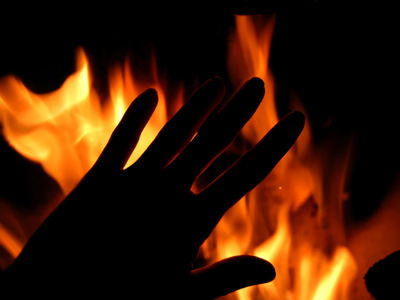
If your hand touches a hot object the reflex response is to move it away very quickly!
Unit 1 - Reflexes
This GCSE Biology quiz explores reflex actions, showing how receptors, neurones and muscles work together to produce rapid, automatic responses that protect the body from harm.
1 .
Your hand touches a hot object. What is the reflex response?
To grab hold of the object
To throw the object
To move the hand away swiftly
To think about what to do
Reflexes are very fast and do not involve thinking. This protects the organism from dangers such as a hot object
2 .
What is the name for the connection between two nerve cells?
Junction
Synapse
Gap
Transmitter
The nerve impulse is usually transmitted from neuron to neuron by a chemical
3 .
The first cell in the reflex is which type of neuron?
Motor
Relay
Sensory
Intermediate
These detect stimuli
4 .
Which of the following is not true of reflexes?
Faster than hormonal responses
Brain not involved
Act for a short time
Brain involved
Although there is a connection to the brain, the nerve impulses that cause the reflex pass only through the central nervous system. Going through the brain would slow things down
5 .
The last cell in the reflex is which type of neuron?
Motor
Sensory
Intermediate
Relay
Also called an effector as it makes the body do something
6 .
If the effector is a gland, what would the response be?
A release of blood
The release of a hormone
A muscle contraction
A muscle expansion
Glands are part of the endocrine system and are where hormones are produced
7 .
Which of the following is an example of an effector?
The heart
The liver
The kidneys
The muscles
Effectors are the output organs for reflexes and they include both muscles and glands
8 .
A reflex arc consists of a chain of which type of cells?
Brain
Neurons
Muscle
Liver
Nerve cells are called neurons (sometimes spelt with an 'e' as neurones)
9 .
The synapse between the sensory and relay neurones is within which part of the body?
The brain
The heart
The spinal cord
The muscles
The bundle of neurons in the spinal cord is referred to as the central nervous system
10 .
What is the correct order of the reflex arc?
Motor - relay - sensory
Sensory - motor - relay
Sensory - relay - motor
Relay - sensory - motor
The brain is not involved, although the relay neuron does send a message to the brain so that the animal is aware of what is happening
You can find more about this topic by visiting BBC Bitesize - Coordination and control - The nervous system



**Unlimited Quizzes Await You! 🚀**
Hey there, quiz champ! 🌟 You've already tackled today's free questions.
Ready for more?
Ready for more?
🔓 Unlock UNLIMITED Quizzes and challenge yourself every day. But that's
not all...
not all...
🔥 As a Subscriber you can join our thrilling "Daily Streak" against other
quizzers. Try to win a coveted spot on our Hall of Fame Page.
quizzers. Try to win a coveted spot on our Hall of Fame Page.
Don't miss out! Join us now and keep the fun rolling. 🎉
**Unlimited Quizzes Await You! 🚀**
Hey there, quiz champ! 🌟 You've already tackled today's free questions. Ready for more?
🔓 Unlock UNLIMITED Quizzes and challenge yourself every day. But that's not all...
🔥 As a Subscriber you can join our thrilling "Daily Streak" against other quizzers. Try to win a coveted spot on our Hall of Fame Page.
Don't miss out! Join us now and keep the fun rolling. 🎉




© Copyright 2016-2026 - Education Quizzes
Work Innovate Ltd - Design | Development |
Marketing
