




Ask the AI Tutor
Need help with Unit 1 - Synapse? Ask our AI Tutor!
AI Tutor - Lucy
Connecting with Tutor...
Please wait while we establish connection
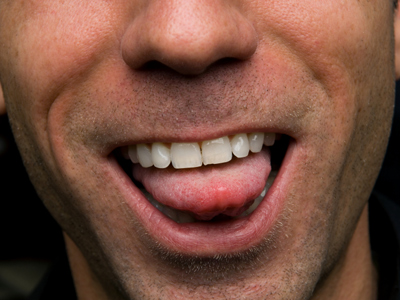
The tongue is a sense organ.
Unit 1 - Synapse
This GCSE Biology quiz explores synapses, tiny gaps between neurones where nerve impulses are transmitted using chemical messengers called neurotransmitters.
1 .
Which of the following is not a sense organ?
Eye
Ear
Tongue
Synapse
They do not detect anything - a synapse is simply the name for the gap between neurons
2 .
How does the neurotransmitter travel across the synapse?
By osmosis
By active transport
By diffusion
By taxi
Neurotransmitter molecules are small and easily diffuse across the synaptic gap
3 .
The central nervous system consists of the brain and which other body part?
The heart
The liver
The spinal cord
The eyes
This is protected by the vertebrae which form a tunnel that surrounds it. That's why a broken back can often lead to paralysis of parts of the body as, in severe cases, the spinal cord is broken as well as the bones of the spine
4 .
Electrical impulses travel along which part of a neuron?
The synapse
The axon
The nucleus
The receptor
The axon is the long thin part of a neuron and is surrounded by a protective fatty layer made from the substance myelin. This also acts as an electrical insulator preventing the nerve impulses from being conducted out of the sides of the axon
5 .
What is the order of events at a synapse between a neuron and a muscle cell?
Nerve impulse - neurotransmitter released - muscle contraction
Muscle contraction - neurotransmitter released - nerve impulse
Neurotransmitter released - muscle contraction - nerve impulse
Neurotransmitter released - nerve impulse - muscle contraction
A reflex is a chain of events through sensory, relay and motor neurones
6 .
Synapses are not found within which of the following?
The spinal cord
The brain
The alveoli
The heart
These are the small air sacs in the lungs where gases are exchanged with the air
7 .
What happens after the neurotransmitter has crossed the synapse?
It binds to a receptor
It triggers a hormone to be released
It increases the heart rate
It causes an increase in body temperature
This triggers an impulse in the next neuron. Enough neurotransmitter needs to be released to trigger a response in the next cell in the chain
8 .
Which of the following words best describes a synapse?
A gap
A bridge
A valley
A lake
The majority of synapses are chemical but electrical synapses exist too. The gap is about one-tenth of the gap in a chemical synapse and transmission of the nerve impulse is faster
9 .
What do synapses connect?
Neurons
Muscles
Tendons
Ligaments
Synapses occur within the spinal cord for the reflex arc, the brain and anywhere that two nerve cells need to be connected
10 .
What do we call the chemicals which travel across the synapses?
Hormones
Enzymes
DNA
Neurotransmitters
They cross the small gap between adjacent nerve cells



**Unlimited Quizzes Await You! 🚀**
Hey there, quiz champ! 🌟 You've already tackled today's free questions.
Ready for more?
Ready for more?
🔓 Unlock UNLIMITED Quizzes and challenge yourself every day. But that's
not all...
not all...
🔥 As a Subscriber you can join our thrilling "Daily Streak" against other
quizzers. Try to win a coveted spot on our Hall of Fame Page.
quizzers. Try to win a coveted spot on our Hall of Fame Page.
Don't miss out! Join us now and keep the fun rolling. 🎉
**Unlimited Quizzes Await You! 🚀**
Hey there, quiz champ! 🌟 You've already tackled today's free questions. Ready for more?
🔓 Unlock UNLIMITED Quizzes and challenge yourself every day. But that's not all...
🔥 As a Subscriber you can join our thrilling "Daily Streak" against other quizzers. Try to win a coveted spot on our Hall of Fame Page.
Don't miss out! Join us now and keep the fun rolling. 🎉




© Copyright 2016-2026 - Education Quizzes
Work Innovate Ltd - Design | Development |
Marketing
