




Ask the AI Tutor
Need help with Unit 1 - Theories of Evolution? Ask our AI Tutor!
AI Tutor - Lucy
Connecting with Tutor...
Please wait while we establish connection
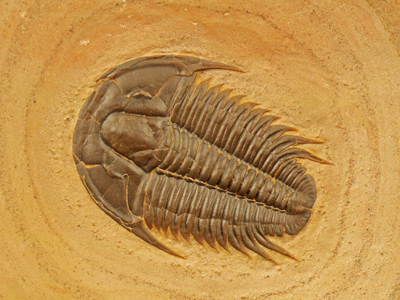
A fossil is any evidence of a plant or animal that lived ages ago.
Unit 1 - Theories of Evolution
This GCSE Biology quiz explores theories of evolution, focusing on how variation and natural selection can gradually change species over long periods of time.
1 .
Evidence for evolution comes from where?
Experiments
Fossils
Genetic engineering
Cloning
The fossil record gives a picture of the evolutionary process
2 .
Evolution leads to the formation of which of the following?
New ideas
New species
New theories
New morals
Variation in each successive generation can create so many new adaptations that an organism is deemed to be a new species, as it has little in common with its ancestors
3 .
Why are there gaps in the fossil record?
Many organisms do not survive
Not all organisms have been preserved
Many fossils have been destroyed by war
Fossils have been stolen from museums
This can occur for many reasons but, despite these gaps, other evidence can be used to support an evolutionary pathway, such as DNA
4 .
In natural selection, the individuals which survive are described as being which of the following?
Better trained
Better adapted
Better suited
Better known
If an organism is better adapted, it can survive and pass on its genes (or new behaviour) to the next and future generations
5 .
Darwin's theory was not accepted at first because of objections by which organisation?
The Government
The People
The Church
The Police
The press and other scientists were also very harsh towards Darwin's theory
6 .
What does evolution mean?
Gradual change
Gradual reproduction
Gradual excretion
Gradual knowledge
Variation is caused by genetic mutation or a change in behaviour in response to a change in the habitat or environment
7 .
Variation which leads to new forms of organisms is caused by what?
Feeding
Excretion
Starvation
Mutation
Mutation of genes can be caused by environmental factors and by mistakes arising when DNA copies itself during cell reproduction
8 .
The organisms which survive can then breed and pass on what?
Their jeans
Their pants
Their alleles
Their trousers
Alleles are alternative forms of a gene that arise by mutation and are found at the same place on a chromosome
9 .
What is a fossil?
A very old person
Any evidence of a plant or animal that lived ages ago
Any very old sedimentary rock
A skeleton of an animal
The fossil record of the horse is particularly complete and provides evidence for evolution that is difficult to deny
10 .
What did Lamark's theory of evolution state?
That life evolved from apes
That the use of a feature allowed it to develop and be passed on and vice-versa
That evolution caused changes to skip a generation
That features could arise and then be lost
Knowledge of genetics was many years in the future. Without knowing about genes and inheritance, any theory of evolution is hard to understand and explain



**Unlimited Quizzes Await You! 🚀**
Hey there, quiz champ! 🌟 You've already tackled today's free questions.
Ready for more?
Ready for more?
🔓 Unlock UNLIMITED Quizzes and challenge yourself every day. But that's
not all...
not all...
🔥 As a Subscriber you can join our thrilling "Daily Streak" against other
quizzers. Try to win a coveted spot on our Hall of Fame Page.
quizzers. Try to win a coveted spot on our Hall of Fame Page.
Don't miss out! Join us now and keep the fun rolling. 🎉
**Unlimited Quizzes Await You! 🚀**
Hey there, quiz champ! 🌟 You've already tackled today's free questions. Ready for more?
🔓 Unlock UNLIMITED Quizzes and challenge yourself every day. But that's not all...
🔥 As a Subscriber you can join our thrilling "Daily Streak" against other quizzers. Try to win a coveted spot on our Hall of Fame Page.
Don't miss out! Join us now and keep the fun rolling. 🎉




© Copyright 2016-2026 - Education Quizzes
Work Innovate Ltd - Design | Development |
Marketing
