




Ask the AI Tutor
Need help with Unit 2 - Construct Genetic Diagrams (H)? Ask our AI Tutor!
AI Tutor - Lucy
Connecting with Tutor...
Please wait while we establish connection
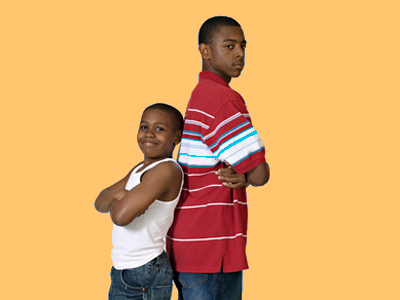
'Tall' is an example of a phenotype.
Unit 2 - Construct Genetic Diagrams (H)
This GCSE Biology quiz checks how well you can use genetic diagrams and Punnett squares to predict inherited traits and calculate simple probabilities.
1 .
Genotype describes which of the following?
All alleles present in a population
One allele
Alleles present in a single organism, for a particular feature
Four genes
It can also refer to an individual's collection of genes
2 .
What does homozygous mean?
That the alleles are the same
That the alleles are different
That the alleles are varied
That the alleles are mutated
The prefix homo always means the same e.g. homologous, homogenous
3 .
Which word describes Tt?
Heterozygous
Homozygous
Heterogametic
Homogametic
Since the alleles are different, you can immediately rule out the two options beginning with 'homo'
4 .
Which word describes TT?
Heterozygous
Heterogametic
Homozygous
Homogametic
Since the alleles are the same, it could only be one of the last two alternatives
5 .
'Tall' is an example of which of the following?
A genotype
An allele
A gene
A phenotype
Phenotypes are descriptions of the effects of alleles
6 .
Which of the following is an example of a heterozygous genotype?
TT
CC
Tt
Tc
The same letter of the alphabet is used for each feature (gene) - T in this case - so Tc is incorrect
7 .
Phenotype is the expression of what?
The face
The genotype
The eyes
The zygote
Phenotype is usually described as 'what you look like'! Blue eyes or brown hair, tall or short. The genes (alleles) in the genotype dictate what we look like
8 .
Alleles are different forms of the same...
allele
gene
code
egg
In some inherited diseases, like cystic fibrosis or Huntingtons disease, one of the alleles is faulty
9 .
What is the ratio of Tall:short if Tt is crossed with tt? Use a genetic diagram to predict the outcome.
2:1
3:1
4:1
1:1
Using a Punnett square:
T t
t Tt Tt
t tt tt 2 Tall Tt and 2 short tt cancels to 1:1, Equal numbers of Tall to short in the offspring
T t
t Tt Tt
t tt tt 2 Tall Tt and 2 short tt cancels to 1:1, Equal numbers of Tall to short in the offspring
10 .
Using a Punnett square, predict the ratio of tall to short when Tt is crossed with Tt. The allele for tall is T and the allele for short is t.
2:1
4:1
3:1
1:1
The gametes are T or t. The Punnett Square looks like this:
T t
T TT Tt
t Tt tt 3 Tall (either TT or Tt) and 1 short (tt), hence a 3:1 ratio Tall:short
T t
T TT Tt
t Tt tt 3 Tall (either TT or Tt) and 1 short (tt), hence a 3:1 ratio Tall:short



**Unlimited Quizzes Await You! 🚀**
Hey there, quiz champ! 🌟 You've already tackled today's free questions.
Ready for more?
Ready for more?
🔓 Unlock UNLIMITED Quizzes and challenge yourself every day. But that's
not all...
not all...
🔥 As a Subscriber you can join our thrilling "Daily Streak" against other
quizzers. Try to win a coveted spot on our Hall of Fame Page.
quizzers. Try to win a coveted spot on our Hall of Fame Page.
Don't miss out! Join us now and keep the fun rolling. 🎉
**Unlimited Quizzes Await You! 🚀**
Hey there, quiz champ! 🌟 You've already tackled today's free questions. Ready for more?
🔓 Unlock UNLIMITED Quizzes and challenge yourself every day. But that's not all...
🔥 As a Subscriber you can join our thrilling "Daily Streak" against other quizzers. Try to win a coveted spot on our Hall of Fame Page.
Don't miss out! Join us now and keep the fun rolling. 🎉




© Copyright 2016-2026 - Education Quizzes
Work Innovate Ltd - Design | Development |
Marketing
