




Ask the AI Tutor
Need help with Unit 2 - Photosynthesis? Ask our AI Tutor!
AI Tutor - Lucy
Connecting with Tutor...
Please wait while we establish connection
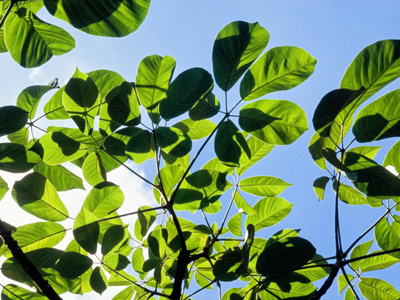
Plants can convert the sugars made during photosynthesis into starch.
Unit 2 - Photosynthesis
This GCSE Biology quiz on photosynthesis checks how plants use light, carbon dioxide, and water to make glucose, and how this process supports respiration, growth, and storage.
1 .
Various factors can limit the rate of photosynthesis. Which of these variables can limit photosynthesis?
Carbon dioxide concentration
Oxygen concentration
pH
Time
In practice, there is normally sufficient carbon dioxide in the atmosphere to keep plants fully supplied
2 .
Photosynthesis takes place in which part of a plant cell?
The nucleus
The mitochondria
The cell wall
The chloroplasts
This is where the chlorophyll is located
3 .
Plants can convert sugars into protein using which mineral ion obtained from the soil?
Sodium
Magnesium
Phosphate
Nitrate
Proteins and amino acids contain nitrogen which enters the plant from the soil in the form of nitrate ions
4 .
Photosynthesis is a process in...
plants and animals
plants and fungi
plants and algae
bacteria
Animals cannot photosynthesise and rely on plants to provide their food either directly (herbivores) or indirectly by eating other animals
5 .
Which very important gas is given off as a by-product of photosynthesis?
Carbon dioxide
Hydrogen
Ammonia
Oxygen
Oxygen makes up about 20% of the air we breathe. Plants and algae are responsible for producing the oxygen we need!
6 .
Plants can convert the sugars made during photosynthesis into which insoluble stored form of energy?
Protein
Starch
Fructose
Cholesterol
Starch is made from long chains of glucose molecules that have been chemically joined together
7 .
Farmers will use heated greenhouses for faster growth of crops. This increases photosynthesis by increasing the...
pH
light intensity
temperature
water
Photosynthesis is a series of chemical reactions. Chemical reactions usually increase in speed as temperature is increased
8 .
Where does the water needed for photosynthesis usually come from in plants?
Soil
Rivers
The sea
The air
Root hairs absorb the water needed by the plant for photosynthesis from the soil
9 .
Photosynthesis requires which type of energy?
Heat
Electrical
Potential
Light
The light energy is trapped by chlorophyll molecules which are packed into the chloroplasts
10 .
If the rate of photosynthesis is reduced, which of the following important processes is also reduced?
Respiration
Growth
Reproduction
Excretion
Photosynthesis makes sugars which are then used to make the biomass of the plant itself. More photosynthesis means more sugars which can be used to grow a bigger plant



**Unlimited Quizzes Await You! 🚀**
Hey there, quiz champ! 🌟 You've already tackled today's free questions.
Ready for more?
Ready for more?
🔓 Unlock UNLIMITED Quizzes and challenge yourself every day. But that's
not all...
not all...
🔥 As a Subscriber you can join our thrilling "Daily Streak" against other
quizzers. Try to win a coveted spot on our Hall of Fame Page.
quizzers. Try to win a coveted spot on our Hall of Fame Page.
Don't miss out! Join us now and keep the fun rolling. 🎉
**Unlimited Quizzes Await You! 🚀**
Hey there, quiz champ! 🌟 You've already tackled today's free questions. Ready for more?
🔓 Unlock UNLIMITED Quizzes and challenge yourself every day. But that's not all...
🔥 As a Subscriber you can join our thrilling "Daily Streak" against other quizzers. Try to win a coveted spot on our Hall of Fame Page.
Don't miss out! Join us now and keep the fun rolling. 🎉




© Copyright 2016-2026 - Education Quizzes
Work Innovate Ltd - Design | Development |
Marketing
