




Ask the AI Tutor
Need help with Unit 3 - Changes in Capillary Blood Flow for Heat Loss (H)? Ask our AI Tutor!
AI Tutor - Lucy
Connecting with Tutor...
Please wait while we establish connection
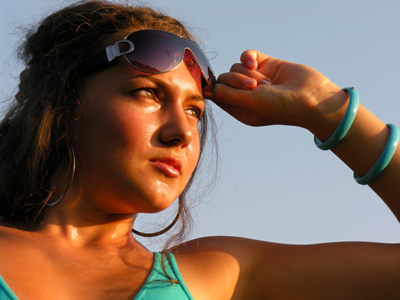
When we exercise, the skin looks red due to increased blood flow in the skin capillaries.
Unit 3 - Changes in Capillary Blood Flow for Heat Loss (H)
GCSE Biology explains how your body controls temperature by changing blood flow in the skin. Tiny surface vessels widen or narrow to lose extra heat or conserve warmth.
1 .
Name the special cells responsible for detecting temperature changes.
Chemoreceptors
Thermoreceptors
Neuroreceptors
Baroreceptors
Chemoreceptors detect chemical changes, for example carbon dioxide levels
2 .
Name the part of the brain that controls body temperature in mammals.
Medulla
Cortex
Thermoregulatory centre
Cerebellum
Receptor cells detect whether the blood is abnormally hot or abnormally cold
3 .
Skin contains thermoreceptors which send messages to which of the following, to start body responses to maintain body temperature?
Heart
Skin
Thermoregulatory centre
Adrenal gland
This is an example of a feedback system in the body
4 .
When blood vessels tighten and have a smaller lumen, we call this...
vasoconstriction
vasodilation
vasomotion
vasodirection
This reduces the volume of blood that can pass through the blood vessels
5 .
Which of the following encourages heat loss by evaporation?
Sweating
Urinating
Excretion
Breathing
Evaporation of water in sweat cools the skin due to the change of state from a liquid to a gas
6 .
When we exercise, the skin looks red due to...
more blood being pumped round the body
less blood to the muscles
increased blood flow in the skin capillaries
increased sweating
This helps to get rid of excess heat from the core of the body
7 .
To allow for more heat loss, the vessels supplying the skin capillaries undergo...
vasoconstriction
vasodilation
no change
leakage of fluid
Skin looks red due to vasodilation. This increases blood flow to the surface of the skin, allowing greater heat loss
8 .
When we are cold, muscles shiver to increase...
heat generation
heat loss
cooling
evaporation
Shivering means that the muscles are working harder and therefore respiration will be greater, generating more heat
9 .
Thermoregulation is an example of...
keeping warm
homeostasis
hormonal control
keeping fit
Homeostasis is maintaining a constant internal environment. Internal body temperature needs to be kept within narrow limits
10 .
What is the core temperature for humans, in degrees C?
38
37
37.4
36
Enzymes start to become denatured at temperatures above 37 degrees C



**Unlimited Quizzes Await You! 🚀**
Hey there, quiz champ! 🌟 You've already tackled today's free questions.
Ready for more?
Ready for more?
🔓 Unlock UNLIMITED Quizzes and challenge yourself every day. But that's
not all...
not all...
🔥 As a Subscriber you can join our thrilling "Daily Streak" against other
quizzers. Try to win a coveted spot on our Hall of Fame Page.
quizzers. Try to win a coveted spot on our Hall of Fame Page.
Don't miss out! Join us now and keep the fun rolling. 🎉
**Unlimited Quizzes Await You! 🚀**
Hey there, quiz champ! 🌟 You've already tackled today's free questions. Ready for more?
🔓 Unlock UNLIMITED Quizzes and challenge yourself every day. But that's not all...
🔥 As a Subscriber you can join our thrilling "Daily Streak" against other quizzers. Try to win a coveted spot on our Hall of Fame Page.
Don't miss out! Join us now and keep the fun rolling. 🎉




© Copyright 2016-2026 - Education Quizzes
Work Innovate Ltd - Design | Development |
Marketing
