




Ask the AI Tutor
Need help with Unit 3 - Exchange Surface and Diffusion? Ask our AI Tutor!
AI Tutor - Lucy
Connecting with Tutor...
Please wait while we establish connection
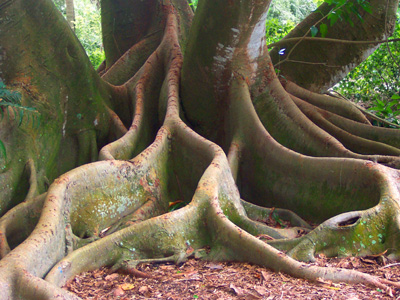
Mineral ions enter the plant by active transport through the roots.
Unit 3 - Exchange Surface and Diffusion
GCSE Biology explains how substances move by diffusion and how specialised exchange surfaces help living organisms take in what they need and remove waste efficiently.
1 .
During gaseous exchange, which two gases are involved?
Oxygen and hydrogen
Nitrogen and oxygen
Carbon dioxide and oxygen
Ammonia and oxygen
Oxygen is taken in and carbon dioxide is given out. Plants do the opposite during photosynthesis.
2 .
These are found in large numbers in the lining of the small intestine.
Alveoli
Ville
Villi
Arteries
These create a very large surface area within the small intestine
3 .
Exchange surfaces are generally involved in the...
transfer of materials across a membrane
removal of waste
uptake of nutrients
respiration
This happens where there is a difference in concentration (a concentration gradient) of the materials being exchanged on the two sides of the membrane
4 .
In animals, uptake of materials is quicker if there is a rich network of...
capillaries
villi
lungs
arteries
Lungs, gills and the villi all have a dense capillary network which takes up the materials quickly, thus maintaining a steep concentration gradient for maximal uptake
5 .
Alveoli are found in the...
gills
lungs
liver
brain
They are also known as air sacs
6 .
Diffusion is faster across an exchange surface if the concentration gradient is...
less
increased
the same
moved
Think of it like a hill. If a hill is steeper (has a greater gradient), an object will roll down it better
7 .
Exchange surfaces are usually very...
thin
thick
wide
tall
If the structure is thin, materials get through more quickly
8 .
Carbon dioxide enters plants mainly through the...
roots
leaves
flowers
stem
Leaves are thin and flat which helps to make gaseous exchange more efficient.
9 .
Within leaves, the gases enter and leave through specialised pores called...
stomata
stoma
holes
gaps
These are found on the underside of the leaves
10 .
Mineral ions enter the plant by active transport through the...
stem
leaves
roots
flowers
Mineral ions, such as nitrate ions, enter the plant through specialised cells in the roots called root hair cells. These have a lot of mitochondria to supply the energy required for the active transport of the mineral ions
Our Social Circles




**Unlimited Quizzes Await You! 🚀**
Hey there, quiz champ! 🌟 You've already tackled today's free questions.
Ready for more?
Ready for more?
🔓 Unlock UNLIMITED Quizzes and challenge yourself every day. But that's
not all...
not all...
🔥 As a Subscriber you can join our thrilling "Daily Streak" against other
quizzers. Try to win a coveted spot on our Hall of Fame Page.
quizzers. Try to win a coveted spot on our Hall of Fame Page.
Don't miss out! Join us now and keep the fun rolling. 🎉
**Unlimited Quizzes Await You! 🚀**
Hey there, quiz champ! 🌟 You've already tackled today's free questions. Ready for more?
🔓 Unlock UNLIMITED Quizzes and challenge yourself every day. But that's not all...
🔥 As a Subscriber you can join our thrilling "Daily Streak" against other quizzers. Try to win a coveted spot on our Hall of Fame Page.
Don't miss out! Join us now and keep the fun rolling. 🎉
© Copyright 2016-2026 - Education Quizzes
Work Innovate Ltd - Design | Development |
Marketing
