




Ask the AI Tutor
Need help with Unit 3 - Osmosis? Ask our AI Tutor!
AI Tutor - Lucy
Connecting with Tutor...
Please wait while we establish connection
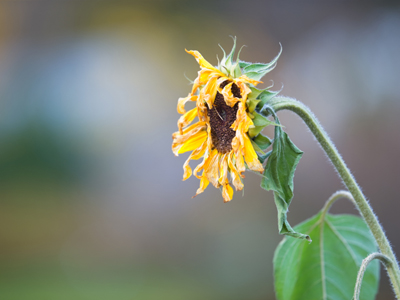
Plants use osmosis to prevent wilting.
Unit 3 - Osmosis
GCSE Biology shows how osmosis moves water across partially permeable membranes, affecting animal and plant cells in different external solutions.
1 .
Dilute means...
a little solute and a lot of water
a lot of solute and little water
concentrated
the same
Dilute means weak and watery. A small amount of solute, e.g. salt, dissolved in a lot of water
2 .
In living organisms, the partially permeable membrane is the...
nucleus
cell membrane
chloroplast
bacterium
This contains the cytoplasm and when there is a concentration gradient between the outside of the cell and the cytoplasm, osmosis occurs, restoring the equilibrium
3 .
Water molecules move from...
dilute to a more dilute solution
dilute to a more concentrated solution
concentrated to a more dilute solution
concentrated to a less concentrated solution
It is a special case of diffusion as it involves a movement of only water particles from a higher concentration to a lower concentration across a partially permeable membrane
4 .
Osmosis is the movement of which molecules?
Oxygen
Hydrogen
Any
Water
Osmosis is only about water molecules
5 .
Osmosis takes place in this important structure.
Alveolus
Villus
Nephron
Artery
Water is reabsorbed by osmosis in the nephrons of the kidneys, keeping the blood plasma at the right concentration to avoid the lysis (bursting) of the red blood cells in particular
6 .
Plants use osmosis to prevent...
respiration
photosynthesis
wilting
excretion
Plant cells become flaccid when they are short of water. Osmosis makes them turgid once more
7 .
Osmosis takes place in which of the following?
Roots
Hair
Soil
The atmosphere
Water is taken up by root hair cells from the soil as there is a concentration gradient from soil to the root hair cell
8 .
Potato cylinders are put into a strong sugar solution. After an hour they are...
bigger
smaller
the same
sweet potato
Water leaves the potato cells by osmosis, so the potato cylinders shrink in size due to water loss
9 .
Why is osmosis not the same thing as diffusion?
A partially permeable membrane is needed for osmosis
A partially permeable membrane is needed for diffusion
Osmosis involves oxygen only
Diffusion involves water only
True diffusion occurs when two substances are in direct contact with one another, here they are physically separated by the partially permeable membrane
10 .
Water molecules move...
down the concentration gradient
along the concentration gradient
against the concentration gradient
nowhere
Along the gradient is always marked as incorrect in exams



**Unlimited Quizzes Await You! 🚀**
Hey there, quiz champ! 🌟 You've already tackled today's free questions.
Ready for more?
Ready for more?
🔓 Unlock UNLIMITED Quizzes and challenge yourself every day. But that's
not all...
not all...
🔥 As a Subscriber you can join our thrilling "Daily Streak" against other
quizzers. Try to win a coveted spot on our Hall of Fame Page.
quizzers. Try to win a coveted spot on our Hall of Fame Page.
Don't miss out! Join us now and keep the fun rolling. 🎉
**Unlimited Quizzes Await You! 🚀**
Hey there, quiz champ! 🌟 You've already tackled today's free questions. Ready for more?
🔓 Unlock UNLIMITED Quizzes and challenge yourself every day. But that's not all...
🔥 As a Subscriber you can join our thrilling "Daily Streak" against other quizzers. Try to win a coveted spot on our Hall of Fame Page.
Don't miss out! Join us now and keep the fun rolling. 🎉




© Copyright 2016-2026 - Education Quizzes
Work Innovate Ltd - Design | Development |
Marketing
