




Ask the AI Tutor
Need help with China: Under Mao - 1965-1976 - The Impact Of Communist Rule On China's Foreign Policy? Ask our AI Tutor!
AI Tutor - Lucy
Connecting with Tutor...
Please wait while we establish connection
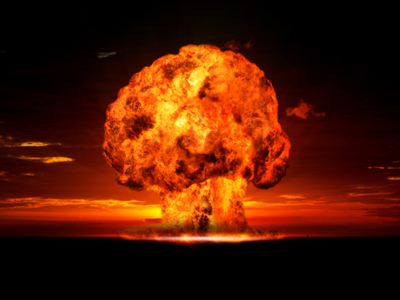
Mao was anxious to develop nuclear weapons as quickly as he could.
China: Under Mao - 1965-1976 - The Impact Of Communist Rule On China's Foreign Policy
How did Communist rule shape China’s foreign policy between 1965 and 1976? Test your GCSE History knowledge of the Cultural Revolution, alliances and changing relations with other countries.
1 .
With which adjoining state did China sign a friendship treaty in 1950?
India
Japan
The USSR
North Korea
China felt vulnerable just after the revolution and expected an early attack. Alliance with the USSR made an attack less likely
2 .
China joined in the Korean War on the side of North Korea. Why?
Mao feared the existence of a capitalist South Korea as a threat to him
Mao wanted to replace the Soviet Union as North Korea's main supporter
Mao feared that the UN forces (mainly American) would continue through North Korea and cross the Yalu River into China
Mao feared that the USA and its allies would deploy nuclear weapons against the North and wished to forestall this by passing through North Korea and into the south. From there Mao thought that he could negotiate from a position of strength
Mao felt vulnerable, as a newly installed ruler, to an attack by capitalist powers
3 .
In 1962 Mao fought a brief border war against a neighbouring power. Which one?
India
Outer Mongolia
Russia
North Vietnam
Mao's sense of insecurity continued. Many of these borders had only recently been defined - usually in the colonial era. With the decline of the European empires, Mao felt that these artificial constructions could be revised: either by negotiation or by force
4 .
Chinese troops clashed on the Ussuri River in 1969 with another neighbouring state. Which one was this?
Pakistan
Burma
Laos
The Soviet Union
Still insecure, Mao feared attack from all directions. There was no formal declaration of war, but Mao used force to deter what he regarded as frontier incursions
5 .
In 1972 a diplomatic bombshell occurred with the visit of a United States delegation to Beijing, anxious to talk about trade and other matters. Who headed the US team?
Security Advisor Henry Kissinger
President Nixon
Vice-President Gerald Ford
Secretary of Defense Robert McNamara
The US was keen to exploit the worsening relations between China and the Soviet Union, and to reduce its own defence spending
6 .
What was the main reason for the deteriorating relations between China and the USSR during the 1960s?
Territorial disputes
Ideological arguments over the interpretation of Marxist doctrine
Personal hostility between Khrushchev and Mao
Rivalry for leadership of the Communist world
Mao believed that the USSR had never been a sincere and durable ally of China
7 .
With which nearby state was a peace treaty eventually signed in 1978, although hostilities had ceased over thirty years earlier? Hostilities had begun fourteen years before that.
Japan
Great Britain
France
Nepal
The change in government in China from 1949 complicated matters, as it had been a previous Chinese government that had responded to attack in the first place
8 .
Which state did China herself invade and occupy in 1950, provoking a serious rebellion in 1958 that was brutally crushed?
Tibet
Mongolia
Bhutan
Sikkim
China maintained that she had an historic claim to this territory, and also no doubt strategic considerations influenced her actions
9 .
When did China first acquire an atomic bomb?
1957
1961
1964
1970
China was anxious to develop this weapon as she felt insecure, and she wanted it also as a bargaining counter in any future negotiations
10 .
A visit by a US sports team paved the way for the successful official visit in 1972. Which sport was this?
Ice hockey
Table tennis/ping pong
Swimming
Tennis
The games generated enormous excitement, and genuinely made a contribution to the success of the official talks



**Unlimited Quizzes Await You! 🚀**
Hey there, quiz champ! 🌟 You've already tackled today's free questions.
Ready for more?
Ready for more?
🔓 Unlock UNLIMITED Quizzes and challenge yourself every day. But that's
not all...
not all...
🔥 As a Subscriber you can join our thrilling "Daily Streak" against other
quizzers. Try to win a coveted spot on our Hall of Fame Page.
quizzers. Try to win a coveted spot on our Hall of Fame Page.
Don't miss out! Join us now and keep the fun rolling. 🎉
**Unlimited Quizzes Await You! 🚀**
Hey there, quiz champ! 🌟 You've already tackled today's free questions. Ready for more?
🔓 Unlock UNLIMITED Quizzes and challenge yourself every day. But that's not all...
🔥 As a Subscriber you can join our thrilling "Daily Streak" against other quizzers. Try to win a coveted spot on our Hall of Fame Page.
Don't miss out! Join us now and keep the fun rolling. 🎉




© Copyright 2016-2026 - Education Quizzes
Work Innovate Ltd - Design | Development |
Marketing
