




Ask the AI Tutor
Need help with Middle East: 1948-1999 - Attempts Since 1973 To Broker A Peace Settlement? Ask our AI Tutor!
AI Tutor - Lucy
Connecting with Tutor...
Please wait while we establish connection
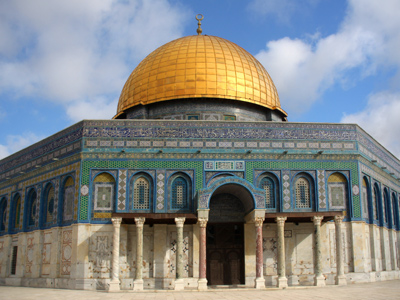
The Dome of the Rock, in Jerusalem, is a holy site for Muslims.
Middle East: 1948-1999 - Attempts Since 1973 To Broker A Peace Settlement
Explore how peace talks, treaties and negotiations have tried to reduce conflict in the Middle East since 1973, and see how well you understand this GCSE History topic.
1 .
In 1977 President Sadat of Egypt flew to Jerusalem and addressed the Israeli Knesset. What was this body?
The Israeli Foreign Ministry
The Israeli Parliament
The Israeli Broadcasting Authority
The Conference of Israeli Synagogues
Sadat took a big risk in going to Israel, and indeed a short while after his return he was assassinated by members of his own bodyguard
2 .
In 1978 Sadat and Menachem Begin, the Israeli leader, met the US President Jimmy Carter. Where did this meeting take place?
The White House
The Pentagon
The State Department
Camp David
These talks led to the signing in 1979 of a peace treaty between Egypt and Israel
3 .
In 1993 talks took place in Oslo, that included representatives of the Palestinian people. Which organisation was recognised by the United Nations as the sole legitimate voice of Palestinians?
The Palestinian Authority
The Palestinian Liberation Organisation
Hamas
Hezbollah
Negotiations with the Palestinians were difficult. Issues like Gaza, the West Bank, Israeli settlements and East Jerusalem were complicated and aroused strong passions
4 .
Which Arab state reached agreement with the State of Israel in 1994?
Jordan
Lebanon
Syria
Iraq
This was progress, but very slow if countries were going to recognise Israel one by one, and only after the passage of more time
5 .
In 2003 a phrase was used by the leaders of the US, the Palestinians and the government of Israel to suggest a peace plan with regular gradual targets towards an eventual "two-state solution". What was this phrase?
A road plan
A peace plan
A road map
A peace map
This document suggested a long and gradual "peace process"
6 .
From 2002 a "Quartet" of four main states, or groups of states, agreed to use their collective influence to achieve Middle East peace. Which of the following did not belong to the Quartet?
Russia
China
The European Union
The United Nations
After 10 years the Quartet had little to show for their efforts
7 .
The Quartet did, however, have a Special Envoy, tasked with exploiting opportunities for Middle East peace. Who occupied this post from 2007 - 2015?
Baroness Ashton of Upholland
Tony Blair
Senator McCain
Ex-President of the USA Jimmy Carter
Despite apparent intense activity Blair's achievements in the role seem rather meagre
8 .
Both the Al-Aqsa Mosque and the Dome of the Rock are sacred sites for muslims. On which part of Israeli-occupied East Jerusalem are they to be found?
The Mount of Olives
The Temple Mount
The Old City
The Plain of Midian
This is an especially sensitive area. Ariel Sharon's visit there in 2000 provoked serious protests
9 .
Equally the so-called "Wailing Wall" in East Jerusalem is cherished by Jews, especially Ultra-Orthodox ones. What other name is given to this wall?
The Temple Wall
The Eastern Wall
The Praying Wall
The Western Wall
In 1967, after the wall was captured by Israeli forces, many Orthodox Jews gathered there to pray
10 .
One stumbling block in the way of an agreement between Israel and the Palestinians is the question of "settlements", parcels of land seized by Jewish farmers. Where are these settlements mainly to be found?
In the Gaza Strip
In the Negev Desert
On the West Bank
On the Golan Heights, the border between Israel and Syria
For settlers this land is part of "Eretz Israel" extending beyond the borders established in 1948-9 to which they have a right according to the Old Testament. For the Palestinians this is their land and they look to the Israeli authorities to eject the settlers



**Unlimited Quizzes Await You! 🚀**
Hey there, quiz champ! 🌟 You've already tackled today's free questions.
Ready for more?
Ready for more?
🔓 Unlock UNLIMITED Quizzes and challenge yourself every day. But that's
not all...
not all...
🔥 As a Subscriber you can join our thrilling "Daily Streak" against other
quizzers. Try to win a coveted spot on our Hall of Fame Page.
quizzers. Try to win a coveted spot on our Hall of Fame Page.
Don't miss out! Join us now and keep the fun rolling. 🎉
**Unlimited Quizzes Await You! 🚀**
Hey there, quiz champ! 🌟 You've already tackled today's free questions. Ready for more?
🔓 Unlock UNLIMITED Quizzes and challenge yourself every day. But that's not all...
🔥 As a Subscriber you can join our thrilling "Daily Streak" against other quizzers. Try to win a coveted spot on our Hall of Fame Page.
Don't miss out! Join us now and keep the fun rolling. 🎉




© Copyright 2016-2026 - Education Quizzes
Work Innovate Ltd - Design | Development |
Marketing
