




Ask the AI Tutor
Need help with World War One Aftermath: 1920-1923 Treaties? Ask our AI Tutor!
AI Tutor - Lucy
Connecting with Tutor...
Please wait while we establish connection
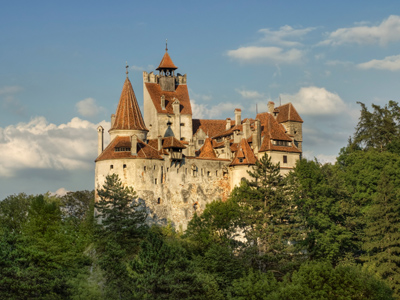
Romania almost doubled in size when it was given Transylvania, formerly a part of Hungary.
World War One Aftermath: 1920-1923 Treaties
Explore the peace treaties signed after the First World War and test how well you understand new borders, lost territories, and the impact on countries such as Hungary.
1 .
Britain was granted a second mandate in the Western Middle East, apart from the one in Palestine. By what name was this area known at first?
Jordan
Transjordan
The Sinai
Nafud
This acquisition seemed to complement the other mandated territories granted to Britain, and to complete a fair share-out of Arab lands with France
2 .
What was the name of the treaty signed with Bulgaria?
Trianon
Neuilly
St. Germain
Senlis
Bulgaria paid a heavy price for its alliance with the Central Powers
3 .
Britain received land from Turkey, most of which later became the state of Israel. What was this mandate called from 1920 to 1948?
Palestine
The West Bank
Samaria
Galilee
The area was largely peopled by Arabs, and Britain was reluctant to let in too many Jews for fear of upsetting this Arab majority. Britain had of course announced in the Balfour Declaration of 1917 that she welcomed the establishment of a home for Jews in the Middle East
4 .
Austria lost substantial territory to other powers in the settlement. With which state was it forbidden to unite in the 1920 treaty?
Hungary
Switzerland
Italy
Germany
Many Austrians felt that, having lost most of their empire, they should be allowed to merge with a nearby state. Otherwise Austria seemed like a head (the capital Vienna) without a body
5 .
Name one province of the former Ottoman Empire, which France obtained through the settlement, to become ruled under a mandate from the League of Nations.
Lebanon
Iraq
Saudi Arabia
Kuwait
All of Turkey's non-Ottoman lands were ceded by 1924 to one or other of the victorious powers, to be ruled under a League of Nations mandate or - in a few cases - to become independent states
6 .
Which British war hero advised both the British government and Arab leaders, while the peace treaties were being negotiated?
General Allenby
Lawrence of Arabia
General Alexander
General Hamilton
The Arabs wanted their own states in the areas relinquished by the Turks, but Britain and France had held talks during the War over how best to carve up the Middle East between them. The awareness of large deposits of oil was a powerful motive
7 .
Hungary was compelled to give up Transylvania. Which nearby state almost doubled in size when it acquired this province?
Bulgaria
Yugoslavia
Romania
Russia
The loss of Transylvania was bitterly felt in Hungary, but its new possessor hardly felt strengthened by its new acquisition
8 .
Which non-Arab Muslim group, concentrated in N.E. Syria, Northern Iraq and Turkey, failed to influence the Powers to grant them their own state during this period?
Kurds
Druze
Medes
Turkomen
This group was not strong enough to challenge either re-awakened Arab nationalism or growing European imperialism in the new Middle East of the post-war era
9 .
Hungary (like Austria) lost much territory, leaving a small Magyar-state surrounded by other states possessing large Magyar minorities. Which state to the north inherited a large Hungarian population?
Czechoslovakia
Germany
Poland
Liechtenstein
It was difficult to avoid leaving ethnic minorities separated from the majority, as different races were mixed up - especially in Central and Eastern Europe. Such minorities could de-stabilise the state in which they were forced to live, and arouse resentment in the nearby homeland where they would prefer to be
10 .
Which Turkish leader spearheaded his country's rejection of the 1920 treaty, and forced the Allies to sign a much more generous settlement three years later?
Murad
Ocalan
Kemal
Suleiman
The Allies were wary of becoming involved in a further war, and hence they failed to protect the Greek minority in Asia Minor, which was swiftly expelled from Turkish soil. There were also bitter memories of the stout (and successful) defence put up by the Turks at Gallipoli
You can find more about this topic by visiting BBC Bitesize - Paris Peace Treaties and the League of Nations, to 1933



**Unlimited Quizzes Await You! 🚀**
Hey there, quiz champ! 🌟 You've already tackled today's free questions.
Ready for more?
Ready for more?
🔓 Unlock UNLIMITED Quizzes and challenge yourself every day. But that's
not all...
not all...
🔥 As a Subscriber you can join our thrilling "Daily Streak" against other
quizzers. Try to win a coveted spot on our Hall of Fame Page.
quizzers. Try to win a coveted spot on our Hall of Fame Page.
Don't miss out! Join us now and keep the fun rolling. 🎉
**Unlimited Quizzes Await You! 🚀**
Hey there, quiz champ! 🌟 You've already tackled today's free questions. Ready for more?
🔓 Unlock UNLIMITED Quizzes and challenge yourself every day. But that's not all...
🔥 As a Subscriber you can join our thrilling "Daily Streak" against other quizzers. Try to win a coveted spot on our Hall of Fame Page.
Don't miss out! Join us now and keep the fun rolling. 🎉




© Copyright 2016-2026 - Education Quizzes
Work Innovate Ltd - Design | Development |
Marketing
