




Ask the AI Tutor
Need help with Pyramids and Mummies? Ask our AI Tutor!
AI Tutor - Lucy
Connecting with Tutor...
Please wait while we establish connection
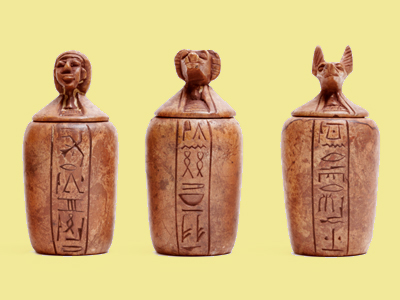
Internal organs were originally placed in canopic jars.
Pyramids and Mummies
Step into Ancient Egypt and discover why pyramids were built, how mummies were made, and what Egyptians believed about life after death.
1 .
What was built around the pyramids to help build them?
Scaffolding
Ramps
Bridges
Walls
Archaeological evidence for the use of ramps has been found at several pyramids. They made it easier to raise the heavy stones
2 .
What was placed in the mummy's hands?
The Book of Life
The Book of the Dead
The Book of the Afterlife
The Book of Truth
The Book of the Dead was a book of spells to help entry to the afterlife
3 .
What are the mummies' coffins placed inside?
A hole in the ground
A third coffin
A sarcophagus
A metal container
The mummy was put in two coffins before the Sarcophagus
4 .
What is a mummy wrapped in?
Cotton
Papyrus
Paper
Linen
Linen is a type of cloth made from the fibres of the flax plant
5 .
What is the first process of mummification?
Wrapping
Burying
Embalming
Cremating
The Ancient Egyptians were experts at preserving dead bodies
6 .
What was originally placed in canopic jars?
Fingers
Oils
Pharaoh's ashes
Internal organs
Later the Egyptians began to return the organs to the body once they had been dried
7 .
What was usually placed on the top of the pyramid?
A statue of the pharaoh
A statue of a Bird
A statue of a Jackal
Gold
The pyramids were originally covered in polished stone which made them very shiny
8 .
What were the Egyptian pyramids used for?
Tombs built for Pharaohs
Pharaoh's palaces
Grain stores
Large family homes
The Egyptian pharaohs began building pyramids to house their earthly remains around 2700 BC
9 .
What was placed between the layers of bandages?
Amulets
Internal organs
Pharaoh's hair
Paper
Amulets were thought to protect the body in the afterlife
10 .
Where are the three largest pyramids still in Egypt?
Memphis
Cairo
Alexandria
Giza
The largest pyramid was The Great Pyramid built for pharaoh Khufu



**Unlimited Quizzes Await You! 🚀**
Hey there, quiz champ! 🌟 You've already tackled today's free questions.
Ready for more?
Ready for more?
🔓 Unlock UNLIMITED Quizzes and challenge yourself every day. But that's
not all...
not all...
🔥 As a Subscriber you can join our thrilling "Daily Streak" against other
quizzers. Try to win a coveted spot on our Hall of Fame Page.
quizzers. Try to win a coveted spot on our Hall of Fame Page.
Don't miss out! Join us now and keep the fun rolling. 🎉
**Unlimited Quizzes Await You! 🚀**
Hey there, quiz champ! 🌟 You've already tackled today's free questions. Ready for more?
🔓 Unlock UNLIMITED Quizzes and challenge yourself every day. But that's not all...
🔥 As a Subscriber you can join our thrilling "Daily Streak" against other quizzers. Try to win a coveted spot on our Hall of Fame Page.
Don't miss out! Join us now and keep the fun rolling. 🎉




© Copyright 2016-2026 - Education Quizzes
Work Innovate Ltd - Design | Development |
Marketing
