




Ask the AI Tutor
Need help with The Agricultural Revolution 02? Ask our AI Tutor!
AI Tutor - Lucy
Connecting with Tutor...
Please wait while we establish connection
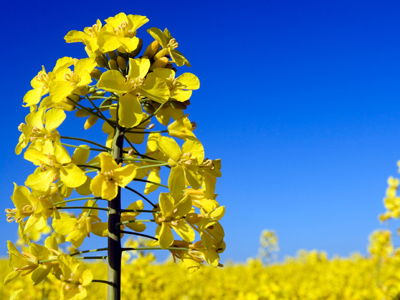
Oilseed rape was not rotated in the Norfolk system.
The Agricultural Revolution 02
Explore how new crop rotation systems transformed British farming, keeping soil fertile, reducing wasted fallow land, and helping farmers feed a growing industrial population.
1 .
Who introduced the Norfolk four-course crop rotation?
'Carrot' Connolly
'Cauliflower' Carter
'Runner Bean' Rogers
'Turnip' Townshend
Charles Townshend was a wealthy landowner
2 .
Which crop was not rotated in the Norfolk system?
Barley
Clover
Oilseed rape
Turnips
Wheat was the fourth crop
3 .
Which was not true of the new crop rotation system?
All farmers had to agree to use it
Animals were fed on the turnips and clover
No field needed to be left fallow
The soil was better nourished
It was not a legal requirement for farmers
4 .
Who shared and spread new ideas?
Thomas Coke
Thomas Fanta
Thomas Sprite
Thomas Vimto
Sheep shearing competitions were one idea of his
5 .
Jethro Tull famously invented a horse-drawn…what?
Combine harvester
Hay baler
Seed drill
Threshing machine
It planted seeds straight and at the same depth
6 .
The old method of scattering seeds by hand was .......
Broadcasting
Palming
Pathetic
Winnowing
Seeds could be blown away or eaten by birds as they were not buried in the soil
7 .
Who helped to produce healthier and heavier animals?
Henry Cornwell
James Stowell
Michael Chartwell
Robert Bakewell
He was the first person to breed cattle specifically for slaughtering to provide beef
8 .
Bakewell's methods were known as what?
Cloning
Controlled mating
Scientific rearing
Selective breeding
His programme of selective breeding was mentioned by Charles Darwin in his theory of evolution. He said it was good evidence that species could change over long periods of time
9 .
Jethro Tull's book of 1731 had what title?
Farming the Modern Way
Horse Hoeing Husbandry
Ploughing New Furrows
Seed Drill Dynamics
He believed that plants used the soil for food. No-one knew about photosynthesis at that time
10 .
Which other historical event greatly helped farmers?
The American Revolution
The French Revolution
The Industrial Revolution
The Mexican Revolution
Farm machinery could now be made of iron instead of wood



**Unlimited Quizzes Await You! 🚀**
Hey there, quiz champ! 🌟 You've already tackled today's free questions.
Ready for more?
Ready for more?
🔓 Unlock UNLIMITED Quizzes and challenge yourself every day. But that's
not all...
not all...
🔥 As a Subscriber you can join our thrilling "Daily Streak" against other
quizzers. Try to win a coveted spot on our Hall of Fame Page.
quizzers. Try to win a coveted spot on our Hall of Fame Page.
Don't miss out! Join us now and keep the fun rolling. 🎉
**Unlimited Quizzes Await You! 🚀**
Hey there, quiz champ! 🌟 You've already tackled today's free questions. Ready for more?
🔓 Unlock UNLIMITED Quizzes and challenge yourself every day. But that's not all...
🔥 As a Subscriber you can join our thrilling "Daily Streak" against other quizzers. Try to win a coveted spot on our Hall of Fame Page.
Don't miss out! Join us now and keep the fun rolling. 🎉




© Copyright 2016-2026 - Education Quizzes
Work Innovate Ltd - Design | Development |
Marketing
