




Ask the AI Tutor
Need help with The Cold War 03? Ask our AI Tutor!
AI Tutor - Lucy
Connecting with Tutor...
Please wait while we establish connection
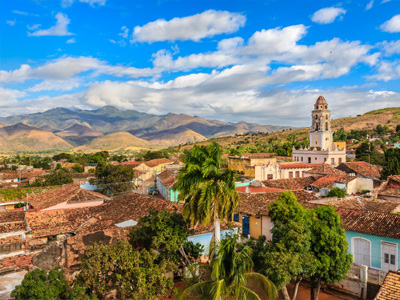
Russia tried to put nuclear missiles on the island of Cuba.
The Cold War 03
This quiz explores what the Cold War was, why tension grew between superpowers, and how rivalry shaped everyday life, weapons, and world politics after the Second World War.
1 .
In what year did Berliners destroy the Berlin Wall?
1986
1987
1989
1991
Small sections can still be seen in the city
2 .
1950 saw a war begin within which country?
Cambodia
China
Korea
Pakistan
The USSR backed North Korea - the UN backed South Korea
3 .
The Korean War ended in which year?
1953
1955
1957
1959
Technically, the war has not yet ended. The Armistice (ceasefire) was signed in July 1953 and a final peaceful solution has yet to be found
4 .
In 1962 Russia tried to put nuclear missiles on which island near the USA?
Cuba
Haiti
Hawaii
Jamaica
They threatened most US cities with the missiles
5 .
Which president forced Russia to back down over the Cuban missile crisis?
Dwight D Eisenhower
John F Kennedy
Lyndon B Johnson
Richard Nixon
Kennedy was assassinated in 1963
6 .
The emergency USSR-USA telephone line was called what?
Crisis line
Hot line
Rant line
War line
It was set up in 1963 to try to avoid war
7 .
Where did Khrushchev send an army in 1956?
Albania
Hungary
Poland
Rumania
To stop it breaking away from communism
8 .
In 1968 the Soviet President, Brezhnev, crushed a rebellion where?
Bulgaria
Czechoslovakia
Poland
Yugoslavia
Much of the trouble was in the capital, Prague
9 .
Where were American troops sent in 1965?
China
Korea
Laos
Vietnam
Vietnamese rebels wanted to unite the whole country under communism
10 .
Which theory said that communist victory in Vietnam would lead to communism elsewhere?
Concertina theory
Domino theory
House of cards theory
Toppling theory
Even though the USA lost the war and Vietnam became a communist country, the worry that many more countries would become communist did not happen



**Unlimited Quizzes Await You! 🚀**
Hey there, quiz champ! 🌟 You've already tackled today's free questions.
Ready for more?
Ready for more?
🔓 Unlock UNLIMITED Quizzes and challenge yourself every day. But that's
not all...
not all...
🔥 As a Subscriber you can join our thrilling "Daily Streak" against other
quizzers. Try to win a coveted spot on our Hall of Fame Page.
quizzers. Try to win a coveted spot on our Hall of Fame Page.
Don't miss out! Join us now and keep the fun rolling. 🎉
**Unlimited Quizzes Await You! 🚀**
Hey there, quiz champ! 🌟 You've already tackled today's free questions. Ready for more?
🔓 Unlock UNLIMITED Quizzes and challenge yourself every day. But that's not all...
🔥 As a Subscriber you can join our thrilling "Daily Streak" against other quizzers. Try to win a coveted spot on our Hall of Fame Page.
Don't miss out! Join us now and keep the fun rolling. 🎉




© Copyright 2016-2026 - Education Quizzes
Work Innovate Ltd - Design | Development |
Marketing
