




Ask the AI Tutor
Need help with The Cold War 04? Ask our AI Tutor!
AI Tutor - Lucy
Connecting with Tutor...
Please wait while we establish connection
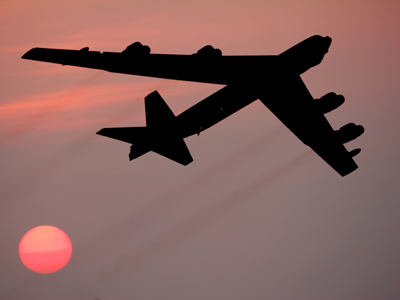
The USA used B-52 bomber planes in Vietnam.
The Cold War 04
Discover how rivalry between capitalism and communism turned former allies into opponents, shaping tension, propaganda, and nuclear fear during the Cold War.
1 .
In the 1980s, Russia was almost bankrupted by an invasion of which country?
Afghanistan
Iran
Iraq
Kazakhstan
It led to USSR's military withdrawal from Eastern Europe
2 .
The Vietcong were what sort of fighting force?
Dad's army
Gorilla army
Guerrilla army
Territorial army
They did not wear uniforms
3 .
The communist leader Ceaucescu was overthrown where in 1989?
Bulgaria
Czechoslovakia
Hungary
Romania
He and his wife were executed on Christmas Day
4 .
The USA used which huge bomber planes in Vietnam?
A-47s
B-52s
C-63s
D-33s
It was a B-52 bomber that dropped the first atomic bomb
5 .
What was North Vietnam's regular army called?
AVNC
CANV
NVAR
PAVN
It stood for People's Army of North Vietnam. You would think that the acronym would be PANV but it is actually PAVN
6 .
Over 100 innocent people were massacred in which Vietnamese village?
Hai Tai
Jai Nai
Kai Pai
Mai Lai
An American officer was found guilty of war crimes
7 .
Which of the following is the name of a chemical weapon used by the USA during the Vietnam war?
Agent Lemon
Agent Lime
Agent Orange
Agent Strawberry
It caused damage to the body and destroyed trees
8 .
The Cold War ended when which president allowed free elections in Russia?
Andropov
Chernenko
Gorbachev
Gromyko
The communists were driven from power in Eastern Europe
9 .
In Vietnam the USA used which substance that burns skin?
CS Gas
Napalm
Pepper spray
Semtex
It was first used against buildings but later in the war, it was used directly on people
10 .
In 1989 free elections in Poland were won by which trade union?
Glasnost
Liberation
Polarity
Solidarity
The union was led by Lech Walesa who later became president of Poland
Our Social Circles




**Unlimited Quizzes Await You! 🚀**
Hey there, quiz champ! 🌟 You've already tackled today's free questions.
Ready for more?
Ready for more?
🔓 Unlock UNLIMITED Quizzes and challenge yourself every day. But that's
not all...
not all...
🔥 As a Subscriber you can join our thrilling "Daily Streak" against other
quizzers. Try to win a coveted spot on our Hall of Fame Page.
quizzers. Try to win a coveted spot on our Hall of Fame Page.
Don't miss out! Join us now and keep the fun rolling. 🎉
**Unlimited Quizzes Await You! 🚀**
Hey there, quiz champ! 🌟 You've already tackled today's free questions. Ready for more?
🔓 Unlock UNLIMITED Quizzes and challenge yourself every day. But that's not all...
🔥 As a Subscriber you can join our thrilling "Daily Streak" against other quizzers. Try to win a coveted spot on our Hall of Fame Page.
Don't miss out! Join us now and keep the fun rolling. 🎉
© Copyright 2016-2026 - Education Quizzes
Work Innovate Ltd - Design | Development |
Marketing
