




Ask the AI Tutor
Need help with Adverbs Relating to Time 02? Ask our AI Tutor!
AI Tutor - Lucy
Connecting with Tutor...
Please wait while we establish connection
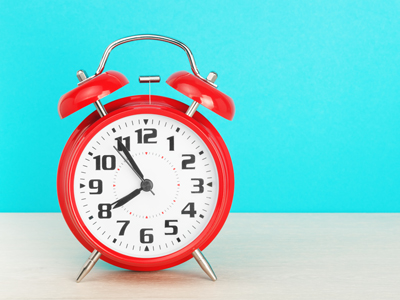
Presque huit heures - almost eight o'clock.
Adverbs Relating to Time 02
Adverbs of time and frequency tell you when things happen in French. Practise using them naturally, so your sentences sound clearer and more GCSE-ready.
In each question you will be given a word or words in English. All you have to do is choose the French equivalent from the four choices offered.
1 .
From time to time
Tout de suite
Tous les jours
Il y a
De temps en temps
2 .
Always / still
Souvent
Toujours
Quelquefois
Peut-être
Souvent = often
Quelquefois = sometimes
Peut-être = perhaps
Quelquefois = sometimes
Peut-être = perhaps
3 .
Slowly
Lentement
Quand
Rarement
Tout à coup
Lentement
Quand = when
Rarement = rarely
Tout à coup = suddenly / all of a sudden
Rarement = rarely
Tout à coup = suddenly / all of a sudden
4 .
Again
De nouveau
Longtemps
En retard
Certainement
Longtemps = for a long time
En retard = late
Certainement = certainly
En retard = late
Certainement = certainly
5 .
Only
Tard
Tôt
Seulement
Soudain
Tard = late
Tôt = early
Soudain = suddenly
Tôt = early
Soudain = suddenly
6 .
Whilst waiting (for) / meanwhile
En avance
En ce moment
En attendant
Encore une fois
En avance = in advance
En ce moment = at the moment
Encore une fois = once more / again
En ce moment = at the moment
Encore une fois = once more / again
7 .
Not yet
Ne ... jamais
Ne ... plus
Vite
Pas encore
Ne ... jamais = never
Ne ... plus = no more / no longer
Vite = quickly
Ne ... plus = no more / no longer
Vite = quickly
8 .
About / approximately
Enfin
Environ
Maintenant
Plus tard
Enfin = at last / finally
Maintenant = now
Plus tard = later
Maintenant = now
Plus tard = later
9 .
Almost / nearly
Presque
Parfois
Pendant
Déjà
Parfois = sometimes
Pendant = during
Déjà = already
Pendant = during
Déjà = already
10 .
At the same time
En général
Normalement
Récemment
En même temps
En général = in general
Normalement = normally
Récemment = recently
Normalement = normally
Récemment = recently



**Unlimited Quizzes Await You! 🚀**
Hey there, quiz champ! 🌟 You've already tackled today's free questions.
Ready for more?
Ready for more?
🔓 Unlock UNLIMITED Quizzes and challenge yourself every day. But that's
not all...
not all...
🔥 As a Subscriber you can join our thrilling "Daily Streak" against other
quizzers. Try to win a coveted spot on our Hall of Fame Page.
quizzers. Try to win a coveted spot on our Hall of Fame Page.
Don't miss out! Join us now and keep the fun rolling. 🎉
**Unlimited Quizzes Await You! 🚀**
Hey there, quiz champ! 🌟 You've already tackled today's free questions. Ready for more?
🔓 Unlock UNLIMITED Quizzes and challenge yourself every day. But that's not all...
🔥 As a Subscriber you can join our thrilling "Daily Streak" against other quizzers. Try to win a coveted spot on our Hall of Fame Page.
Don't miss out! Join us now and keep the fun rolling. 🎉




© Copyright 2016-2026 - Education Quizzes
Work Innovate Ltd - Design | Development |
Marketing

Tous les jours = every day
Il y a = ago