




Ask the AI Tutor
Need help with Victorian Inventions? Ask our AI Tutor!
AI Tutor - Lucy
Connecting with Tutor...
Please wait while we establish connection
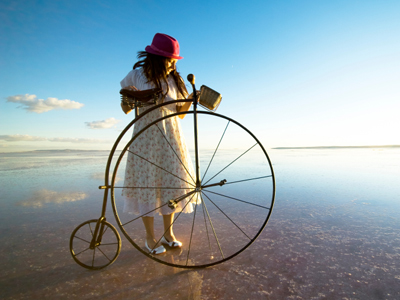
A penny-farthing was a bicycle with one large wheel and one small wheel.
Victorian Inventions
Victorian inventions changed everyday life, from faster trains to bright streetlights. Explore how new machines, ideas, and discoveries transformed work, travel, homes, and school in this quiz.
1 .
What was the name of Stephenson’s engine that won a prize?
Bullet
Rocket
Socket
Thomas
Stephenson had invented the first steam engine that later developed into the steam train
2 .
What was the name of the bicycle with one large wheel and one small wheel?
Shilling Halfpenny
Penny-farthing
Bone shaker
Big and Little
It was so named because the large wheel and small wheel resembled a penny coin and the smaller farthing coin
3 .
What was the name of the first postage stamp?
The Penny Red
The Two penny Red
The Penny Black
The Two penny black
It was named this as the stamp cost 1 penny and was black
4 .
What did Alexander Graham Bell invent?
The television
The steam train
The telegraph
The telephone
Bell was a Scotsman who also invented the metal detector
5 .
What did Samuel Morse invent?
Morse code
Inspector Morse
The telegraph
The telephone
Morse also developed the telegraph in America but it was already in use in Europe
6 .
Who invented the photograph?
William Henry Fox Talbot
George Stephenson
Rowland Hill
Elias Howe
Fox Talbot was also an archaeologist who spent much of his time studying Ancient Mesopotamia
7 .
Where was the Great Exhibition held?
Crystal Palace
Kew Palace
Alexandra Palace
Buckingham Palace
Crystal Palace burnt down in the 1930s but lives on in the name of the South London based football team
8 .
Who invented the postage stamp?
Hubert Booth
George Stephenson
Rowland Hill
Elias Howe
Before postage stamps were invented the people receiving letters had to pay before they were handed over
9 .
What was held in 1851 to celebrate new inventions?
The Great Inventions Show
Festival of Empire
The Great Exhibition
Invention Festival
The Great Exhibition's full title was The Great Exhibition of the Works of Industry of all Nations
10 .
Which of these was NOT built by Isambard Kingdom Brunel?
Crystal Palace
Great Western Railway
Clifton Suspension Bridge
SS Great Britain
Isambard Kingdom Brunel revolutionised transport in Britain by building railways, bridges and ships



**Unlimited Quizzes Await You! 🚀**
Hey there, quiz champ! 🌟 You've already tackled today's free questions.
Ready for more?
Ready for more?
🔓 Unlock UNLIMITED Quizzes and challenge yourself every day. But that's
not all...
not all...
🔥 As a Subscriber you can join our thrilling "Daily Streak" against other
quizzers. Try to win a coveted spot on our Hall of Fame Page.
quizzers. Try to win a coveted spot on our Hall of Fame Page.
Don't miss out! Join us now and keep the fun rolling. 🎉
**Unlimited Quizzes Await You! 🚀**
Hey there, quiz champ! 🌟 You've already tackled today's free questions. Ready for more?
🔓 Unlock UNLIMITED Quizzes and challenge yourself every day. But that's not all...
🔥 As a Subscriber you can join our thrilling "Daily Streak" against other quizzers. Try to win a coveted spot on our Hall of Fame Page.
Don't miss out! Join us now and keep the fun rolling. 🎉




© Copyright 2016-2026 - Education Quizzes
Work Innovate Ltd - Design | Development |
Marketing
