




Ask the AI Tutor
Need help with Case Study Italy (Physical Geography) 01? Ask our AI Tutor!
AI Tutor - Lucy
Connecting with Tutor...
Please wait while we establish connection
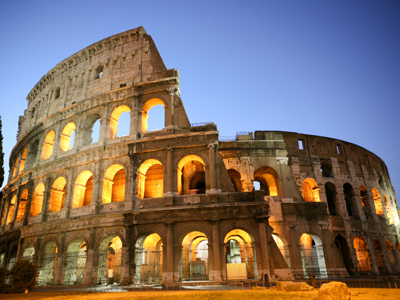
Do you love all things Italian?
Case Study Italy (Physical Geography) 01
Explore how mountains, plains and coasts shape Italy. This case study introduces key physical features that affect climate, farming, settlements and natural hazards across the country.
1 .
Which island does not belong to Italy?
Capri
Corsica
Sardinia
Sicily
Corsica is part of France
2 .
Vesuvius is an active volcano close to which city?
Milan
Naples
Rome
Turin
Despite the dangers, Vesuvius is a major tourist attraction
3 .
Which is not an Italian lake?
Lake Como
Lake Constance
Lake Garda
Lake Maggiore
The 'Italian Lakes' region lies just south of the Alps
4 .
How can Italy's climate generally be described?
Arid
Mediterranean
Temperate
Tropical
Hot, dry summers and warm, wet winters
5 .
Which mountain range runs down the centre of Italy?
Alps
Apennines
Carpathians
Sierra Nevada
They started to be formed about 20 million years ago and that process is still continuing today. That is why there are many strong earthquakes in Italy
6 .
The active volcano on Sicily has what name?
Etna
Pinatubo
Santorini
Vesuvius
Possibly the biggest eruption of Etna in historic times was in 1669 when about 3,000 people were killed
7 .
What is Italy's longest river?
Adige
Arno
Po
Tiber
The Po flows right across the north of the country
8 .
Italy's east coast is bordered by which sea?
Adriatic
Black
Mediterranean
Tyrrhenian
It separates Italy from the Balkan states
9 .
Due to its shape, Italy is said to have what?
A head and foot
A heel and toe
A knee and elbow
An ear and nose
The country is shaped like a boot
10 .
The large northern lowland area is the North Italian what?
Basin
Plain
Strip
Terrace
It contains rich and fertile soils
Our Social Circles




**Unlimited Quizzes Await You! 🚀**
Hey there, quiz champ! 🌟 You've already tackled today's free questions.
Ready for more?
Ready for more?
🔓 Unlock UNLIMITED Quizzes and challenge yourself every day. But that's
not all...
not all...
🔥 As a Subscriber you can join our thrilling "Daily Streak" against other
quizzers. Try to win a coveted spot on our Hall of Fame Page.
quizzers. Try to win a coveted spot on our Hall of Fame Page.
Don't miss out! Join us now and keep the fun rolling. 🎉
**Unlimited Quizzes Await You! 🚀**
Hey there, quiz champ! 🌟 You've already tackled today's free questions. Ready for more?
🔓 Unlock UNLIMITED Quizzes and challenge yourself every day. But that's not all...
🔥 As a Subscriber you can join our thrilling "Daily Streak" against other quizzers. Try to win a coveted spot on our Hall of Fame Page.
Don't miss out! Join us now and keep the fun rolling. 🎉
© Copyright 2016-2026 - Education Quizzes
Work Innovate Ltd - Design | Development |
Marketing
