




Ask the AI Tutor
Need help with Earthquakes and Volcanoes 01? Ask our AI Tutor!
AI Tutor - Lucy
Connecting with Tutor...
Please wait while we establish connection
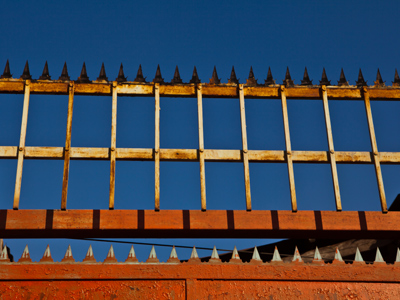
Iron (as found in this rusty gate above) makes up the majority of the earth's core.
Earthquakes and Volcanoes 01
Earthquakes and volcanoes can change landscapes in minutes. This KS3 Geography quiz explores tectonic plates, plate boundaries and how these powerful events affect people around the world.
1 .
Molten rock inside the earth has what name?
Lava
Magenta
Magma
Silica
It's called lava only if it flows out of a volcano
2 .
The earth is made up of how many layers?
2
3
4
6
These are the inner core, the outer core, the mantle and the crust
3 .
What instrument is used to measure an earthquake?
Anemometer
Galvanometer
Seismometer
Shakeometer
The most common scale for measuring the strength of an earthquake is the Richter scale
4 .
Which of these areas is unlikely to suffer an earthquake?
California
Japan
New Zealand
Scandinavia
It isn't in an unstable part of the Earth's crust because it is not near to a plate boundary
5 .
The earth's crust is made up of separate pieces called what?
Plates
Platters
Saucers
Slabs
These move in different directions at the speed of a fingernail growing
6 .
The earth's core is mainly made up of which metal?
Copper
Iron
Magnesium
Zinc
Approximately 90% iron, 10% nickel
7 .
What type of volcano has not erupted for many years but could still do so?
Dormant
Extinct
Snoozing
Somnolent
The name dormant suggests that it's 'sleeping'
8 .
What is the name of the earth's thin surface layer?
Crust
Mantle
Shell
Veneer
Although 'thin' it can be between 5 and 60+ km thick. That's a lot of km, but it is thin when compared with the rest of the thickness of the Earth
9 .
Why doesn't the UK have any active volcanoes?
It doesn't have high enough mountains
It doesn't lie on a plate boundary
It is surrounded by sea
The earth underneath isn't hot enough
The last British volcanoes were active over 30 million years ago
10 .
What is the name for the main opening in a volcano?
Chimney
Downpipe
Vein
Vent
A vent usually appears at the surface as a crater if the volcano is still active. You can still see craters in extinct volcanoes if they haven't been eroded too much



**Unlimited Quizzes Await You! 🚀**
Hey there, quiz champ! 🌟 You've already tackled today's free questions.
Ready for more?
Ready for more?
🔓 Unlock UNLIMITED Quizzes and challenge yourself every day. But that's
not all...
not all...
🔥 As a Subscriber you can join our thrilling "Daily Streak" against other
quizzers. Try to win a coveted spot on our Hall of Fame Page.
quizzers. Try to win a coveted spot on our Hall of Fame Page.
Don't miss out! Join us now and keep the fun rolling. 🎉
**Unlimited Quizzes Await You! 🚀**
Hey there, quiz champ! 🌟 You've already tackled today's free questions. Ready for more?
🔓 Unlock UNLIMITED Quizzes and challenge yourself every day. But that's not all...
🔥 As a Subscriber you can join our thrilling "Daily Streak" against other quizzers. Try to win a coveted spot on our Hall of Fame Page.
Don't miss out! Join us now and keep the fun rolling. 🎉




© Copyright 2016-2026 - Education Quizzes
Work Innovate Ltd - Design | Development |
Marketing
