




Ask the AI Tutor
Need help with Population 01? Ask our AI Tutor!
AI Tutor - Lucy
Connecting with Tutor...
Please wait while we establish connection
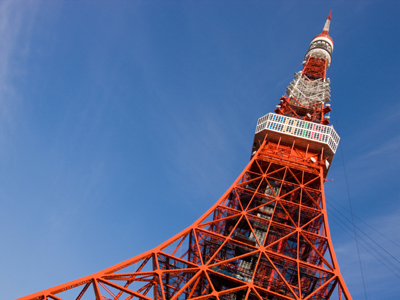
This photo shows Tokyo Tower in Japan.
Population 01
Explore how and why people are spread across the world, and learn what population, density and distribution tell geographers about crowded cities and quiet, remote places.
1 .
A measure of how closely people live to each other is population what?
Density
Index
Ratio
Spread
Usually measured by the number of people per square kilometre
2 .
A city with 10 million people or more is called what?
Jumbo City
Macrocity
Megacity
Metro City
A lot of megacities have large numbers of homeless people living in slums
3 .
In 2010 what was the approximate world population?
3.1 billion
4.2 billion
6.8 billion
8.3 billion
Estimated to be over 9 billion by the year 2050
4 .
What do the letters LEDC mean?
Large Economic Developing Community
Less Economically Developed Country
Limited European Debt Commission
Lower Environmental Damage Costs
LEDCs usually have higher birth rates and lower life expectancies than richer countries
5 .
Which of the following regions has the highest population density?
Central America
North Africa
Northern Europe
South-East Asia
Over 500 people per sqare kilometre in places
6 .
What is the opposite of urban?
Cosmopolitan
Marine
Rural
Streetwise
In the UK, many rural communities are losing useful facilities like shops and post offices because people commute to cities to work
7 .
Moving to settle in a new area has what name?
Extradition
Migration
Momentum
Transition
There are many causes of migration
8 .
Which of these is not a megacity?
Mumbai
Paris
Sao Paulo
Tokyo
Paris has only just over 2 million people
9 .
Which is a 'pull' factor in migration?
Better healthcare
Drought
Hunger
Poor water supply
The other three are 'push' factors
10 .
Which is not a reason why people in less developed countries often have large families?
Children will look after them in old age
Government gives them money for each child
High infant mortality
Lack of birth control
Child benefits are more readily available in developed countries



**Unlimited Quizzes Await You! 🚀**
Hey there, quiz champ! 🌟 You've already tackled today's free questions.
Ready for more?
Ready for more?
🔓 Unlock UNLIMITED Quizzes and challenge yourself every day. But that's
not all...
not all...
🔥 As a Subscriber you can join our thrilling "Daily Streak" against other
quizzers. Try to win a coveted spot on our Hall of Fame Page.
quizzers. Try to win a coveted spot on our Hall of Fame Page.
Don't miss out! Join us now and keep the fun rolling. 🎉
**Unlimited Quizzes Await You! 🚀**
Hey there, quiz champ! 🌟 You've already tackled today's free questions. Ready for more?
🔓 Unlock UNLIMITED Quizzes and challenge yourself every day. But that's not all...
🔥 As a Subscriber you can join our thrilling "Daily Streak" against other quizzers. Try to win a coveted spot on our Hall of Fame Page.
Don't miss out! Join us now and keep the fun rolling. 🎉




© Copyright 2016-2026 - Education Quizzes
Work Innovate Ltd - Design | Development |
Marketing
