




Ask the AI Tutor
Need help with Population 03? Ask our AI Tutor!
AI Tutor - Lucy
Connecting with Tutor...
Please wait while we establish connection
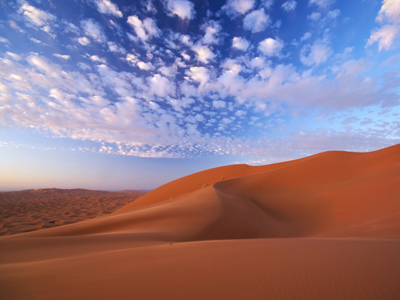
Due to its unforgiving heat, the Sahara Desert has a very low population density.
Population 03
Explore how governments try to manage population growth, from supporting families with benefits to encouraging smaller families through education and healthcare.
1 .
Which of these encourages people to have fewer children?
Child benefit
Family planning
Immunisation
Poor schools
LEDCs (Less Economically Developed Countries) are becoming educated about contraception but it isn't easy as there are many remote settlements and a lot of the population can't read or write
2 .
Which of these has the highest population density?
Amazon rainforest
Himalayas
North West Europe
Sahara Desert
The other three places are sparsely populated because the climatic and physical features make living there very difficult
3 .
The difference between birth rate and death rate is called what?
Natural increase
Normal increase
Standard increase
Usual increase
If the birth rate is lower, it would be called a natural decrease
4 .
An LEDC's population structure has which most common age group?
0-15
30-45
50-65
70+
LEDCs have high birth rates
5 .
Which is a 'push' factor in migration?
Better education
Better paid jobs
Higher standards of living
Natural disasters
The rest are 'pull' factors that attract people to a particular place
6 .
Which is a positive factor affecting population density?
Coal and minerals
Dense forest
Mountainous land
Very high temperatures
The other three will discourage settlement
7 .
Birth and death rates are always given per what?
Billion people
Hundred people
Million people
Thousand people
The difference between birth and death rates gives the percentage increase or decrease in population
8 .
What diagram is used to show population structure?
Population cone
Population cube
Population pyramid
Population sphere
Those of LEDCs have a triangular shape because they have high birth rates and low life expectancy
9 .
What is a physical factor in population density?
Availability of jobs
Climate
Housing
Number of hospitals
The others are human factors
10 .
What does population structure mean?
The age and sex of the total population
The number of females
The number of people in work and what they do
The number of people over 65
The best way to gather this data is from a census of the population



**Unlimited Quizzes Await You! 🚀**
Hey there, quiz champ! 🌟 You've already tackled today's free questions.
Ready for more?
Ready for more?
🔓 Unlock UNLIMITED Quizzes and challenge yourself every day. But that's
not all...
not all...
🔥 As a Subscriber you can join our thrilling "Daily Streak" against other
quizzers. Try to win a coveted spot on our Hall of Fame Page.
quizzers. Try to win a coveted spot on our Hall of Fame Page.
Don't miss out! Join us now and keep the fun rolling. 🎉
**Unlimited Quizzes Await You! 🚀**
Hey there, quiz champ! 🌟 You've already tackled today's free questions. Ready for more?
🔓 Unlock UNLIMITED Quizzes and challenge yourself every day. But that's not all...
🔥 As a Subscriber you can join our thrilling "Daily Streak" against other quizzers. Try to win a coveted spot on our Hall of Fame Page.
Don't miss out! Join us now and keep the fun rolling. 🎉




© Copyright 2016-2026 - Education Quizzes
Work Innovate Ltd - Design | Development |
Marketing
