




Ask the AI Tutor
Need help with The Water Cycle 01? Ask our AI Tutor!
AI Tutor - Lucy
Connecting with Tutor...
Please wait while we establish connection
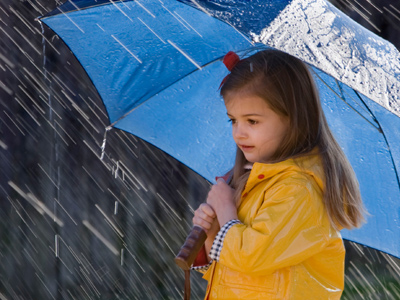
Heavy rainfall is also known as precipitation.
The Water Cycle 01
Follow a water droplet on its journey from sea to sky and back again, and see how the water cycle shapes weather and landscapes.
1 .
Very high, thin wispy clouds have what name?
Cirrus
Cumulonimbus
Cumulus
Stratus
They often mean bad weather is on the way
2 .
What type of rain is caused by moist air rising over mountains?
Cats and dogs
Convection
Relief
Summit
The atmosphere is usually cooler the higher you go in mountains. Cold air can hold less water vapour than when it is warm so it falls as some form of precipitation
3 .
What is the name for all forms of moisture that reach the ground?
Perspiration
Precipitation
Prescription
Preservation
The water on the Earth today is the same that was here when dinosaurs lived!
4 .
Warm and cold air meeting causes what sort of rain?
Convection rain
Frontal rain
Purple rain
Relief rain
The warm air is forced to rise over the cold air
5 .
Transpiration involves the release of water by what?
Lakes
Rocks
Trees and plants
Wildlife
Water vapour is released from the leaves
6 .
Man-made attempts to form cloud and rain is called what?
Cloud seeding
Mist meddling
Overcasting
Rain conjuring
Particles fired into the clouds cause large water droplets to form. Experiments in cloud seeding have met with mixed success
7 .
Another word for throughflow is what?
Flirtation
Infiltration
Interception
Transpiration
It is the downward movement of water into the soil
8 .
Which word is not part of the water cycle?
Condensation
Evaporation
Separation
Transpiration
Condensation forms clouds. Evaporation and transpiration put water vapour into the air
9 .
Precipitation returns to the atmosphere as what?
Water spouts
Water vacuums
Water valency
Water vapour
There is always some water vapour in our atmosphere
10 .
What will reduce rates of infiltration?
Gentle slopes
Impermeable surface rock
Light rain
Permeable surface rock
Impermeable rock will not let water through



**Unlimited Quizzes Await You! 🚀**
Hey there, quiz champ! 🌟 You've already tackled today's free questions.
Ready for more?
Ready for more?
🔓 Unlock UNLIMITED Quizzes and challenge yourself every day. But that's
not all...
not all...
🔥 As a Subscriber you can join our thrilling "Daily Streak" against other
quizzers. Try to win a coveted spot on our Hall of Fame Page.
quizzers. Try to win a coveted spot on our Hall of Fame Page.
Don't miss out! Join us now and keep the fun rolling. 🎉
**Unlimited Quizzes Await You! 🚀**
Hey there, quiz champ! 🌟 You've already tackled today's free questions. Ready for more?
🔓 Unlock UNLIMITED Quizzes and challenge yourself every day. But that's not all...
🔥 As a Subscriber you can join our thrilling "Daily Streak" against other quizzers. Try to win a coveted spot on our Hall of Fame Page.
Don't miss out! Join us now and keep the fun rolling. 🎉




© Copyright 2016-2026 - Education Quizzes
Work Innovate Ltd - Design | Development |
Marketing
