




Ask the AI Tutor
Need help with Galleries - Metropolitan and National Gallery? Ask our AI Tutor!
AI Tutor - Lucy
Connecting with Tutor...
Please wait while we establish connection
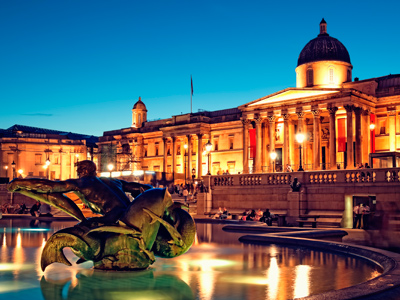
The National Gallery in Trafalgar Square.
Galleries - Metropolitan and National Gallery
Compare two famous galleries, the Metropolitan Museum of Art and the National Gallery. Learn what they collect, how artworks are displayed, and why museum curation matters.
For a closer look at the pictures, please click on them to expand.
1 .
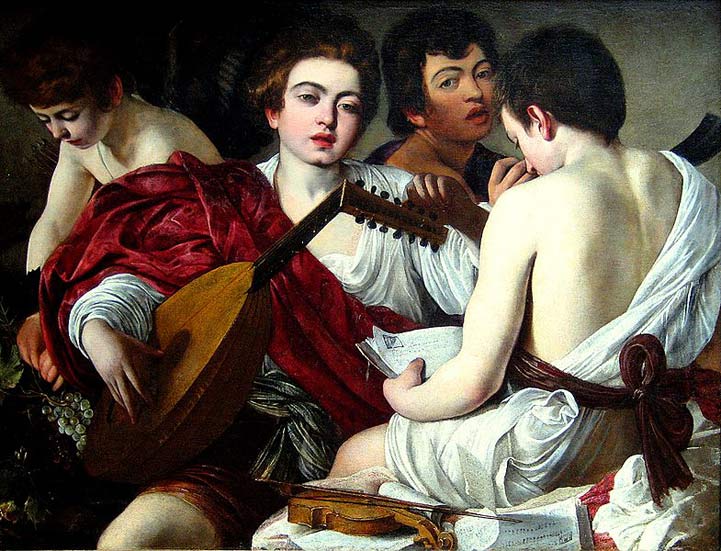
The Musicians was painted by Caravaggio in 1595 and is now in the collection of the Metropolitan Museum. It is an allegorical painting rather than a true to life picture, as can be seen by the inclusion of which figure in the top left hand corner?
A devil
Apollo
An angel
Cupid
2 .
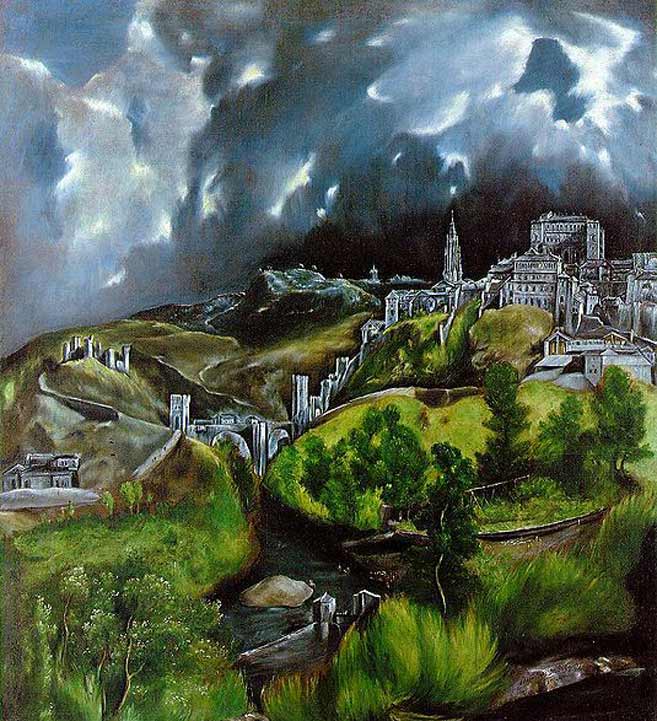
Painted by El Greco circa 1597, this dramatic landscape is a view of which Spanish city?
Toledo
Madrid
Seville
Barcelona
El Greco, although originally from Crete, spent most of his life in Toledo.
His unique style was way ahead of its time and he is seen as the forerunner of not only expressionism but also of Cubism
His unique style was way ahead of its time and he is seen as the forerunner of not only expressionism but also of Cubism
3 .
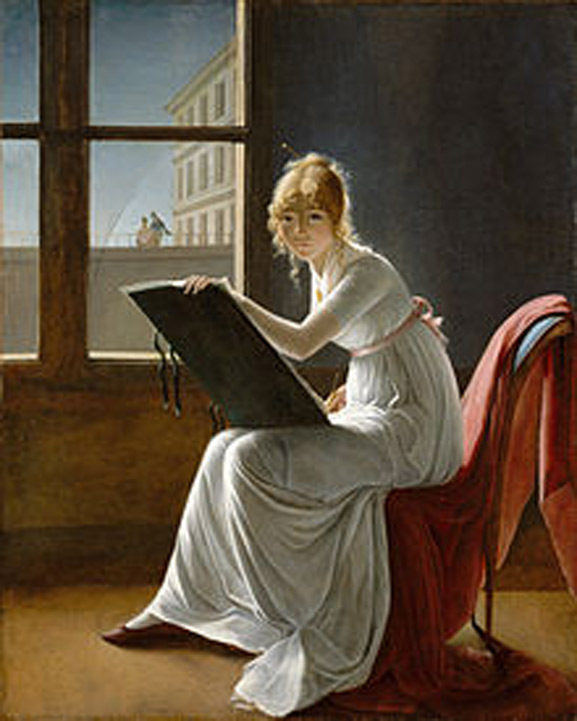
Once ascribed to Jacques-Louis David, this is now thought to be a self portrait by which 19th century French artist?
Angelina Jolie
Marie Denise Villers
Brigitte Bardot
Anne Marie Escoffier
Marie Denise Villers was an accomplished artist, as were her sisters Marie-Élisabeth Gabiou and Marie-Victoire Lemoine. She had her first exhibition in 1799 and enjoyed moderate success before her death in 1821 at the age of 47
4 .
What is the title of this 1833 fantasy painting by the British-American artist, Thomas Cole?
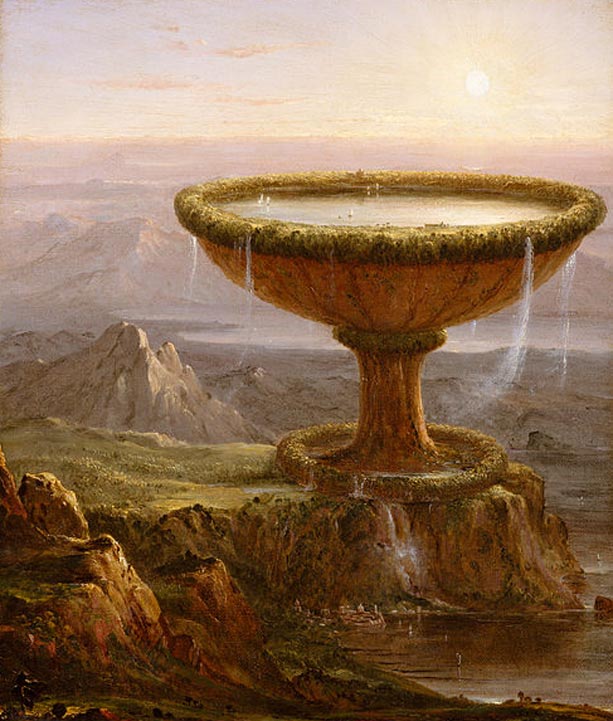
The Giant's Chalice
World in Miniature
The Titan's Goblet
Insignificance of Man
The enormous goblet in the painting has classical ruins on its rim, and its bowl contains a great sea on which ships are sailing. It has been described as a microcosm of the human world, which pales into insignificance when seen in the vast expanse of nature.
Cole was born in Bolton, Lancashire and emigrated to the USA in 1818 where he founded the Hudson River School artistic movement
Cole was born in Bolton, Lancashire and emigrated to the USA in 1818 where he founded the Hudson River School artistic movement
5 .
An appropriate choice of subject for question number 5, Charles Demuth's 1928 work I Saw the Figure 5 in Gold is inspired by what?
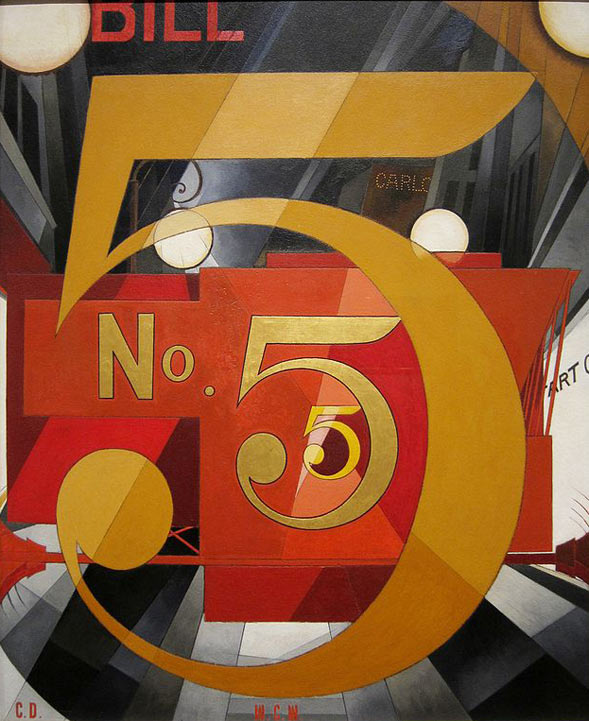
By a song
By a film
By a poem
By an advert
The painting is actually a portrait of Demuth's friend, William Carlos Williams; not an actual likeness, but a collection of images associated with him. The words Bill and Carlos can be seen in the painting, as can the initials WCW. The number 5 is a reference to William's poem, The Great Figure which describes seeing the number on a red fire engine as it hurtled through a city's streets
6 .
Possibly a self portrait, this 1433 painting by the Dutch artist Jan van Eyck can be found in the National Gallery. It is called simply Portrait of a Man, but what other name has it been given?
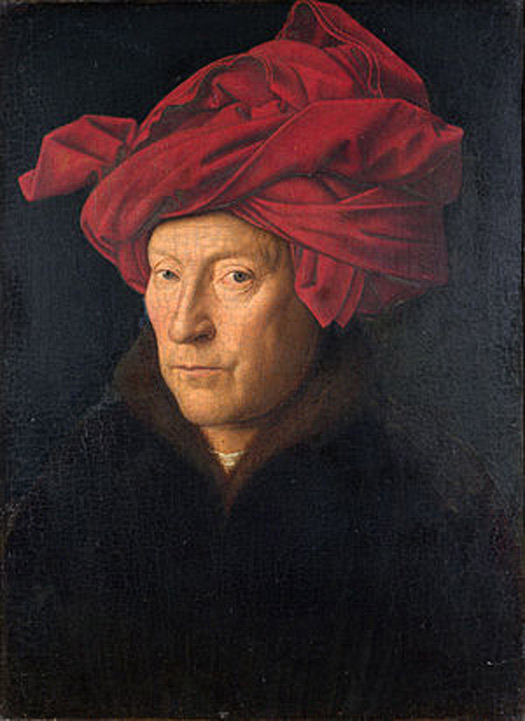
Portrait of a Man in a Turban
Portrait of the Artist
Portrait of an Old Man
Portrait of van Eyck
The item on the subject's head is in fact a chaperon - a type of medieval hood with long, hanging ends. The ends have been tied up, giving the appearance of a turban.
The identity of the subject is uncertain. It could well be a self portrait (and several clues support the idea) but there is no direct evidence
The identity of the subject is uncertain. It could well be a self portrait (and several clues support the idea) but there is no direct evidence
7 .
What is the name of this 1811 piece created by German artist Caspar David Friedrich, which unites Christian ideas with a winter scene?

Christmas Tree
Holy Tree
Christmas landscape
Winter Landscape
Friedrich's landscape is full of Christian symbolism. A crippled man has cast aside his crutch and prays before a crucifix. The Cathedral emerging from the mist may represent life coming through death, and the evergreen trees are symbolic of eternal life
8 .
This portrait of Leonardo Loredan was painted in 1501 by the Venician painter Giovanni Bellini. Who exactly was Leonardo Loredan?
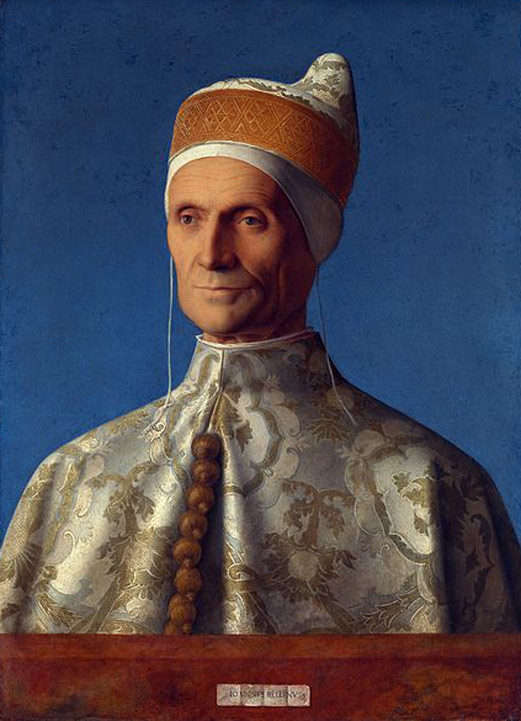
He was the Pope
He was the elected leader of Venice
He was a Cardinal
He was the King of Florence
The elected leaders of Venice were called the Doges and held their posts for life.
This painting is done in the style of a classical Roman sculpted bust. Bellini was renowned for this type of work and, partly because of him, this style of portrait became very popular in Venice
This painting is done in the style of a classical Roman sculpted bust. Bellini was renowned for this type of work and, partly because of him, this style of portrait became very popular in Venice
9 .
This painting, Christ healing the Paralytic at the Pool of Bethesda, was created around 1670 by the Spanish artist Bartolomé Esteban Murillo. It was one of a series of works representing what?

The seven pillars of wisdom
The seven acts of charity
The seven days of the week
The seven deadly sins
The painting was made for the church belonging to the Caridad in Seville. The Caridad was a brotherhood set up to help the poor and sick in the city. Murillo was himself a member of the brotherhood. He painted six paintings to represent different acts of charity. The seventh act of charity was represented by a sculpture.
The seven acts of charity are: to feed the hungry, to give drink to the thirsty, to clothe the naked, to harbour the harbourless, to visit the sick, to visit the imprisoned, and to bury the dead. This painting represents the act of visiting the sick
The seven acts of charity are: to feed the hungry, to give drink to the thirsty, to clothe the naked, to harbour the harbourless, to visit the sick, to visit the imprisoned, and to bury the dead. This painting represents the act of visiting the sick
10 .
This Hans Holbein work, The Ambassadors, has a distorted skull in a central position at the foot of the painting. The distortion is deliberate. Holbein has used an anamorphic perspective which can only be seen clearly when viewed from the correct angle (in this case, from below and slightly to the right). In what year was this painting made?
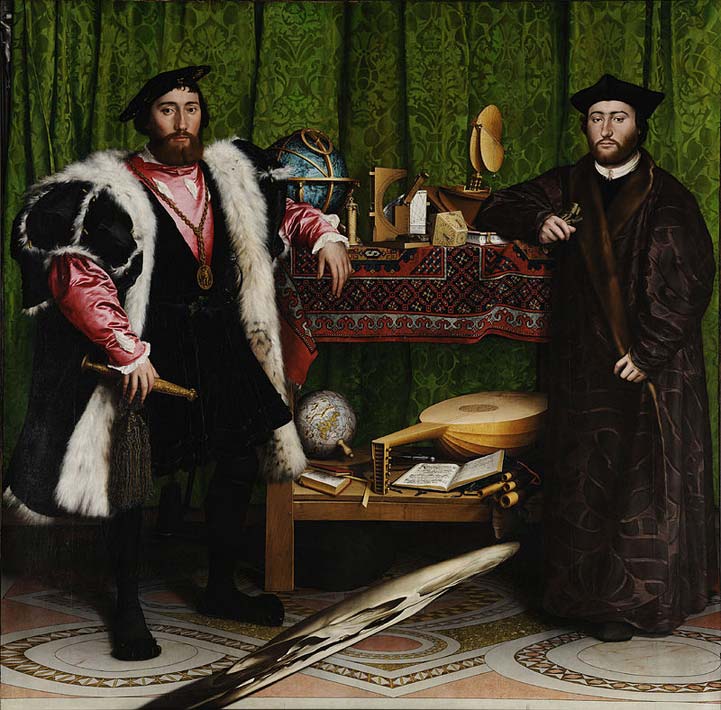
1533
1633
1733
1833
The picture is of two wealthy men; the French ambassadors to England and to Rome. They are shown with instruments of learning (such as a globe and a quadrant) and of art (a lute and a music book) which show them to be true Renaissance men. The anamorphic skull is a reminder that despite knowledge, wealth and skill, death still awaits us all. (Click here to see the skull as it was meant to be viewed.)



**Unlimited Quizzes Await You! 🚀**
Hey there, quiz champ! 🌟 You've already tackled today's free questions.
Ready for more?
Ready for more?
🔓 Unlock UNLIMITED Quizzes and challenge yourself every day. But that's
not all...
not all...
🔥 As a Subscriber you can join our thrilling "Daily Streak" against other
quizzers. Try to win a coveted spot on our Hall of Fame Page.
quizzers. Try to win a coveted spot on our Hall of Fame Page.
Don't miss out! Join us now and keep the fun rolling. 🎉
**Unlimited Quizzes Await You! 🚀**
Hey there, quiz champ! 🌟 You've already tackled today's free questions. Ready for more?
🔓 Unlock UNLIMITED Quizzes and challenge yourself every day. But that's not all...
🔥 As a Subscriber you can join our thrilling "Daily Streak" against other quizzers. Try to win a coveted spot on our Hall of Fame Page.
Don't miss out! Join us now and keep the fun rolling. 🎉




#mediaviewer/File:Holbein_Skull.jpg)
© Copyright 2016-2026 - Education Quizzes
Work Innovate Ltd - Design | Development |
Marketing

Caravaggio included himself in this portrait. He is the second boy from the right