




Ask the AI Tutor
Need help with Painter - Titian? Ask our AI Tutor!
AI Tutor - Lucy
Connecting with Tutor...
Please wait while we establish connection
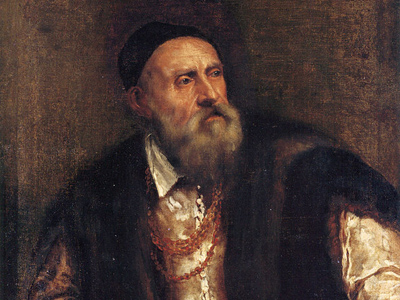
A Titian self-portrait from around 1561, which includes a symbol of his knighthood - a golden chain.
Painter - Titian
Titian shaped Renaissance art with rich colour and powerful portraits. Explore his Venetian style, his famous subjects, and how oil paint helped him create glowing surfaces.
For a closer look at the pictures, please click on them to enlarge.
1 .
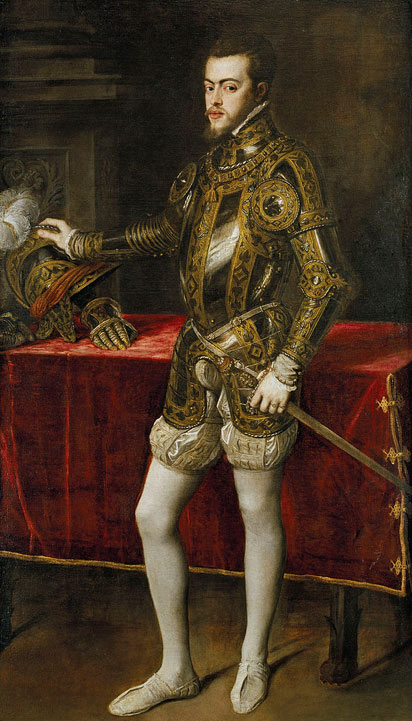
This is a portrait of which future Spanish king who would in years to come marry one English queen and send an armada to attack another?
Philip I
Ferdinand VI
Philip II
Ferdinand VII
2 .
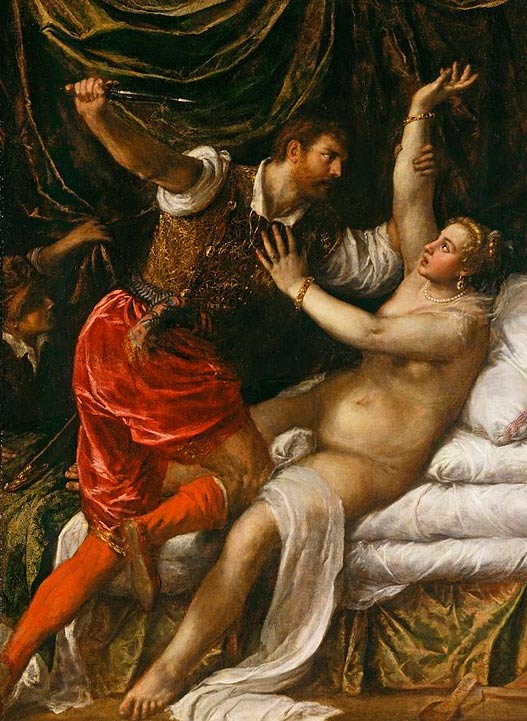
In this painting we see a semi-legendary Roman woman vainly attempting to reject the advances of a king's son. What are the two character's names?
Tarquin and Lucretia
Aeneas and Dido
Caesar and Cleopatra
Brutus and Boadicea
Whether it was true or not, the event depicted in the painting is said to have instigated Rome's revolution which replaced its monarchy with a republic. The piece is thought to have been commissioned by Philip II of Spain circa 1570
3 .
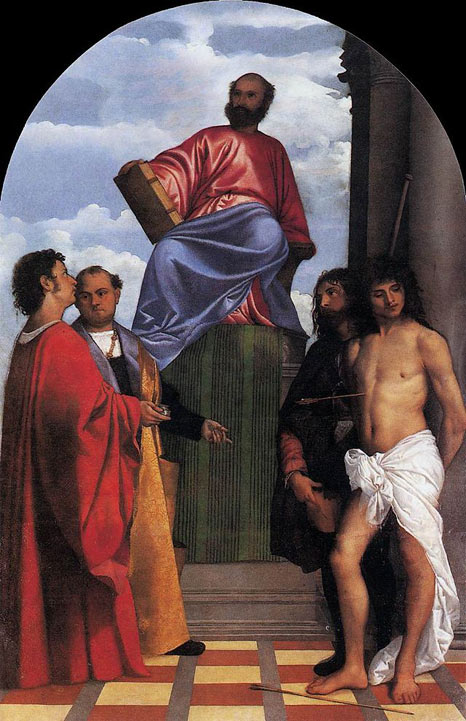
This 1511 painting, Saint Mark Enthroned, was commissioned by the church of Santo Spirito in Venice, to celebrate the end of what?
A plague outbreak
A six month drought
War with France
A year long famine
Now located in the Santa Maria della Salute in the same city, the painting shows Saint Mark, the patron saint of Venice, surrounded by four saints invoked for protection from the plague: Roch, Sebastian, Cosmas and Damian
4 .
Titian's 1538 work Venus of Urbino was described by which 19th century writer as "the foulest, the vilest, the obscenest picture the world possesses"?
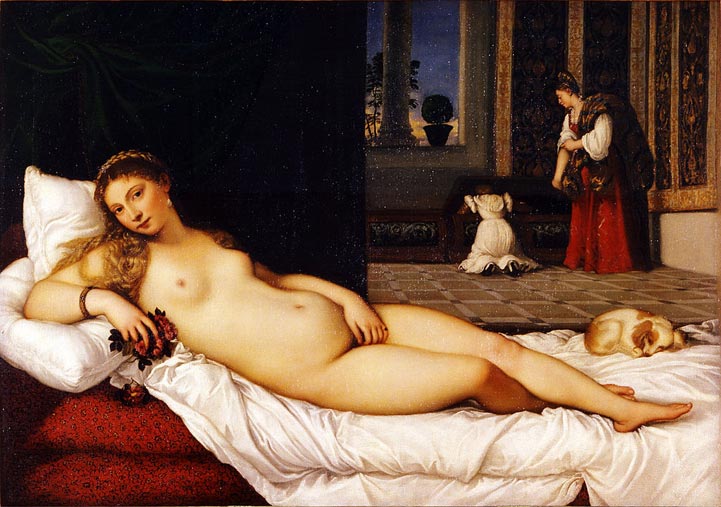
Lord Byron
Mark Twain
Charles Dickens
Edgar Allan Poe
Twain went on to say "it was painted for a bagnio, and it was probably refused because it was a trifle too strong...in truth, it is a trifle too strong for any place but a public art gallery".
In the background of the painting two maids can be seen rummaging through a chest in search of Venus's clothes - apparently more concerned for the goddess' modesty than she is herself!
In the background of the painting two maids can be seen rummaging through a chest in search of Venus's clothes - apparently more concerned for the goddess' modesty than she is herself!
5 .
Housed in the National Gallery of Scotland in Edinburgh, this 1520 painting shows which Roman goddess emerging from the sea?
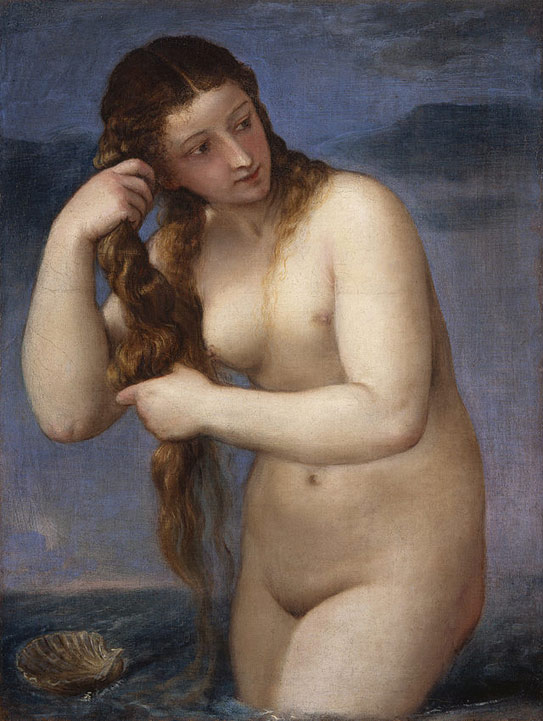
Diana
Minerva
Juno
Venus
Venus Anadyomene (literally Venus Rising from the Sea) shows the goddess of beauty wringing her hair as she emerges from the Mediterranean. The seashell from which Venus was born can be seen in the bottom left corner
6 .
Painted around 1546, this is a picture of Pope Paul III and which other two men?
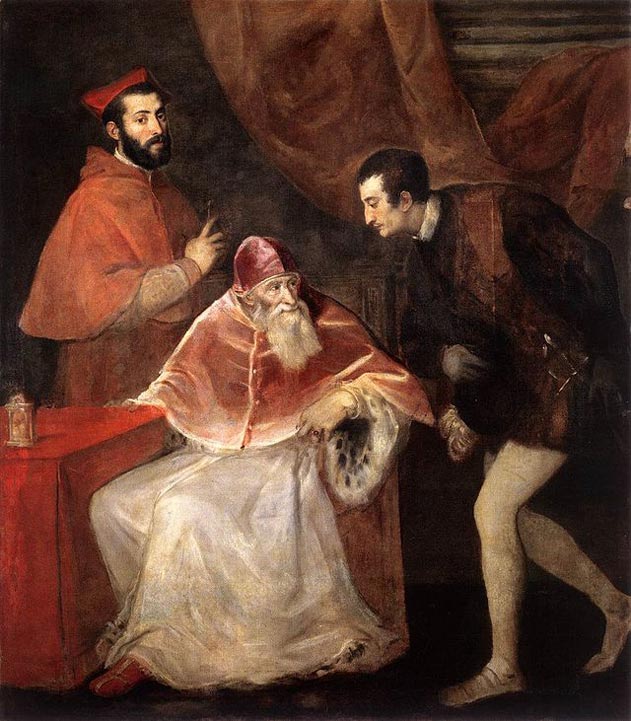
The Prime Minister and the King of Venice
His nephews
His chief cardinals
His grandsons
By all accounts Pope Paul III was not a religious man. He rose to his position through his links with the Medici family, made his grandson Alessandro (who was later murdered) a cardinal, fathered several illegitimate children, and spent huge sums of the church's money on art and antiques.
Aware of the dangerous political environment and the sensitivity of his subject, Titian abandoned this piece before it was finished
Aware of the dangerous political environment and the sensitivity of his subject, Titian abandoned this piece before it was finished
7 .
This semi-nude painting of 1533 shows which repentant biblical woman?
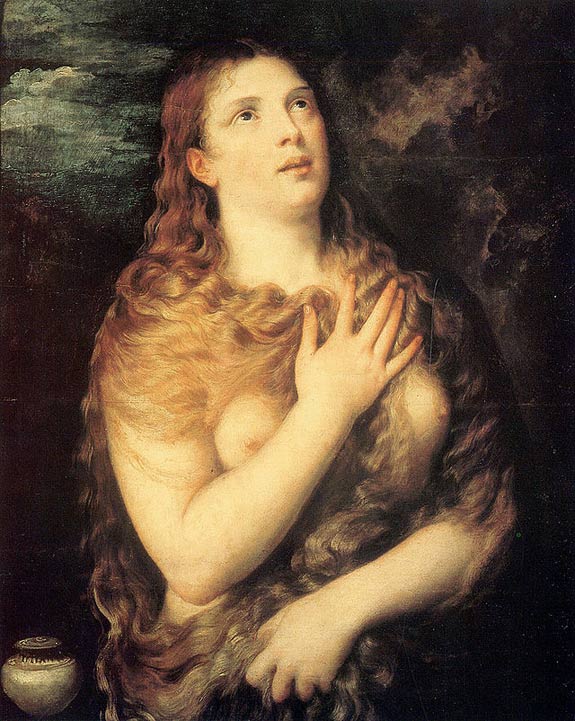
Eve
Jezebel
Mary Magdalene
Salome
Penitent Magdalene was commissioned by the Duke of Urbino. Mary's nudity is accounted for by the medieval legend which states that she spent her last years naked and alone in a French hermitage
8 .
Painted in the late 1560s and with a theme of the passage of time, what is the name of this piece?
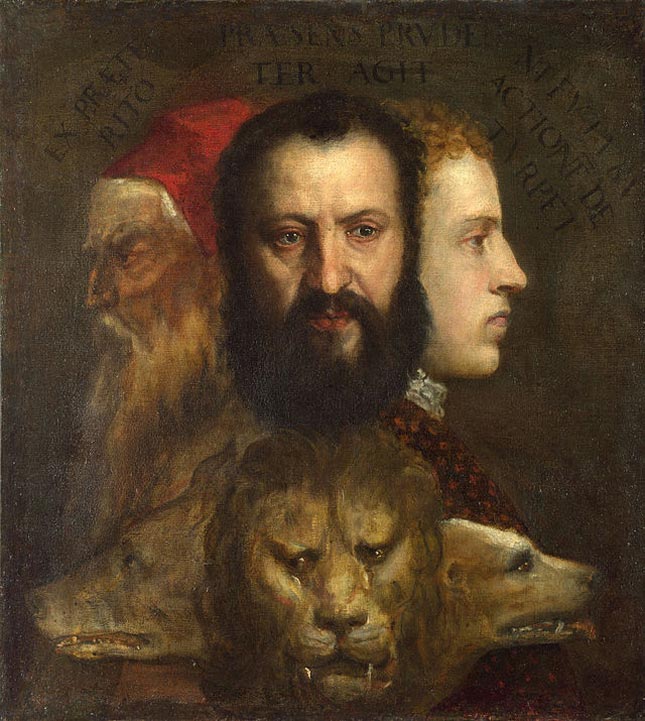
Allegory of Prudence
Ages of Man
Past, Present, Future
Cradle to Grave
The meaning of the painting can be discerned from the inscription it bears: "From the experience of the past, the present acts prudently, lest it spoil future actions". This has been interpreted by some as meaning that Titian regrets his youthful lack of Prudence.
The three men pictured are thought to be Titian himself, his son Orazio, and his cousin, Marco Vecellio. Each one represents a different stage of life - old age, the prime of manhood, and youth
The three men pictured are thought to be Titian himself, his son Orazio, and his cousin, Marco Vecellio. Each one represents a different stage of life - old age, the prime of manhood, and youth
9 .
Pietà is thought to be Titian's final work. It is a depiction of Christ after his death on the cross, in which Titian has painted himself as which biblical character?
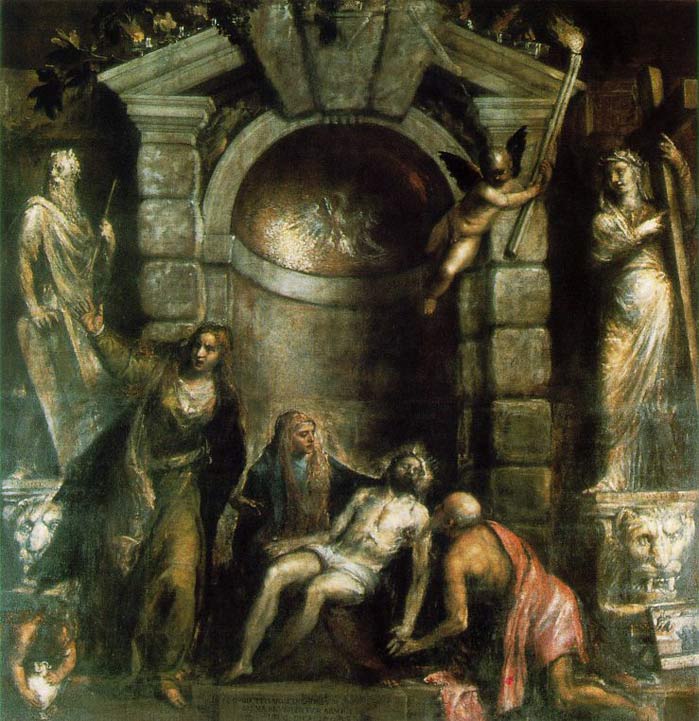
Joseph of Arimathea
Peter
Nicodemus
John the Divine
Nicodemus helped to prepare Christ's body for burial. In the painting he can be seen looking into Jesus' face, perhaps representing Titian looking at his own impending passing.
Nicodemus' beard outlined against Jesus' arm is reminiscent of a paintbrush, which is perhaps also intended by the artist
Nicodemus' beard outlined against Jesus' arm is reminiscent of a paintbrush, which is perhaps also intended by the artist
10 .
Salome was painted by Titian circa 1515. It shows the biblical character holding the head of who?
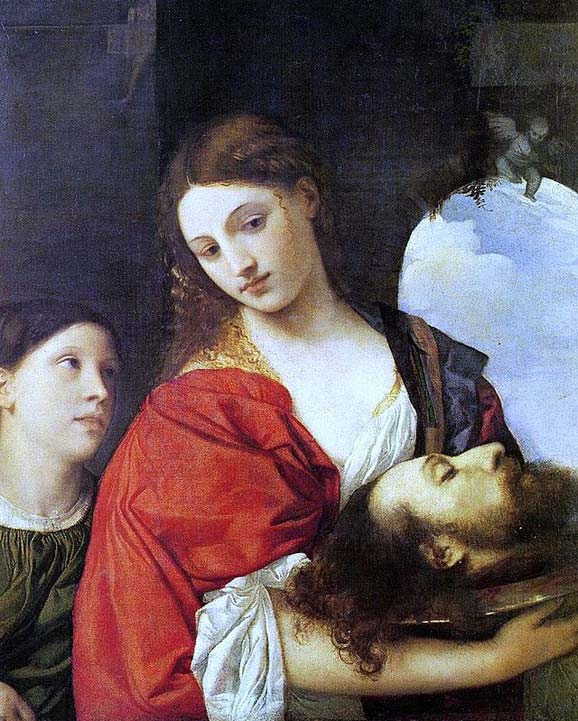
Daniel
John the Baptist
David
James the Just
Salome had asked Herod for John's head and he duly obliged.
The woman in the painting can be seen in several of Titian's works including, Vanity, Flora, and Woman at the Mirror
The woman in the painting can be seen in several of Titian's works including, Vanity, Flora, and Woman at the Mirror
Our Social Circles




**Unlimited Quizzes Await You! 🚀**
Hey there, quiz champ! 🌟 You've already tackled today's free questions.
Ready for more?
Ready for more?
🔓 Unlock UNLIMITED Quizzes and challenge yourself every day. But that's
not all...
not all...
🔥 As a Subscriber you can join our thrilling "Daily Streak" against other
quizzers. Try to win a coveted spot on our Hall of Fame Page.
quizzers. Try to win a coveted spot on our Hall of Fame Page.
Don't miss out! Join us now and keep the fun rolling. 🎉
**Unlimited Quizzes Await You! 🚀**
Hey there, quiz champ! 🌟 You've already tackled today's free questions. Ready for more?
🔓 Unlock UNLIMITED Quizzes and challenge yourself every day. But that's not all...
🔥 As a Subscriber you can join our thrilling "Daily Streak" against other quizzers. Try to win a coveted spot on our Hall of Fame Page.
Don't miss out! Join us now and keep the fun rolling. 🎉
© Copyright 2016-2026 - Education Quizzes
Work Innovate Ltd - Design | Development |
Marketing

This picture, Philip II in Armour, was painted in 1551 when he and Titian were both in the German city of Augsberg