




Ask the AI Tutor
Need help with Sculptor - Donatello? Ask our AI Tutor!
AI Tutor - Lucy
Connecting with Tutor...
Please wait while we establish connection
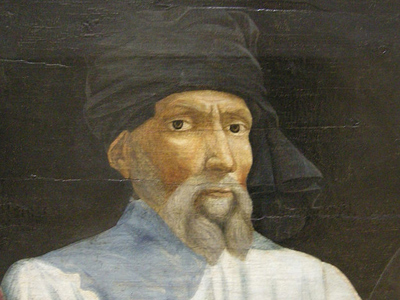
A portrait of Donatello by his contemporary, Paolo Uccello.
Sculptor - Donatello
Step into Renaissance Italy and explore Donatello’s groundbreaking sculptures. Learn how his ideas, materials, and techniques helped shape Western art for centuries.
For a closer look at the pictures, please click on them to enlarge.
1 .
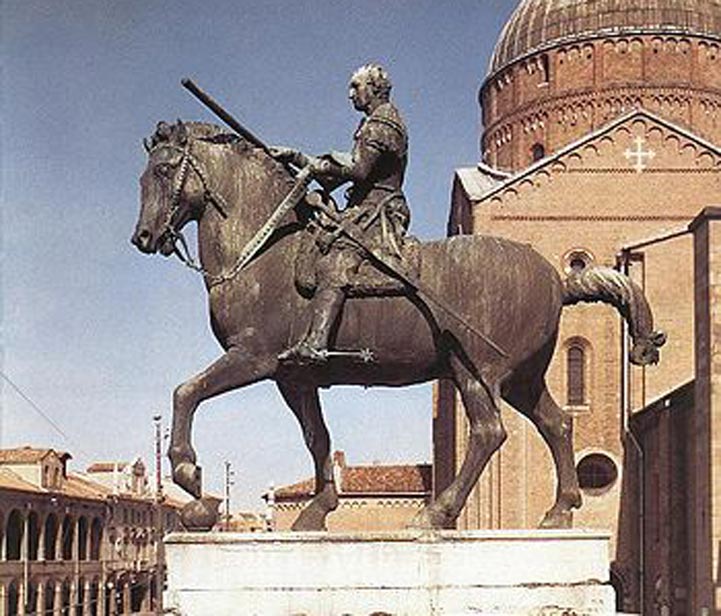
The Equestrian statue of Gattamelata in the city of Padua is a life sized representation of Erasmo da Narni. Who exactly was Erasmo?
He was a king
He was a jockey
He was a prince
He was a soldier
Erasmo was a mercenary and his family commissioned the statue from Donatello after his death. It was the first full sized sculpture of a horse since the fall of the Roman Empire
2 .
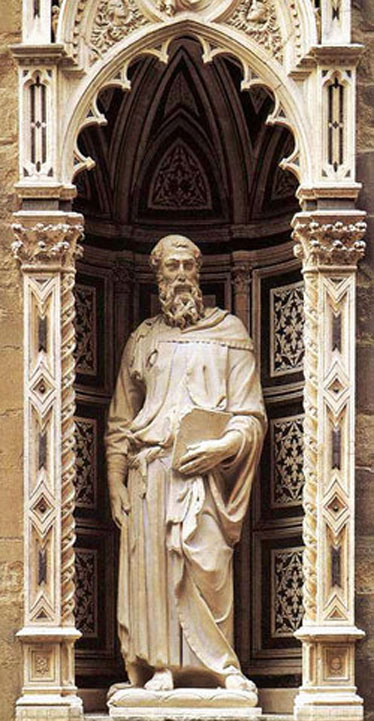
Commissioned in 1411 for the Orsanmichele church in Florence, this is a statue of which saint?
Photograph courtesy of Cnelson
Saint Mattew
Saint Mark
Saint Luke
Saint John
According to the art historian Giorgio Vasari, the statue was rejected at first because the chest and head were disproportionately large (Donatello had made them that way because it would be viewed from below). The artist promised to make changes and the statue was covered with a cloth. It was then placed in its position above the street and when the cloth was removed the commissioners were happy with the changes (which had not been made!)
3 .
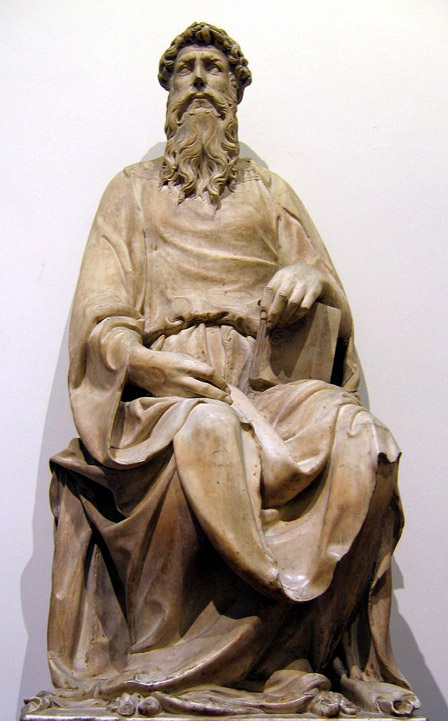
This is Donatello's statue of Saint John the Evangelist, a seated figure which is how tall?
Photograph courtesy of Richardfabi
210cm (6ft 10in)
190cm (6ft 2in)
170cm (5ft 7in)
150cm (4ft 11in)
Though the figure is seated it is still quite large. Like the statue of Saint Mark, the body is disproportionately larger than the legs to account for perspective when seen from below
4 .
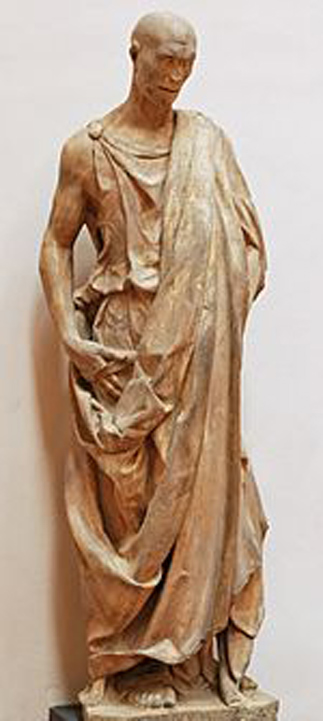
Originally crafted for the bell tower of Florence Cathedral, the Statue of the Prophet Habakkuk is also known as Lo Zuccone because of its resemblance to which vegetable?
Photograph courtesy of Sailko
A courgette
A butternut squash
A pumpkin
An acorn squash
Zuccone literally means pumpkin in Italian and is a reference to the statue's bald head!
Donatello was so pleased with this particular sculpture that he is quoted as swearing by it: "By the faith I place in my Zuccone"
Donatello was so pleased with this particular sculpture that he is quoted as swearing by it: "By the faith I place in my Zuccone"
5 .
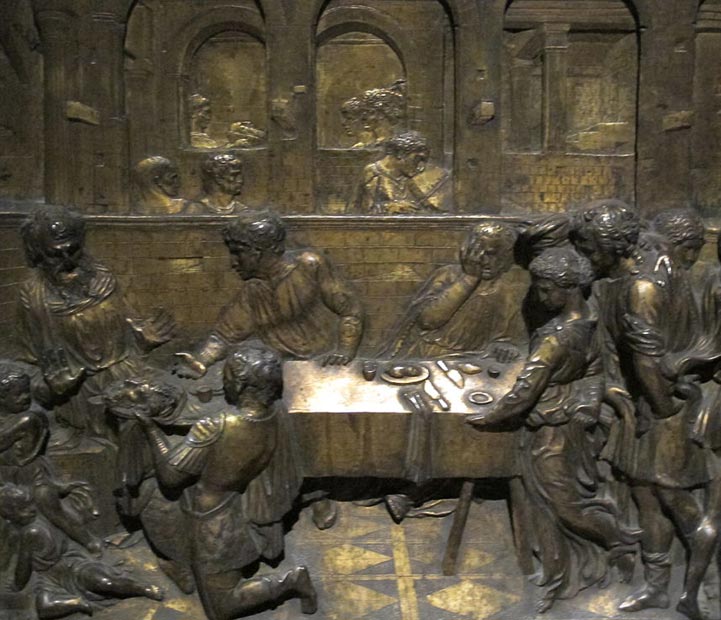
The Feast of Herod is a relief sculpture created by Donatello from what material?
Photograph courtesy of Sailko
Marble
Brass
Alabaster
Bronze
Created for the baptistry of the Siena Cathedral around 1427, this piece illustrates Herod's presentation with the head of John the Baptist. It is quite small, measuring just 60cm (2ft) along each edge
6 .
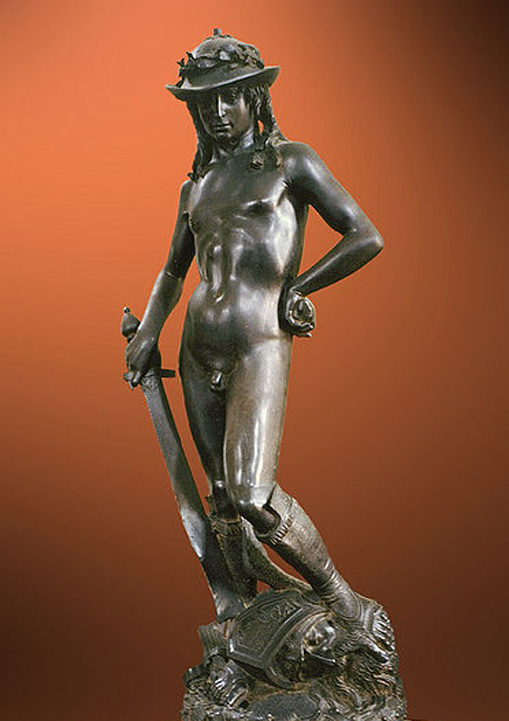
Commissioned by the powerful Medici family during the 1440s, this is a statue of which biblical figure who was the symbol of Florence?
Photograph courtesy of Patrick A
David
Cain
Joseph
Moses
Donatello also made a marble version of David in 1408 which is his earliest known commission. That one was for Florence Cathedral and was clothed, unlike this nude version for the Medici family
7 .
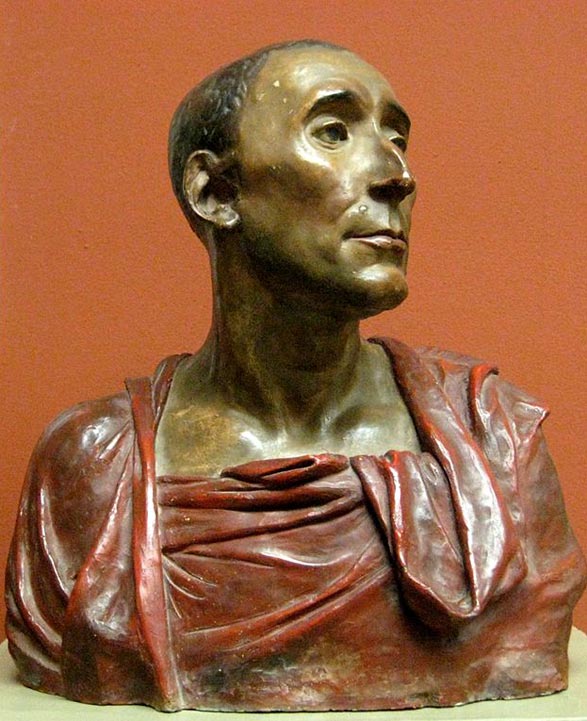
This is a bust of the Florentine politician Niccolo da Uzzano, made from what material?
Photograph courtesy of Shakko
Bronze
Terracotta
Alabaster
Marble
The bust is made from terracotta which is coloured. The technique was common in the past and statues were often painted. The ancient Roman statues which are universally white were not always so. The vivid colours which once adorned them have been bleached away by the passage of time
8 .
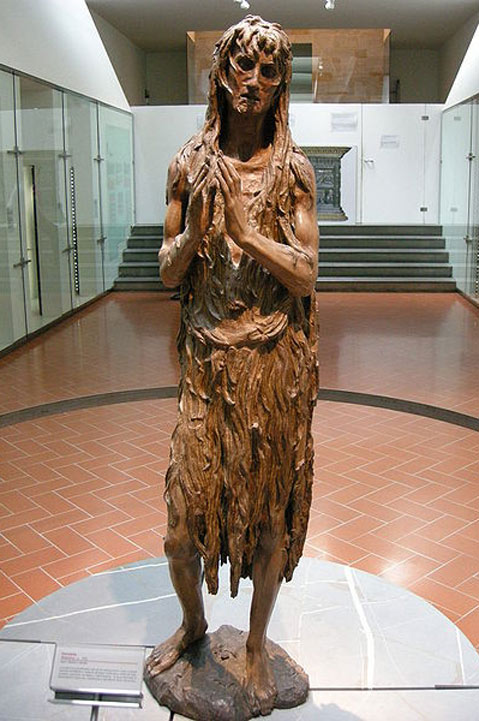
Created circa 1455, the Penitent Magdalene had to be restored in the 1960s after it was damaged by what?
Photograph courtesy of Sailko
By a fire
By a jar of acid
By a flood
By pot of paint
In 1966 the Arno River in Florence flooded, killing over 100 people, damaging many pieces of art and destroying thousands of rare books. Penitent Magdalene was one of the casualties, although it was a blessing in disguise. During the restoration it was discovered that the statue had originally been painted various colours, with gold streaks in its hair. At sometime in the past these had been painted over with a dull shade of brown
9 .
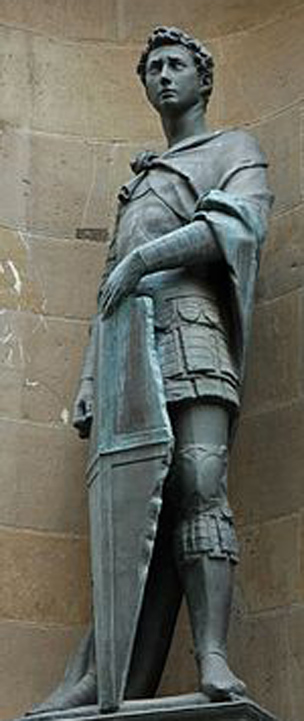
This statue of Saint George was commissioned by which guild of craftsmen for the Orsanmichele church in Florence?
The Guild of Coopers
The Guild of Blacksmiths
The Guild of Armourers
The Guild of Printers
Many have admired this statue of Saint George. Speaking of it in the 16th century the Italian writer Francesco Bocchi said,"The legs move, the arms are ready, the head alert, and the whole figure acts; by virtue of the character, the manner and form of the action presents to our eyes a valiant, invincible, and magnanimous soul”
10 .
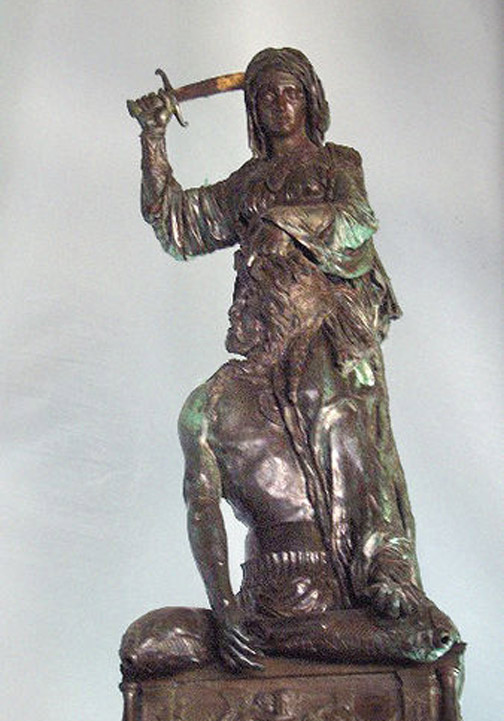
Another commission for the Medici family, this piece shows which two biblical figures?
Delilah and Samson
Judith and Holofernes
Bathsheba and Uriah
Salome and John the Baptist
Like the statue of David, also commissioned by the Medicis, this piece shows a decapitation.
Inscribed on the statue are the words "OPVS . DONATELLI . FLOR" (the work of the Florentine, Donatello), making it the only work signed by the artist to survive
Inscribed on the statue are the words "OPVS . DONATELLI . FLOR" (the work of the Florentine, Donatello), making it the only work signed by the artist to survive



**Unlimited Quizzes Await You! 🚀**
Hey there, quiz champ! 🌟 You've already tackled today's free questions.
Ready for more?
Ready for more?
🔓 Unlock UNLIMITED Quizzes and challenge yourself every day. But that's
not all...
not all...
🔥 As a Subscriber you can join our thrilling "Daily Streak" against other
quizzers. Try to win a coveted spot on our Hall of Fame Page.
quizzers. Try to win a coveted spot on our Hall of Fame Page.
Don't miss out! Join us now and keep the fun rolling. 🎉
**Unlimited Quizzes Await You! 🚀**
Hey there, quiz champ! 🌟 You've already tackled today's free questions. Ready for more?
🔓 Unlock UNLIMITED Quizzes and challenge yourself every day. But that's not all...
🔥 As a Subscriber you can join our thrilling "Daily Streak" against other quizzers. Try to win a coveted spot on our Hall of Fame Page.
Don't miss out! Join us now and keep the fun rolling. 🎉




© Copyright 2016-2026 - Education Quizzes
Work Innovate Ltd - Design | Development |
Marketing
