




Ask the AI Tutor
Need help with Sculptor - Michelangelo? Ask our AI Tutor!
AI Tutor - Lucy
Connecting with Tutor...
Please wait while we establish connection
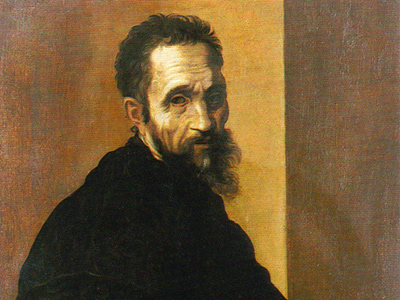
Many believe this to be a self-portrait by Michelangelo, although others are not so sure.
Sculptor - Michelangelo
Explore Michelangelo’s life and art, from powerful marble sculptures to world-famous frescoes. Discover why his Renaissance ideas and techniques still influence artists and viewers today.
For a closer look at the pictures, please click on them to enlarge.
1 .
Cristo della Minerva is the second version of this statue to be created by Michelangelo. Why did he abandon the first version?
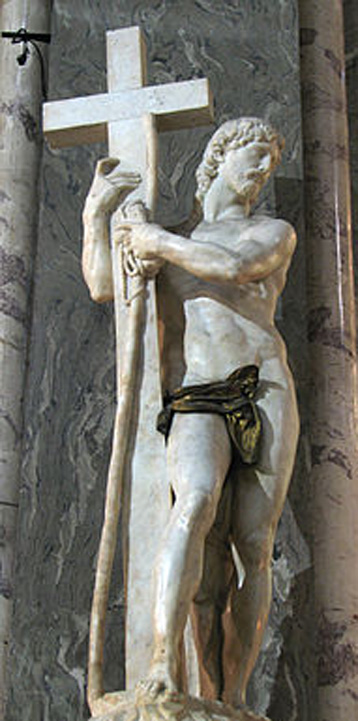
Photograph courtesy of Tetraktys
Because the commissioner of the work did not like the original
Because he accidentally knocked off the statue's nose
Because he discovered a black vein in the block of white marble he was using
Because one of his apprentices knocked the statue over and cracked it
2 .
The Taddei Tondo (also known as The Virgin and Child with the Infant Saint John) is unique because it is the only work by Michelangelo to be found in which country?
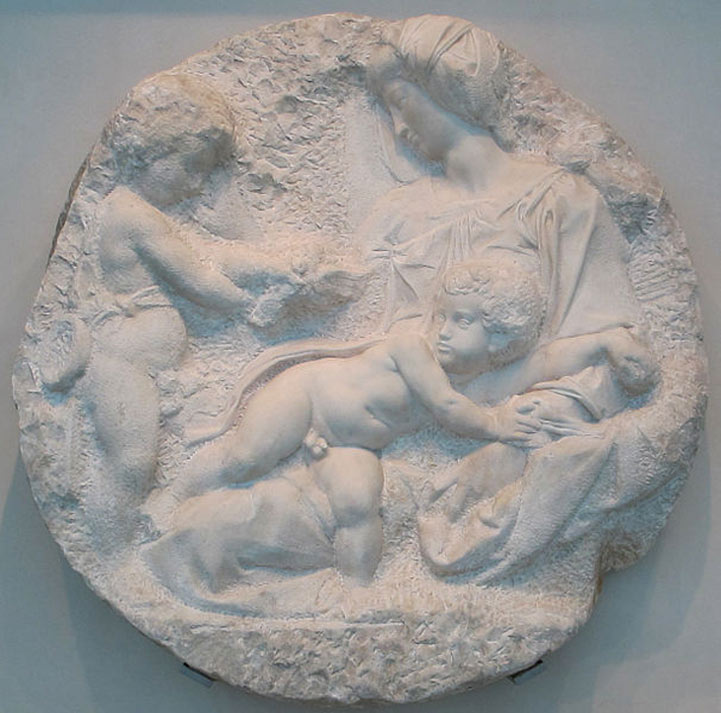
Photograph courtesy of Sailko
The United Kingdom
The United Arab Emirates
The United States of America
Uzbekistan
The Taddei Tondo was purchased by Sir George Beaumont in 1821 during a visit to Italy. Following his death it was donated to the Royal Academy of Arts in London where it is now on display in its own purpose built area
3 .
This statue of Moses is just one of many figures on the tomb of Pope Julius II. How many statues were included in the original plans for the tomb?
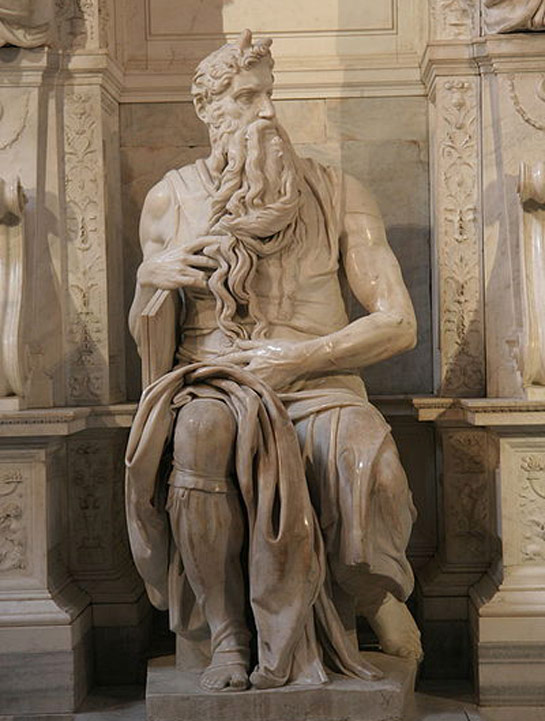
Photograph courtesy of Prasenberg
40 statues
30 statues
20 statues
10 statues
Funding for the work was drastically cut and the finished tomb had only 11 of the intended figures.
This statue of Moses is strange because he is depicted with horns coming from his head! This is because of description of his face in the Latin Vulgate Bible as cornuta which means 'horned' in English
This statue of Moses is strange because he is depicted with horns coming from his head! This is because of description of his face in the Latin Vulgate Bible as cornuta which means 'horned' in English
4 .
Michelangelo is said to have created this figure of Christ whilst he was a guest at the Santa Maria del Santo Spirito convent when he was what age?
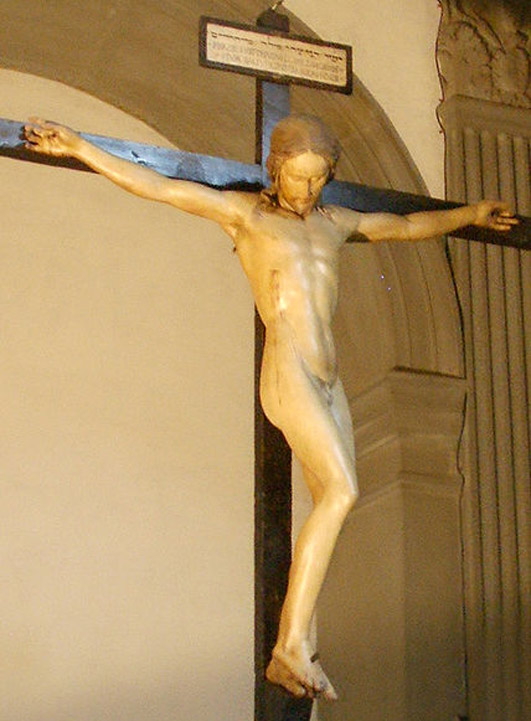
Photograph courtesy of Sailko
13 years old
15 years old
17 years old
19 years old
In return for his crafting of this statue Michelangelo is said to have been allowed access to corpses in the convent's hospital - which allowed him to study human anatomy
5 .
This sculpture is thought by many to be Michelangelo's greatest work. It is a statue of which biblical figure?
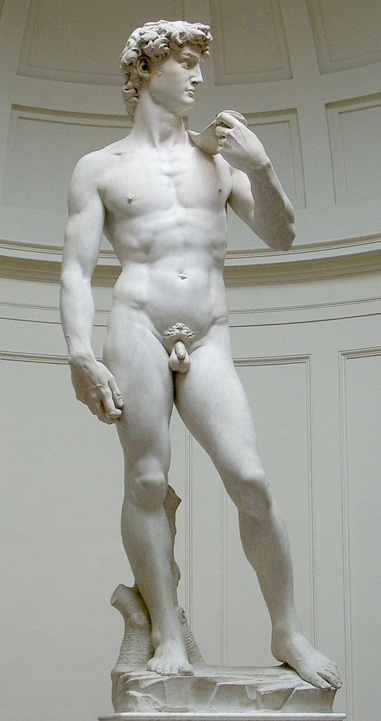
Photograph courtesy of Rico Heil
Saint Peter
Abraham
Saint Paul
David
Michelangelo's contemporaries were impressed by the statue's size (it is 17ft tall) but also with it's life like appearance. The 16th century art historian Giorgio Vasari said of this work, "[it is] certainly a miracle that of Michelangelo, to restore to life one who was dead"
6 .
Crouching Boy is a work which appears to be unfinished as the figure seems to be stuck in the block of stone it is sculpted from. What is the name of this intentional effect used by Michelangelo?
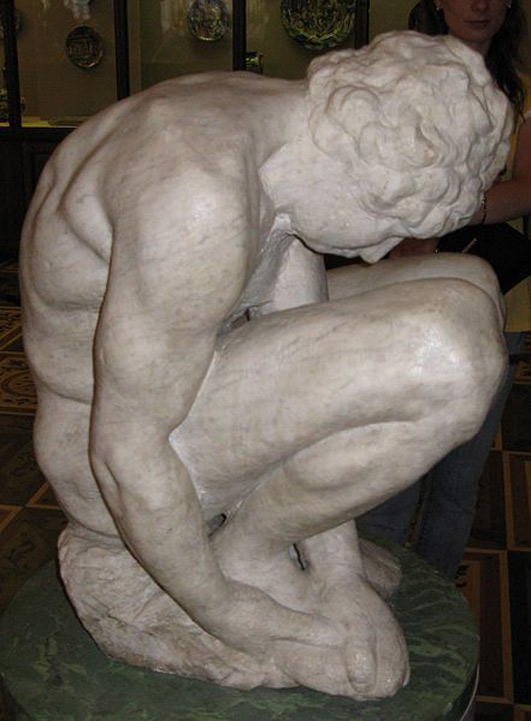
Photograph courtesy of Yair Haklai
Adhaesit (stuck)
Non Finite (not finished)
Emergentes (emerging)
Parte Insculptam (part sculpted)
The non finite technique had been pioneered by Donatello in the previous decades and Michelangelo adopted its use.
Crouching Boy is thought to have been created for the Medici Chapel in Florence circa 1539. Today it can be found in the Hermitage Museum, St Petersburg
Crouching Boy is thought to have been created for the Medici Chapel in Florence circa 1539. Today it can be found in the Hermitage Museum, St Petersburg
7 .
This bust, thought to have been inspired by the political machinations of the de Medici family, is of which ancient Roman?
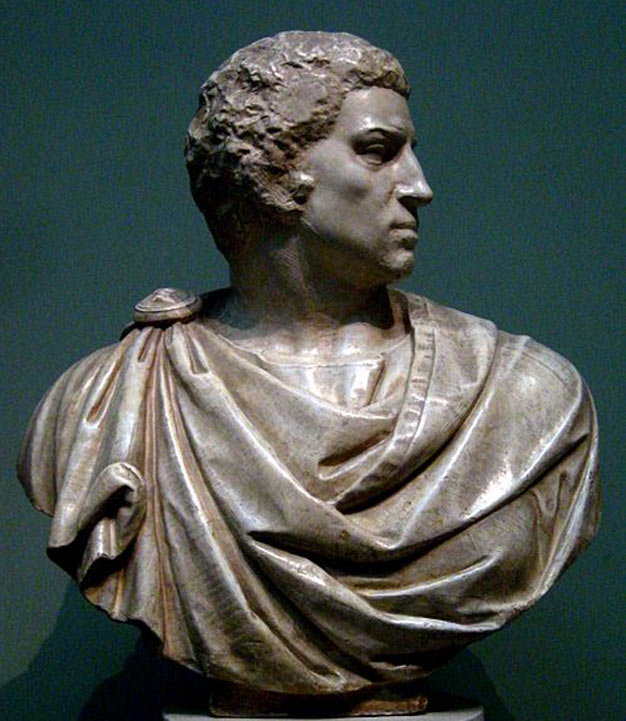
Photograph courtesy of Shakko
Julius Caesar
Brutus
Augustus Caesar
Mark Anthony
Brutus betrayed and murdered his friend Julius Caesar and this piece is thought to be a metaphorical representation of the de Medici family who had recently taken control of the Florentine government. They were rumoured to have arranged assassinations for their own political ends
8 .
The Pietà statue of Mary grieving over Jesus' body, had to be restored after it was attacked by a vandal. Which part of the statue was lost in the attack?
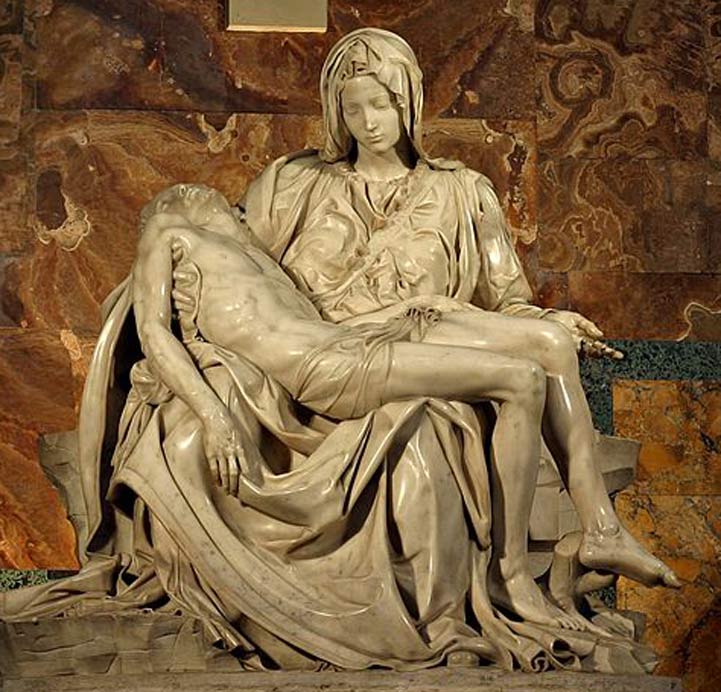
Photograph courtesy of Stanislav Traykov
Jesus' toe
Mary's ear
Jesus' finger
Mary's nose
The vandal attacked the statue with a hammer, removing one of Mary's arms and her nose. The arm was reattached but the nose was lost and had to be reconstructed using a piece of marble from the statue's back
9 .
Michelangelo was still working on this unfinished piece just days before he died. How old was he when he passed away?
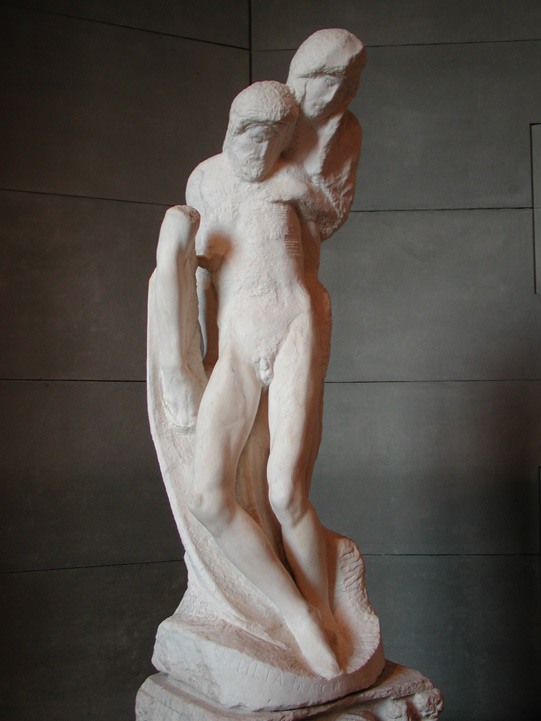
Photograph courtesy of Paolo da Reggio
58 years old
68 years old
78 years old
88 years old
For the period in which Michelangelo lived, 88 was a very good age to reach. In his later years Michelangelo became more concerned with his own mortality and this second attempt to fashion a statue of Mary grieving over her dead son reflects that.
In a letter to his friend Giorgio Vasari, Michelangelo writes, "I have reached the twenty-fourth hour of my day, and... no project arises in my brain which has hath not the figure of death graven upon it"
In a letter to his friend Giorgio Vasari, Michelangelo writes, "I have reached the twenty-fourth hour of my day, and... no project arises in my brain which has hath not the figure of death graven upon it"
10 .
The Deposition (also known as The Florence Pietà) was begun when Michelangelo was 73 years old and was intended to be a part of which structure?
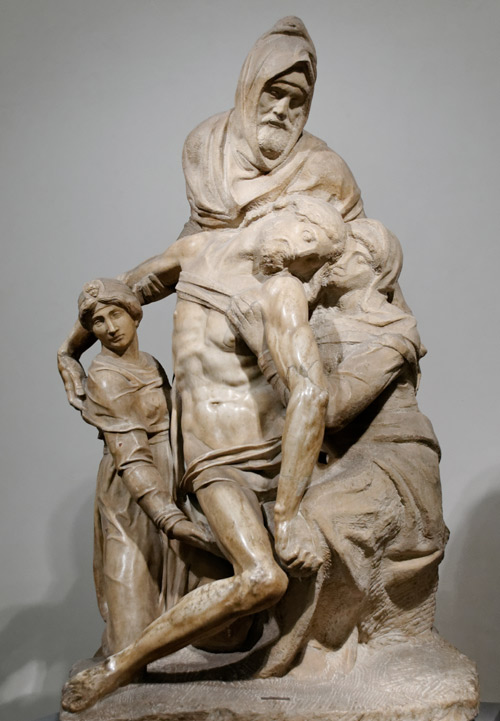
Photograph courtesy of Marie Lan Nguyen
The Tower of Pisa
Venice Cathedral
The Trevi Fountain
Michelangelo's tomb
The work never made it to Michelangelo's tomb. It was abandoned by the artist after a leg was accidentally broken off. A later owner had the work completed and it can now be found in the Museo dell'Opera del Duomo in Florence



**Unlimited Quizzes Await You! 🚀**
Hey there, quiz champ! 🌟 You've already tackled today's free questions.
Ready for more?
Ready for more?
🔓 Unlock UNLIMITED Quizzes and challenge yourself every day. But that's
not all...
not all...
🔥 As a Subscriber you can join our thrilling "Daily Streak" against other
quizzers. Try to win a coveted spot on our Hall of Fame Page.
quizzers. Try to win a coveted spot on our Hall of Fame Page.
Don't miss out! Join us now and keep the fun rolling. 🎉
**Unlimited Quizzes Await You! 🚀**
Hey there, quiz champ! 🌟 You've already tackled today's free questions. Ready for more?
🔓 Unlock UNLIMITED Quizzes and challenge yourself every day. But that's not all...
🔥 As a Subscriber you can join our thrilling "Daily Streak" against other quizzers. Try to win a coveted spot on our Hall of Fame Page.
Don't miss out! Join us now and keep the fun rolling. 🎉




© Copyright 2016-2026 - Education Quizzes
Work Innovate Ltd - Design | Development |
Marketing

This second version was originally naked but a girdle was added some time in the following century