




Ask the AI Tutor
Need help with Sculptor - Rodin? Ask our AI Tutor!
AI Tutor - Lucy
Connecting with Tutor...
Please wait while we establish connection
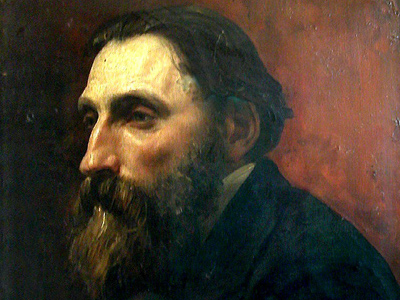
A portrait of Rodin by his contemporary, Jean-Paul Laurens.
Sculptor - Rodin
Explore Rodin’s sculptures and the ideas behind them. Discover how he showed real emotion and movement, and why his approach changed how modern sculpture is viewed.
For a closer look at the pictures, please click on them to enlarge.
1 .
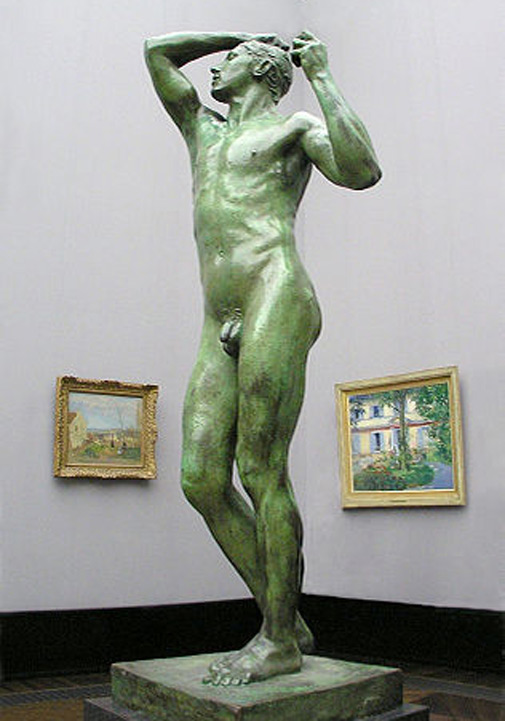
Inspired by the Franco-Prussian war of 1870 - 71 and also known as The Vanquished, what is the more common name of this sculpture?
Photograph courtesy of Daniel Ulrich
The Age of Stone
The Age of Bronze
The Age of Iron
The Age of Innocence
Belgian solider Auguste Neyt, a man who would have had the experience of fighting, was used as the model for The Age of Bronze. The figure suggests heroism, but also anguish - two very different aspects of war
2 .
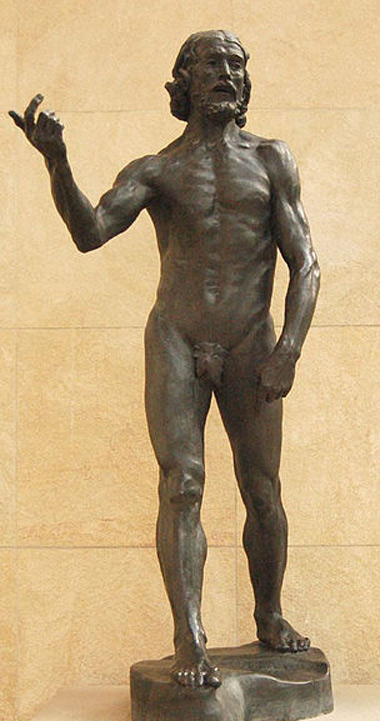
Produced shortly after The Age of Bronze, Saint John the Baptist Preaching was created at a larger than life scale. Why was this?
Photograph courtesy of Maarten
Because Rodin's success enabled him to buy more material
To showcase his skills to a world-wide audience
Because it was meant for display high up on a cathedral wall
To prove that it was not a cast of a man
Rodin is said to have made this figure of John the Baptist on a larger scale as a response to critics of The Age of Bronze who had suggested that he had used casts on that work. The size of this piece proved them wrong
3 .
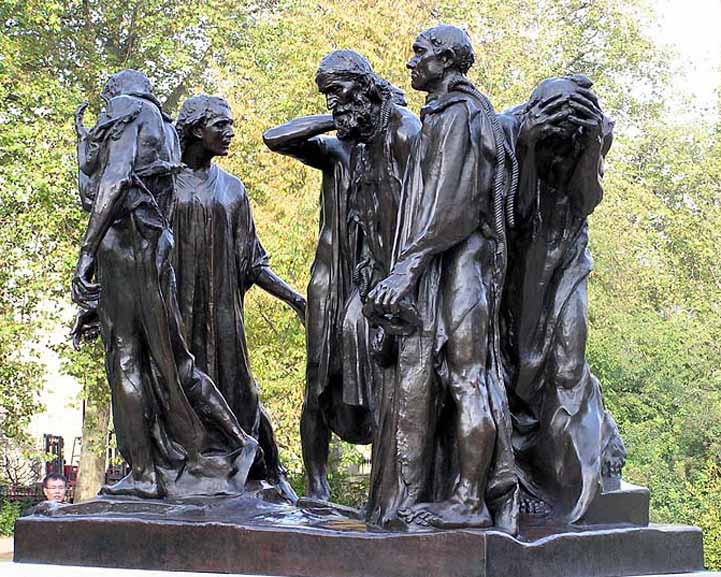
The Burghers was commissioned by which French city in 1884 to commemorate an event of 1347 during the 100 years war with England?
Calais
Dieppe
Le Havre
Cherbourg
English king Edward III laid siege to the city which was forced to surrender. Edward demanded that six of Calais' leaders would surrender themselves to him for execution. Five of the city's burghers volunteered and they are the figures commemorated in the sculpture.
Although the burghers expected to be killed, they were in fact spared.
There were 12 casts made of the work, one of which sits, ironically, in Victoria Tower Gardens, London - the city which was home to Edward III
Although the burghers expected to be killed, they were in fact spared.
There were 12 casts made of the work, one of which sits, ironically, in Victoria Tower Gardens, London - the city which was home to Edward III
4 .
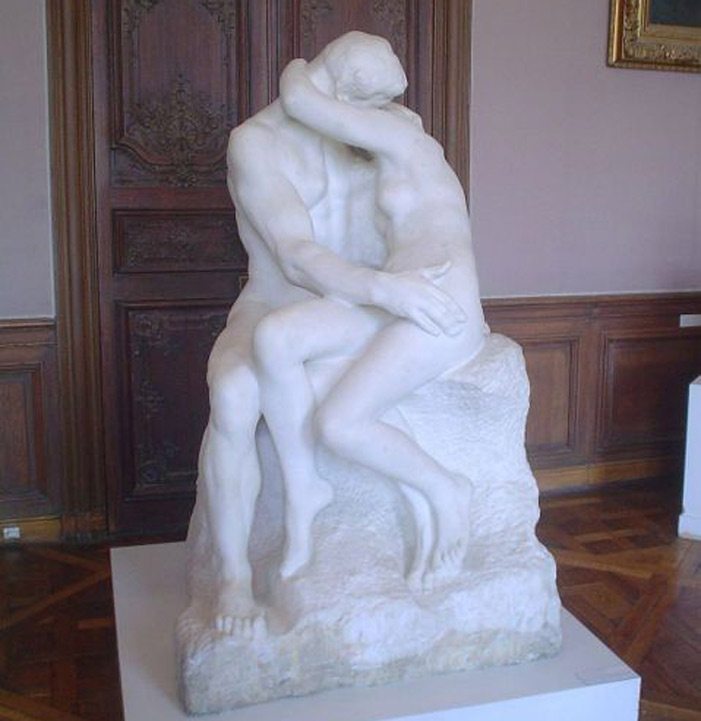
Perhaps Rodin's most famous sculpture, The Kiss was originally titled Francesca da Rimini after a character in which work by Dante?
Paradiso
Purgatorio
Inferno
Convivio
Francesca was a real woman who lived in the 13th century in Italy. She and her husband's brother fell in love. They were discovered together by her husband who killed them both.
In Dante's Inferno Francesca and her lover are condemned to the second circle of hell which is reserved for the lustful. Here an eternal whirlwind blows, sweeping them forever through the air - just as they allowed themselves to be swept away by their desire
In Dante's Inferno Francesca and her lover are condemned to the second circle of hell which is reserved for the lustful. Here an eternal whirlwind blows, sweeping them forever through the air - just as they allowed themselves to be swept away by their desire
5 .
This statue of the novelist and playwright Honoré de Balzac was commissioned and then rejected by the Society of Men of Letters of France. What did Rodin do with the rejected sculpture?
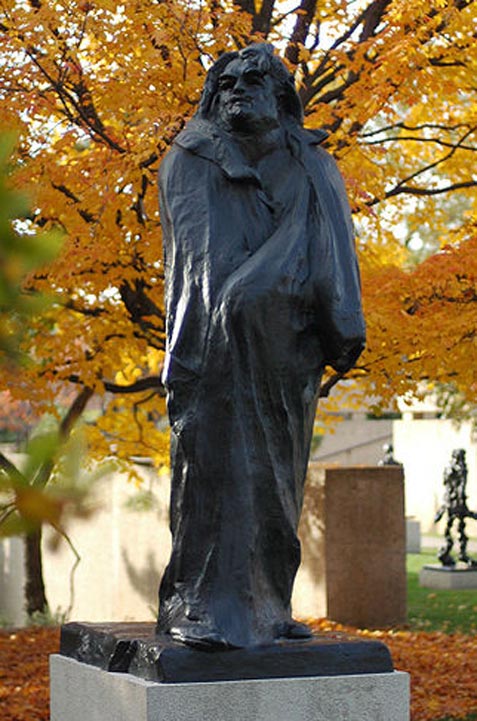
Photograph courtesy of Jeff Kubina
He broke it up in a fit of rage
He sold it to a more appreciative buyer
He altered it so that it was accepted
He stood it in his own back garden
After this rejection Rodin's contemporaries such as Paul Cézanne, Toulouse-Lautrec and Claude Monet, signed a petition, but it made no difference. Later critics have liked the work, with art historian Kenneth Clark calling it "the greatest piece of sculpture of the 19th Century, perhaps, indeed, the greatest since Michelangelo"
6 .
This cast of The Shade was donated by the French government in 1962 to the High Museum of Art in Atlanta USA. Why was this?
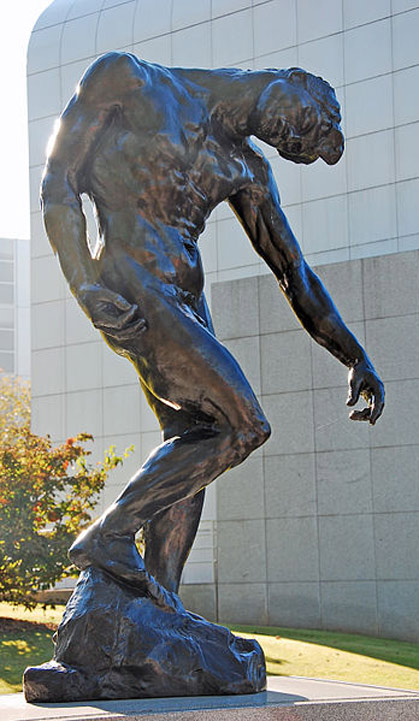
Photograph courtesy of Bubba73
To commemorate President Kennedy
To celebrate the museum's centenary
To commemorate the victims of an aeroplane crash
To celebrate Rodin's centenary
On the 3rd of June 1962, 106 Atlanta arts patrons died in an aeroplane accident at Orly Airport in Paris. They were on a museum-sponsored trip at the time. To honour those who died the French government donated The Shade to the museum
7 .
Rodin's statue of the biblical first woman Eve was never finished . What reason did the artist give for this?
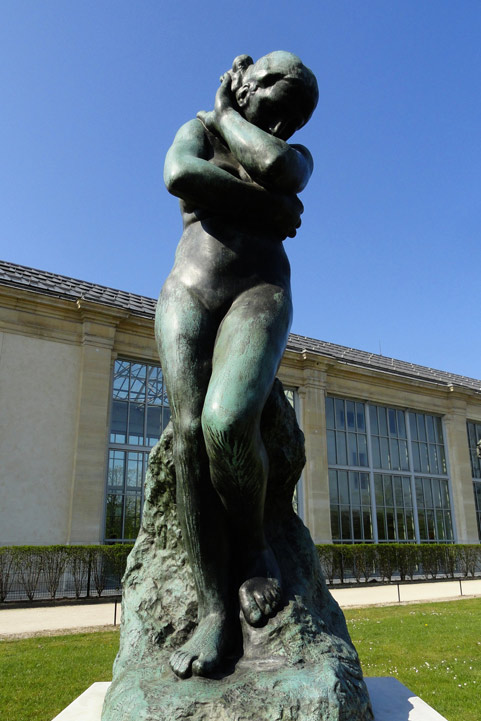
Photograph courtesy of Coldcreation
He found the subject both dull and boring
His model was pregnant and stopped coming to his studio
He was too busy on other works
His failing eyesight made the work impossible
In Rodin's own words, "Without knowing why, I saw my model changing. I modified my contours, naively following the successive transformations of ever-amplifying forms. One day, I learned that she was pregnant; then I understood... It certainly hadn't occurred to me to take a pregnant woman as a model for Eve; an accident - happy for me - gave her to me and it aided the character of the figure singularly. But soon, becoming more sensitive, my model found the studio too cold; she came less frequently, then not at all. That is why my Eve is unfinished"
8 .
Originally intended as a part of another work, what is the name of this piece which is one of the most famous sculptures of all time?
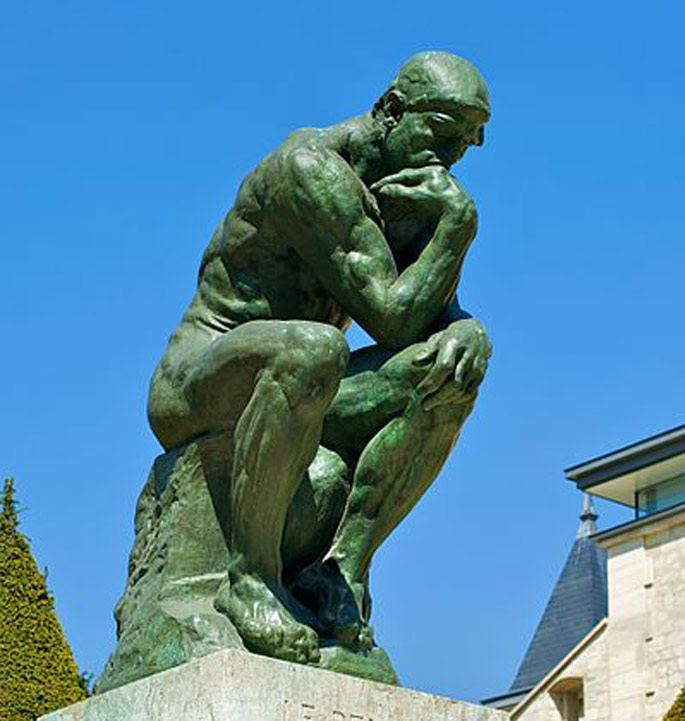
Photograph courtesy of Daniel Stockman
The Thinker
The Waiting Man
The Philosopher
The Patient Man
A small version of The Thinker was created as a part of the larger work The Gates of Hell. Larger versions were made to be displayed on their own and now more than 20 bronze casts exist in cities throughout the world
9 .
What is the name of this piece which (intentionally) has no arms and no head?
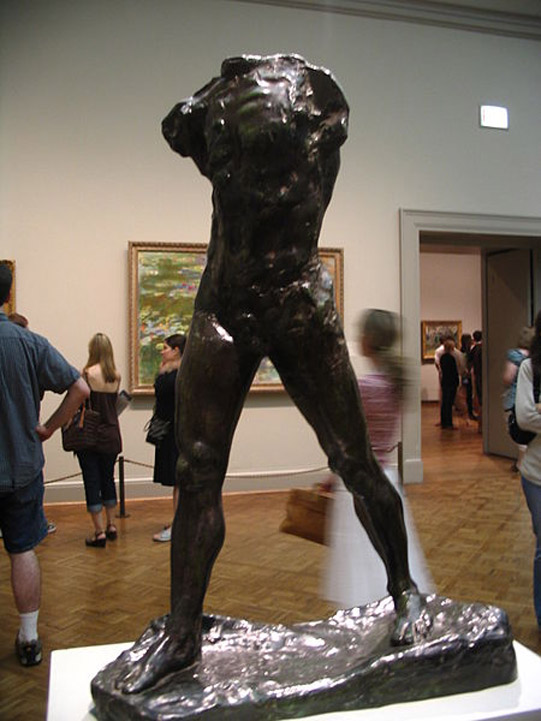
The Walking Man
Legs
The Headless man
Stride
By omitting the arms and head Rodin forces our attention onto the movement of the body. The piece has been compared to the rough sketches of the Impressionist painters - displaying movement and feeling rather than realism
10 .
The Gates Of Hell is a representation of a scene from Dante's Inferno. It was commissioned in 1880 and expected to be finished by 1885. How long did Rodin actually work on the piece?
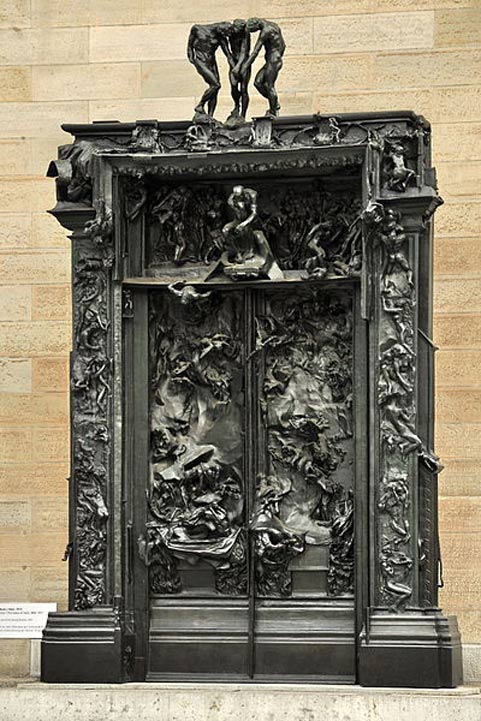
Photograph courtesy of Roland
3 years
7 years
17 years
37 years
The Gates of Hell is truly colossal. It has a height of 6m (20ft), a width of 4m (13ft) and a depth of 1m (3ft). There are a total of 180 individual figures on the piece, some of whom (such as The Shade and The Thinker) are reproduced elsewhere as individual pieces.
Rodin worked on and off on this piece until his death in 1917
Rodin worked on and off on this piece until his death in 1917



**Unlimited Quizzes Await You! 🚀**
Hey there, quiz champ! 🌟 You've already tackled today's free questions.
Ready for more?
Ready for more?
🔓 Unlock UNLIMITED Quizzes and challenge yourself every day. But that's
not all...
not all...
🔥 As a Subscriber you can join our thrilling "Daily Streak" against other
quizzers. Try to win a coveted spot on our Hall of Fame Page.
quizzers. Try to win a coveted spot on our Hall of Fame Page.
Don't miss out! Join us now and keep the fun rolling. 🎉
**Unlimited Quizzes Await You! 🚀**
Hey there, quiz champ! 🌟 You've already tackled today's free questions. Ready for more?
🔓 Unlock UNLIMITED Quizzes and challenge yourself every day. But that's not all...
🔥 As a Subscriber you can join our thrilling "Daily Streak" against other quizzers. Try to win a coveted spot on our Hall of Fame Page.
Don't miss out! Join us now and keep the fun rolling. 🎉




© Copyright 2016-2026 - Education Quizzes
Work Innovate Ltd - Design | Development |
Marketing
