




Ask the AI Tutor
Need help with Limestone Scenery 03? Ask our AI Tutor!
AI Tutor - Lucy
Connecting with Tutor...
Please wait while we establish connection
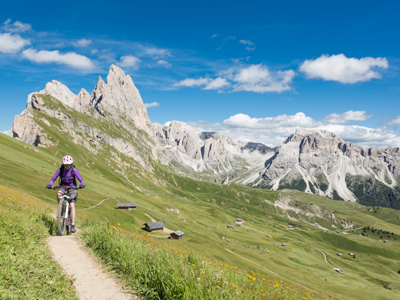
Get to know more about limestone in this quiz.
Limestone Scenery 03
Explore how limestone landscapes form. This KS3 Geography quiz looks at rocks, fossils and past climates to show how Britain’s position on Earth has changed.
1 .
Which of the following is often used as part of the name of a small stream in a limestone area?
Beck
Ria
Tarn
Trickle
If you visit the Yorkshire Dales, you might cross or walk beside such streams as Tang Hall Beck or Osbaldwick Beck!
2 .
Water disappears underground through what?
Loop holes
Pigeon holes
Sparrow holes
Swallow holes
Sometimes called sink holes
3 .
What process causes calcium carbonate deposits in caverns?
Distillation
Evaporation
Fermentation
Hydration
As a drop of water evaporates, it cannot hold as much dissolved material
4 .
Stalactites and stalagmites may join to form what?
Branches
Columns
Spines
Trunks
In very old caves, there are some spectacular examples of columns
5 .
Vertical cracks in limestone have what name?
Crevasses
Joints
Ruptures
Vents
These are cracks that formed as the sediments turned into rock
6 .
What type of stream results from water reappearing above ground?
Recalcitrant
Rejuvenant
Resplendent
Resurgent
In the winter, the river Lathkill in Derbyshire is fed by a large resurgent stream in a cave in the side of its valley. During the summer, the cave is dry and the upper part of the river disappears as well. The summer resurgent is much less spectacular and is spread over a distance of several hundred metres
7 .
Rainwater reacts with carbon dioxide to form which acid that attacks limestone?
Carbonic acid
Formic acid
Nitric acid
Sulfuric acid
Surface streams on limestone are mildly acidic due to this acid
8 .
What is another name for limestone landscapes?
Horst
Karst
Schist
Wurst
Originally the name of a limestone region in Slovenia
9 .
As well as chemical weathering, Carboniferous limestone can be weathered by freeze…?
Bake
Melt
Split
Thaw
Water freezes and expands to widen the cracks
10 .
Cracks in limestone pavements are called what?
Dykes
Grackles
Gripes
Grykes
It is sometimes spelled as grike. Grykes can sometimes be as wide as half a metre but are often narrower



**Unlimited Quizzes Await You! 🚀**
Hey there, quiz champ! 🌟 You've already tackled today's free questions.
Ready for more?
Ready for more?
🔓 Unlock UNLIMITED Quizzes and challenge yourself every day. But that's
not all...
not all...
🔥 As a Subscriber you can join our thrilling "Daily Streak" against other
quizzers. Try to win a coveted spot on our Hall of Fame Page.
quizzers. Try to win a coveted spot on our Hall of Fame Page.
Don't miss out! Join us now and keep the fun rolling. 🎉
**Unlimited Quizzes Await You! 🚀**
Hey there, quiz champ! 🌟 You've already tackled today's free questions. Ready for more?
🔓 Unlock UNLIMITED Quizzes and challenge yourself every day. But that's not all...
🔥 As a Subscriber you can join our thrilling "Daily Streak" against other quizzers. Try to win a coveted spot on our Hall of Fame Page.
Don't miss out! Join us now and keep the fun rolling. 🎉




© Copyright 2016-2026 - Education Quizzes
Work Innovate Ltd - Design | Development |
Marketing
