




Ask the AI Tutor
Need help with Settlement 01? Ask our AI Tutor!
AI Tutor - Lucy
Connecting with Tutor...
Please wait while we establish connection
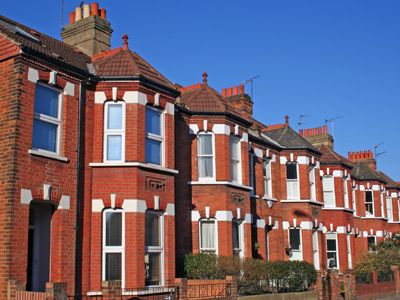
This photo shows a row of terraced houses.
Settlement 01
Learn how different types of settlements grow, from tiny hamlets to huge cities. This KS3 Geography quiz explores where people live and why places develop.
1 .
What type of houses are joined together in a line?
Detached
Prefabricated
Semi-detached
Terraced
Built from the 19th century onwards
2 .
In what settlement are buildings closely grouped?
Concentrated
Condensed
Focused
Nucleated
They are criss-crossed by a network of roads
3 .
Burgess made a 1924 land use model for which city?
Chicago
Edinburgh
London
New York
It has now been used to describe and explain land use in many other cities
4 .
The function of a settlement can be what?
Its age
Its shape
The land it is built on
The uses people have for it
Function can also be the reason why it was built
5 .
The edge of an urban area is the rural-urban what?
Fence
Fringe
Parting
Partition
New shopping centres are built here as the land is cheaper and access is easier than if they were in the centre of the urban area
6 .
What means the location of a settlement in relation to surrounding features?
Function
Relief
Site
Situation
A settlement can have a valley situation, be situated on a river or in the mountains. These are just a few examples of how to describe the situation of a settlement
7 .
A housing area on the edge of a town is called what?
Sub-standard
Subterfuge
Subterranean
Suburb
The 'suburbs' of cities developed as people started to earn more money and wanted to live in larger houses that had gardens
8 .
To help understand settlements we use a land use what?
Estimate
Model
Project
Scale
Models simplify a real situation
9 .
Which of these settlements is the smallest?
Conurbation
Hamlet
Town
Village
A hamlet has a few houses and no services
10 .
Settlements that follow a transport route are called what?
Elongated
Lateral
Linear
Serpentine
Linear settlements sometimes follow a valley floor as it is easier and cheaper to build there than on the sloping sides of valleys



**Unlimited Quizzes Await You! 🚀**
Hey there, quiz champ! 🌟 You've already tackled today's free questions.
Ready for more?
Ready for more?
🔓 Unlock UNLIMITED Quizzes and challenge yourself every day. But that's
not all...
not all...
🔥 As a Subscriber you can join our thrilling "Daily Streak" against other
quizzers. Try to win a coveted spot on our Hall of Fame Page.
quizzers. Try to win a coveted spot on our Hall of Fame Page.
Don't miss out! Join us now and keep the fun rolling. 🎉
**Unlimited Quizzes Await You! 🚀**
Hey there, quiz champ! 🌟 You've already tackled today's free questions. Ready for more?
🔓 Unlock UNLIMITED Quizzes and challenge yourself every day. But that's not all...
🔥 As a Subscriber you can join our thrilling "Daily Streak" against other quizzers. Try to win a coveted spot on our Hall of Fame Page.
Don't miss out! Join us now and keep the fun rolling. 🎉




© Copyright 2016-2026 - Education Quizzes
Work Innovate Ltd - Design | Development |
Marketing
