




Ask the AI Tutor
Need help with Transport 01? Ask our AI Tutor!
AI Tutor - Lucy
Connecting with Tutor...
Please wait while we establish connection
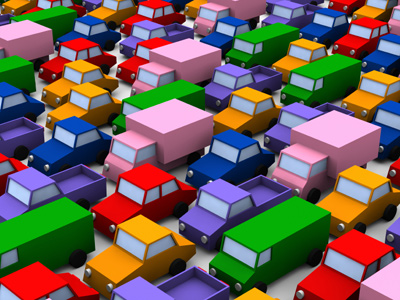
A build up of traffic is known as congestion.
Transport 01
How do goods and people move around the world? In this KS3 Geography quiz you explore transport networks from container ships and lorries to railways and airports.
1 .
The busiest and most important roads are known as what?
Central roads
Strategic roads
Trunk roads
Turnpike roads
They include motorways and 'A' roads
2 .
What is reached directly by the M20 motorway?
Channel Tunnel
Glasgow
Heathrow Airport
Land's End
It also reaches the ferry port of Dover where you can catch a ferry to take you to France
3 .
An RORO ferry means 'Roll on…' then what?
Ramble over
Remain on
Reverse off
Roll off
Vehicles drive on one end and off the other
4 .
Which word describes goods transported in bulk?
Freeload
Freight
Frigate
Refrigerated
A lot of freight in the UK is carried by road but some still goes by rail. Goods can be imported in bulk by airfreight or seafreight
5 .
Some 'A' roads follow sections of what?
Gary roads
Norman roads
Roman roads
Viking roads
Roman roads were built very straight to link their settlements in Britain
6 .
London Orbital is another name for which motorway?
M23
M25
M27
M40
It inspired Chris Rea's song 'The Road to Hell'!
7 .
What word means too much traffic using the road at the same time?
Congestion
Constipation
Constriction
Contraction
'Rush hour' traffic jams are common in cities as people travel to and from their places of work
8 .
Opened in 2003, which was the UK's first toll motorway?
M1
M4
M5
M6
All the other motorways in the UK (including most of the M6) are free to use
9 .
Organising the movement of goods is called what?
Aeronautics
Juggernautics
Linguistics
Logistics
Originally a military word for moving troops/equipment
10 .
Why was the M6 toll road built?
To annoy motorists
To cross a river
To make money
To relieve congestion
Many people protested against the M6 toll road because it was being built on green belt land



**Unlimited Quizzes Await You! 🚀**
Hey there, quiz champ! 🌟 You've already tackled today's free questions.
Ready for more?
Ready for more?
🔓 Unlock UNLIMITED Quizzes and challenge yourself every day. But that's
not all...
not all...
🔥 As a Subscriber you can join our thrilling "Daily Streak" against other
quizzers. Try to win a coveted spot on our Hall of Fame Page.
quizzers. Try to win a coveted spot on our Hall of Fame Page.
Don't miss out! Join us now and keep the fun rolling. 🎉
**Unlimited Quizzes Await You! 🚀**
Hey there, quiz champ! 🌟 You've already tackled today's free questions. Ready for more?
🔓 Unlock UNLIMITED Quizzes and challenge yourself every day. But that's not all...
🔥 As a Subscriber you can join our thrilling "Daily Streak" against other quizzers. Try to win a coveted spot on our Hall of Fame Page.
Don't miss out! Join us now and keep the fun rolling. 🎉




© Copyright 2016-2026 - Education Quizzes
Work Innovate Ltd - Design | Development |
Marketing
